
A supplier VPN accepts a supplier password with no second factor and lands those sessions inside the retail network. Which control should be added?
Select an answer to reveal the explanation.
Short Explanation
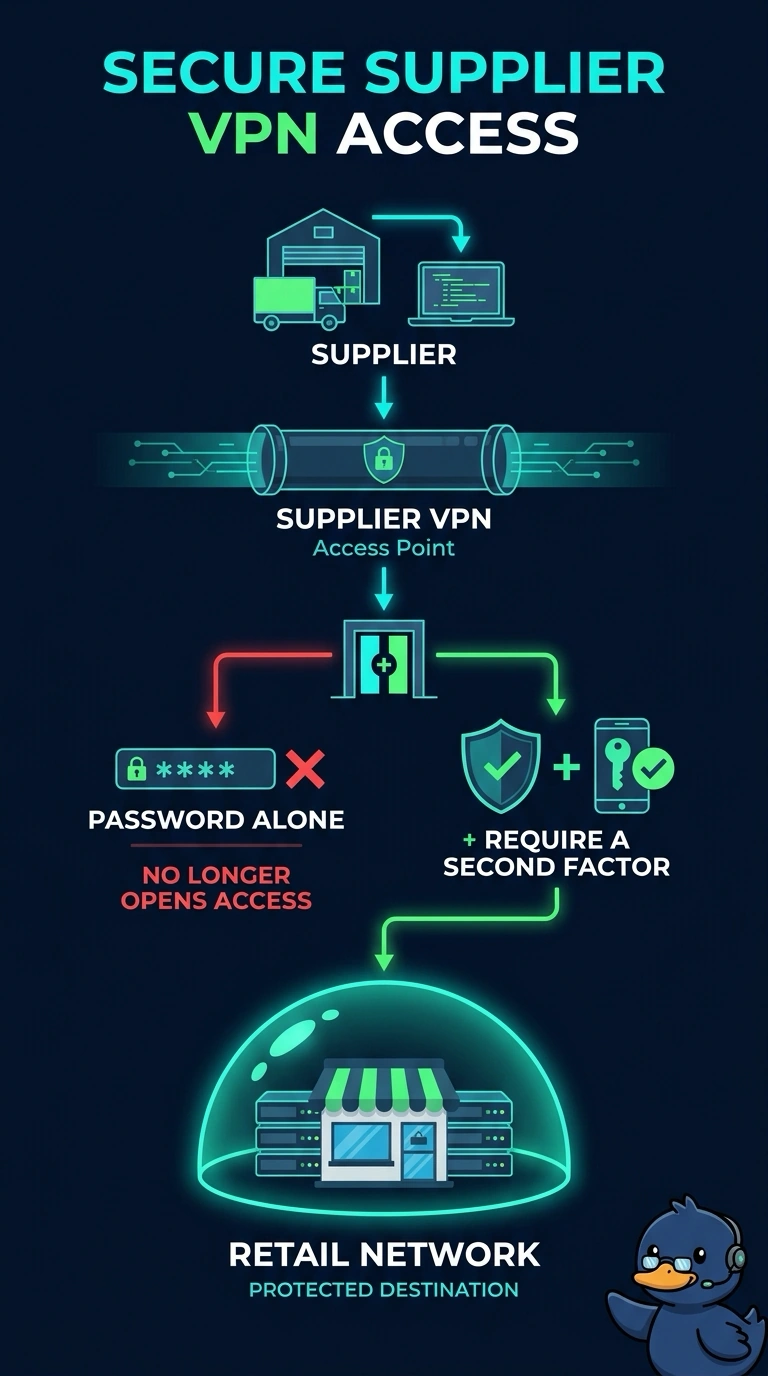
A loading dock that opens for anyone who knows a shared word is still wide open, so you add multifactor authentication to the supplier VPN: a password alone no longer opens the retail network. Publishing supplier passwords, removing VPN authentication logging, or broadening the supplier tunnel makes access easier or less visible, not safer.
Full Explanation
The gap is a supplier VPN that trusts a password alone and then places the session inside the retail network. Add a second factor on the supplier VPN so a password alone no longer opens the retail network; a stolen supplier password is then not enough to establish a session. Publishing supplier passwords on the partner portal so each login takes fewer steps exposes the first factor to anyone who can read the portal. Removing VPN authentication logging so failed supplier logins stay out of the queue blinds detection and leaves password-only access in place. A broader supplier tunnel that reaches every retail system once the password is accepted increases how far a single password can reach rather than strengthening authentication. Exam caveat: a second factor pairs well with a tunnel limited to supplier-facing systems, but the missing control named here is the second factor. Practical check: attempt a password-only supplier login and confirm the gateway demands the second factor before building the session.