
A public booking application is still missing a vendor patch for an exploit already being used against it. What should the team do beyond watching the logs?
Select an answer to reveal the explanation.
Short Explanation
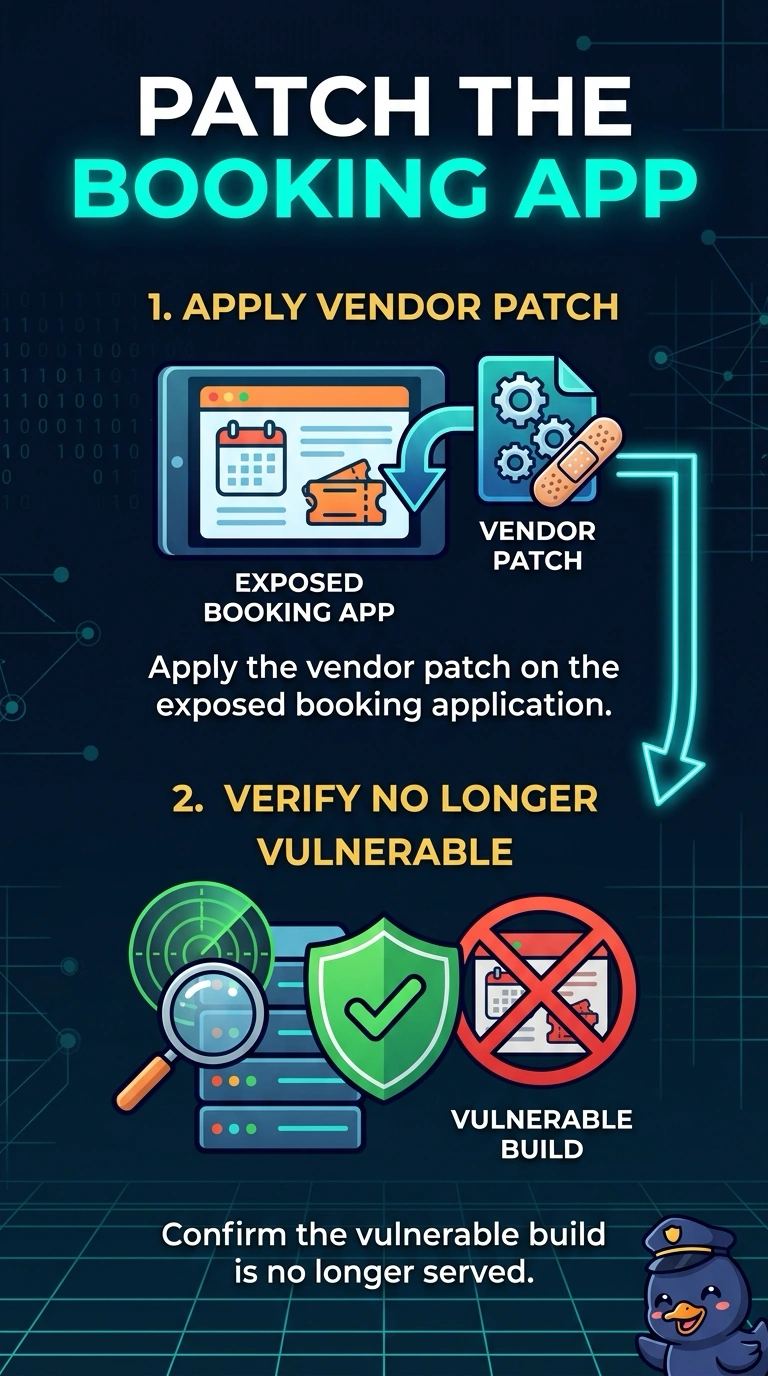
Watching a broken lock does not replace the lock. You apply the vendor patch to the exposed booking application and confirm the vulnerable build is no longer served, closing the flaw. Log watching, disabling logging, or renaming the log folder leaves the same vulnerable code on the internet.
Full Explanation
A known exploit with a vendor patch calls for a fix, not just observation. Apply the vendor patch to the exposed booking application and confirm the vulnerable build is no longer served; this removes the vulnerable code that the exploit targets. Keeping watch on the access log while leaving the unpatched booking application exposed to the internet preserves evidence of attempts but does not remove the flaw. Disabling logging on the booking host may stop exploit noise from consuming disk space, but it blinds the team and leaves the bug in place. Renaming the log folder while continuing to run the same unpatched code on the public site changes where messages land, not the application. After the patch, recheck the public service so the old build cannot still answer requests. Exam caveat: if the patch cannot be installed immediately, a temporary network control can reduce exposure, but the patch remains the fix that removes the vulnerable build. Practical check: record the installed version after the change and confirm it matches the patched build shipped by the vendor.