
A manager at an insurer suspects an employee is copying a customer list up to a personal cloud drive. Which sources fit this case?
Select an answer to reveal the explanation.
Short Explanation
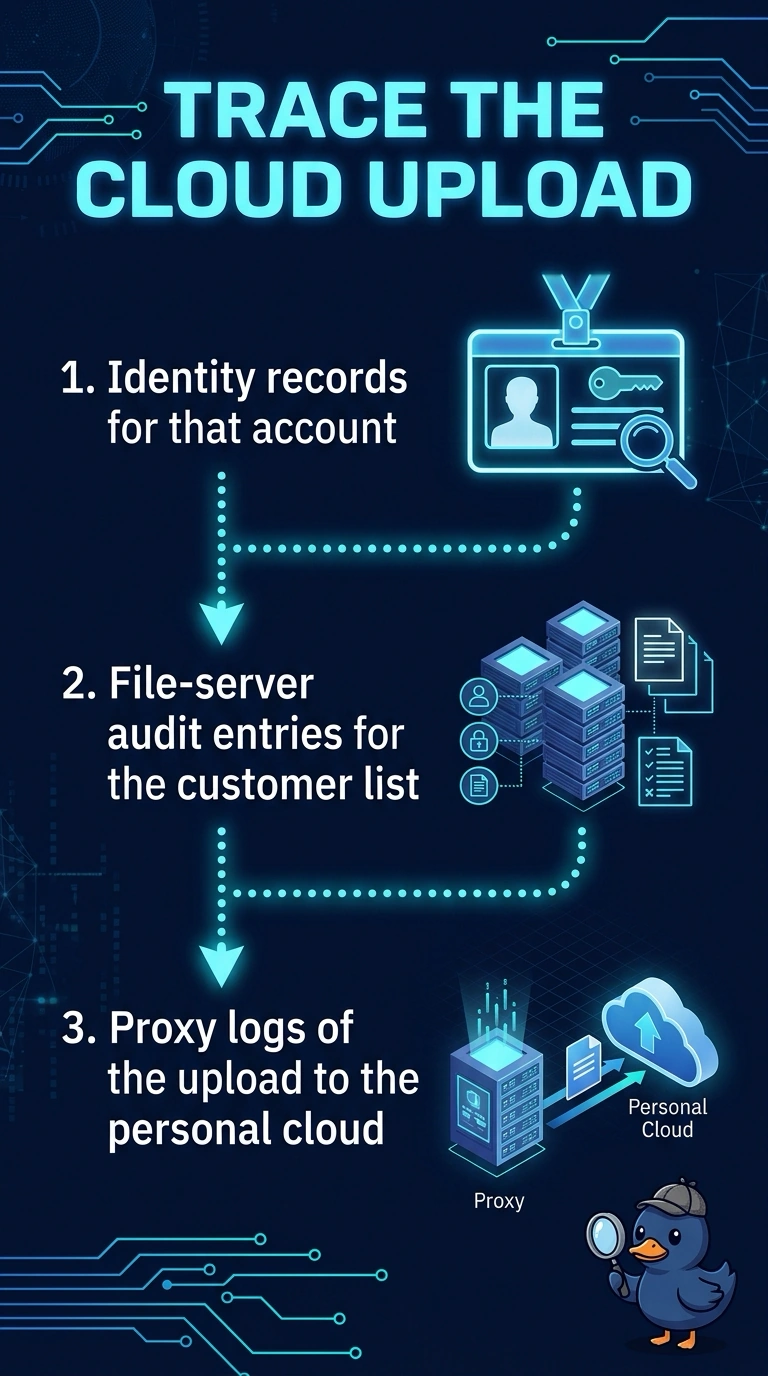
Follow the person, the folder they took, and the door they carried it through. You want identity records, the file-server audit of the customer list, and proxy logs of the upload to the personal cloud. A malware sandbox scores a file; it does not show an employee copying data they were allowed to open.
Full Explanation
This hypothesis is theft by an employee, not a malware detonation. Identity records for that account, file-server audit entries for the customer list, and proxy logs of the upload to the personal cloud connect the person, the file, and the destination. A malware-sandbox detonation of the customer spreadsheet, scored for hostile behavior of the file, asks whether the spreadsheet is malicious code, which is a different question from who copied it. A data-center packet capture that shows byte volume but carries no user identity and no file name can show bulk transfer and still cannot name the employee or the list. The endpoint quarantine queue for a hash that has not been linked to this particular copy is an endpoint malware action aimed at an unrelated indicator. Exam caveat: the customer list can be legitimate content; the case turns on the copy path, not on a hostile verdict for the file. Operational check: join the account in the identity log to the file-audit read of the customer list and to the proxy request that uploads toward the personal cloud.