
A clinic jump host accepts Remote Desktop from the internet and protects that login with a password alone. Which mitigation actually closes that exposure?
Select an answer to reveal the explanation.
Short Explanation
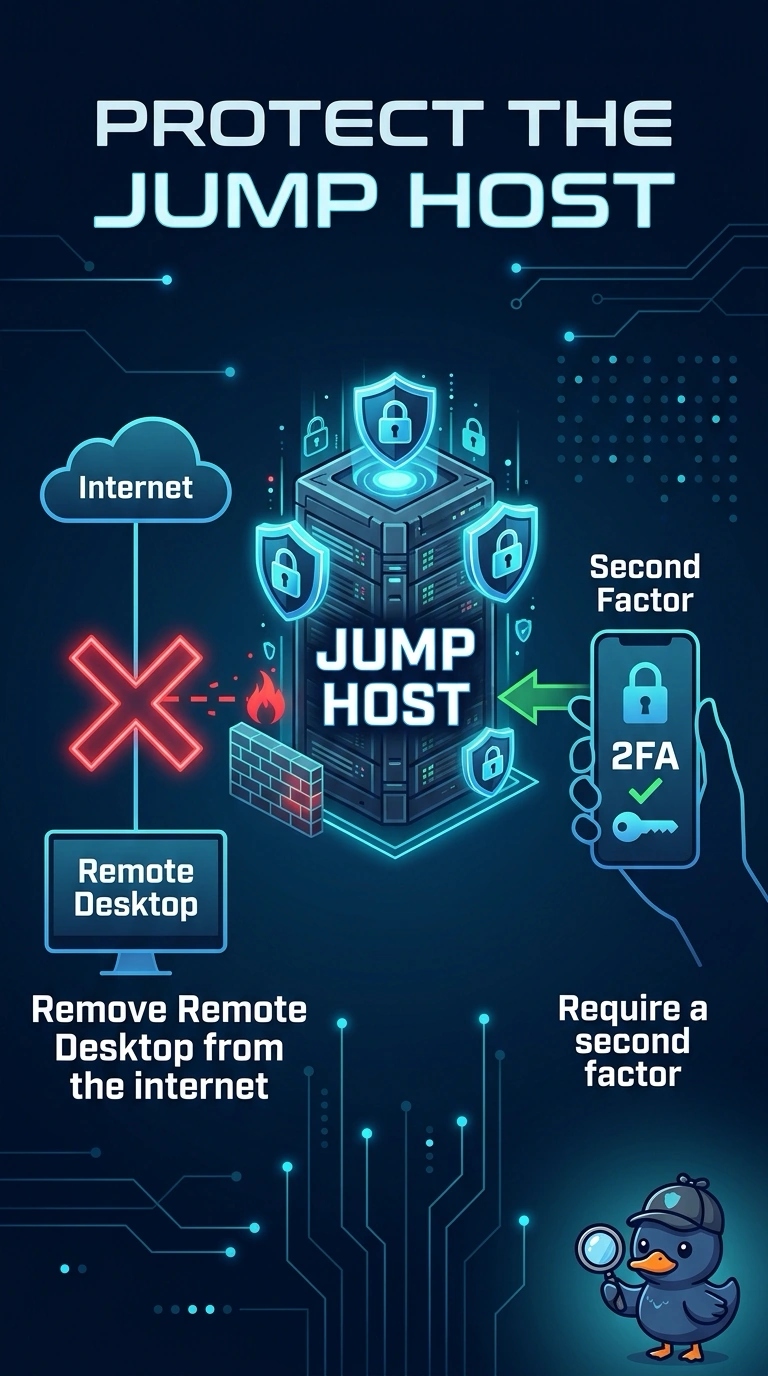
An alley door with a single key is still an alley door. You close it by taking Remote Desktop off the internet and requiring a second factor before anyone uses that jump host. A longer hint or louder logging leaves the same door open.
Full Explanation
The exposed surface is Remote Desktop reachable from the internet with only a password. Closing it means you remove Remote Desktop from the internet and require a second factor before anyone can use that jump host, so a guessed password is no longer enough and the service is no longer a public front door. Leaving Remote Desktop on the internet and placing a longer password hint on the login page keeps the path and can even help guessing. Raising the logging detail on the jump host while the internet path and password stay unchanged improves visibility and does not close the exposure. Adding an internal name record for the jump host and keeping the same internet-facing login path is a directory change, not a control on who can connect. Password hints and extra logging do not shrink that internet path. Exam caveat: extra logging and a longer password hint can make the host easier to watch or to guess, and neither one removes the internet path. Operational check: confirm the edge policy no longer publishes that service to the internet and that the jump account challenges for a second factor.