
Dozens of retail laptops launch the same unsigned binary within minutes and then open SMB sessions to many internal hosts. Which incident picture and which data should the SOC pull together?
Select an answer to reveal the explanation.
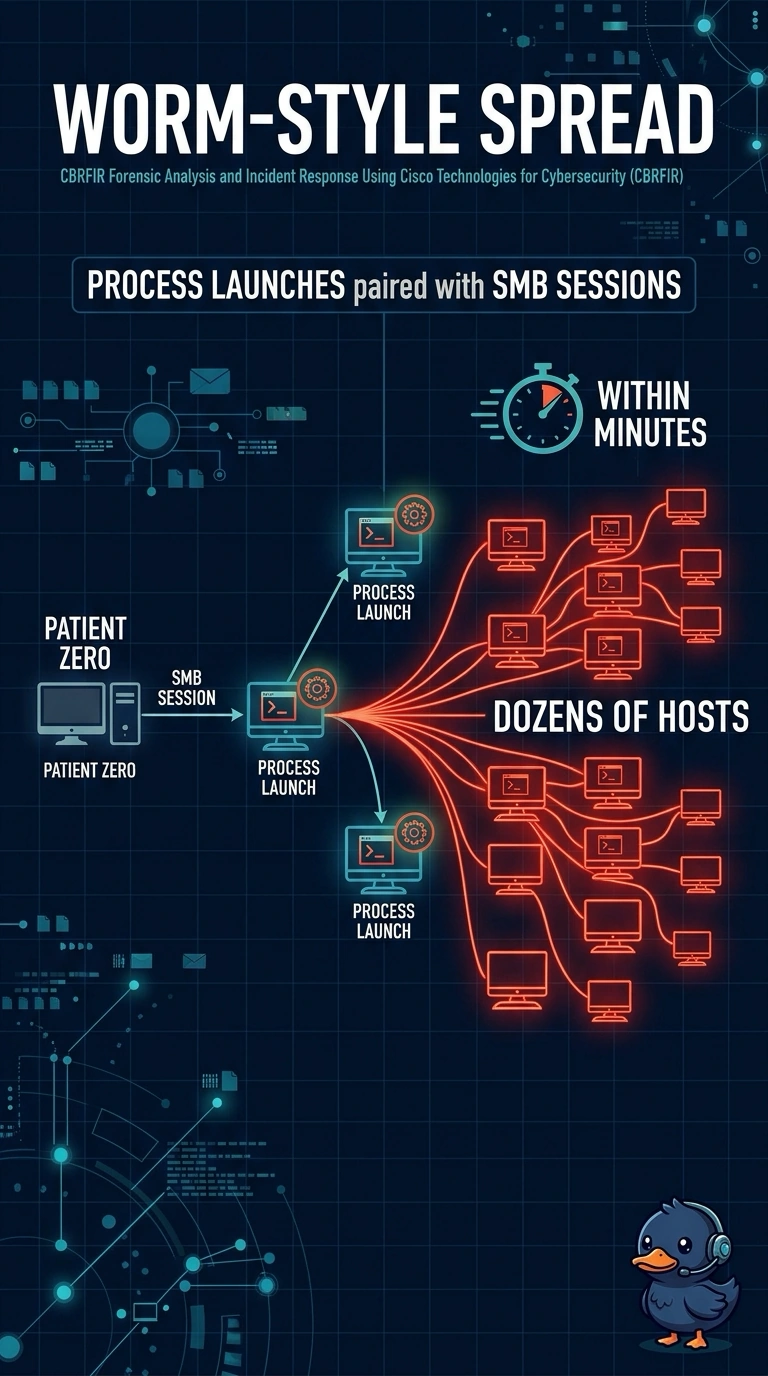
Short Explanation
When the same unmarked van shows up at many loading docks and then drives between them, you are watching spread, not one person's mailbox. Pair the process launches with the SMB sessions among those hosts. An email-only review misses the fan-out that never needed a new message.
Full Explanation
Hosts launching one unsigned binary in a short window and then opening SMB sessions to many internal machines is consistent with worm-style spread and warrants correlating launches with SMB activity; the pattern alone does not prove self-propagation or rule out authorized deployment. The data that matches that picture is the set of process launches on the endpoints together with the SMB sessions among the affected hosts, so you can see both the common binary and the lateral path. A phishing review limited to the mailbox of the first person who opened a message answers a mail question and never sees the binary or the host-to-host sessions. A web-shell review limited to the public site access log for unusual upload paths belongs to a compromised web server, and nothing in this pattern points at that site. An insider-theft review limited to one employee audit on the file server, while ignoring other hosts, assumes a single person copying files and throws away the multi-host launch evidence. Exam caveat: ransomware can ride a worm, but the incident type you scope first is the automated spread, not a mailbox. Operational check: list endpoints that executed that binary in the window and match them to internal SMB sessions in NetFlow or the firewall log.