
A retail cloud API key is calling storage resources from a network the company has not used before. Which evidence should be pulled before anyone relies on campus NetFlow alone?
Select an answer to reveal the explanation.
Short Explanation
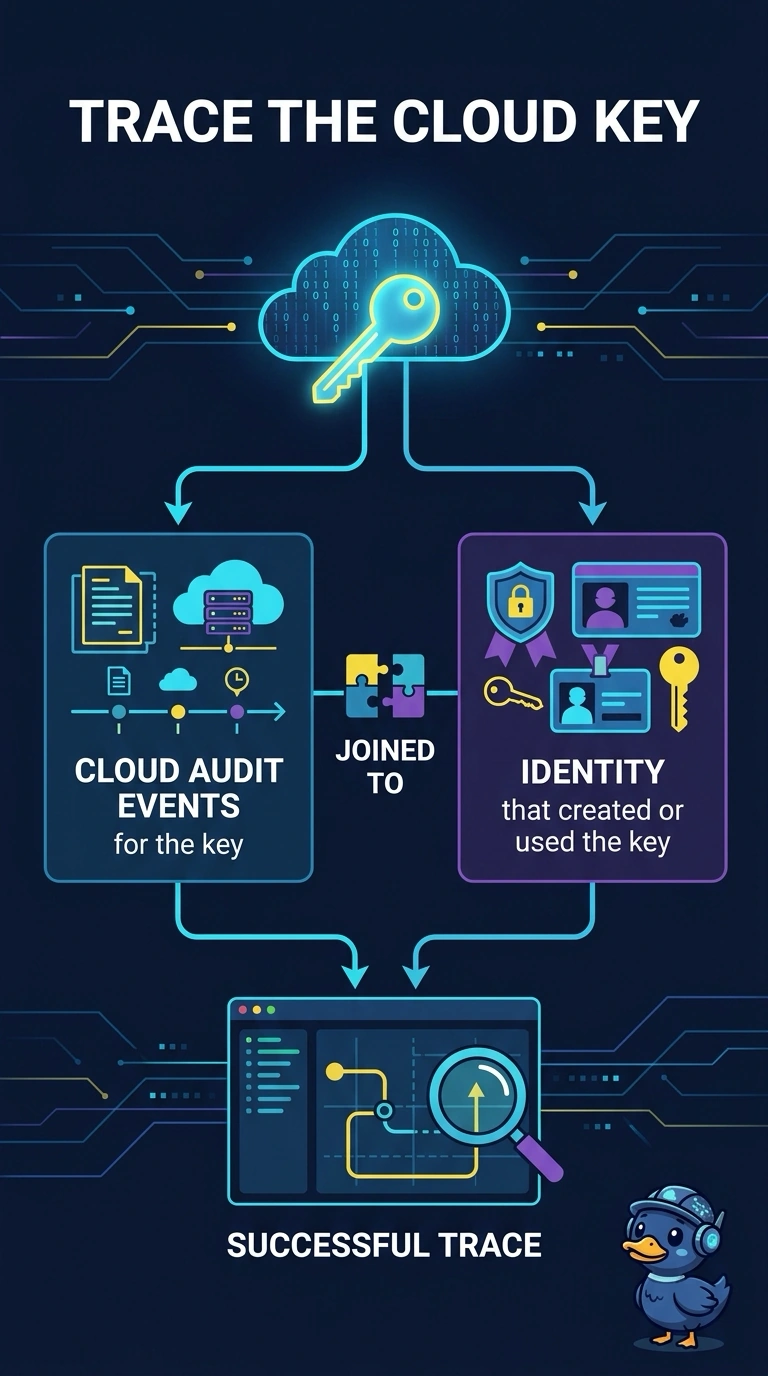
A badge used in a building you do not own will not show up on the turnstile log back at your old office. You need to retrieve the available provider audit events for that key and tie it to the principal associated with the key; logs do not by themselves establish the human using a stolen key. You still check whether storage data-plane logging was enabled, because campus NetFlow alone never saw a call that did not cross the campus.
Full Explanation
Retrieve available provider audit events, checking whether the relevant storage data-plane logging was enabled and retained. For example, CloudTrail event history does not include S3 object data events by default. Those events are what tie the key to the principal associated with the key; logs do not by themselves establish the human using a stolen key, as well as to the resources touched and the source network. Campus NetFlow by itself is the wrong primary source when the theory is that every cloud API call still crosses the office core switch; calls from an unfamiliar network can miss the campus entirely. A sandbox run of the key string has nothing to execute and will not display the storage resources that were called. The branch firewall deny log shows traffic that was blocked at the branch, and reading it as if it recorded the successful cloud API invocations reverses a deny into an allow. Record the caller identity, the key, and the source network from those audit events before you decide whether any campus flow is even relevant. Exam caveat: NetFlow can still help if some calls did traverse campus, but it cannot name the key or the storage action. Operational check: filter the provider audit log for that key, note the caller identity and source network, and only then compare any campus flows.