
A university web server may be hosting a web shell. Which combination of sources should the analyst gather?
Select an answer to reveal the explanation.
Short Explanation
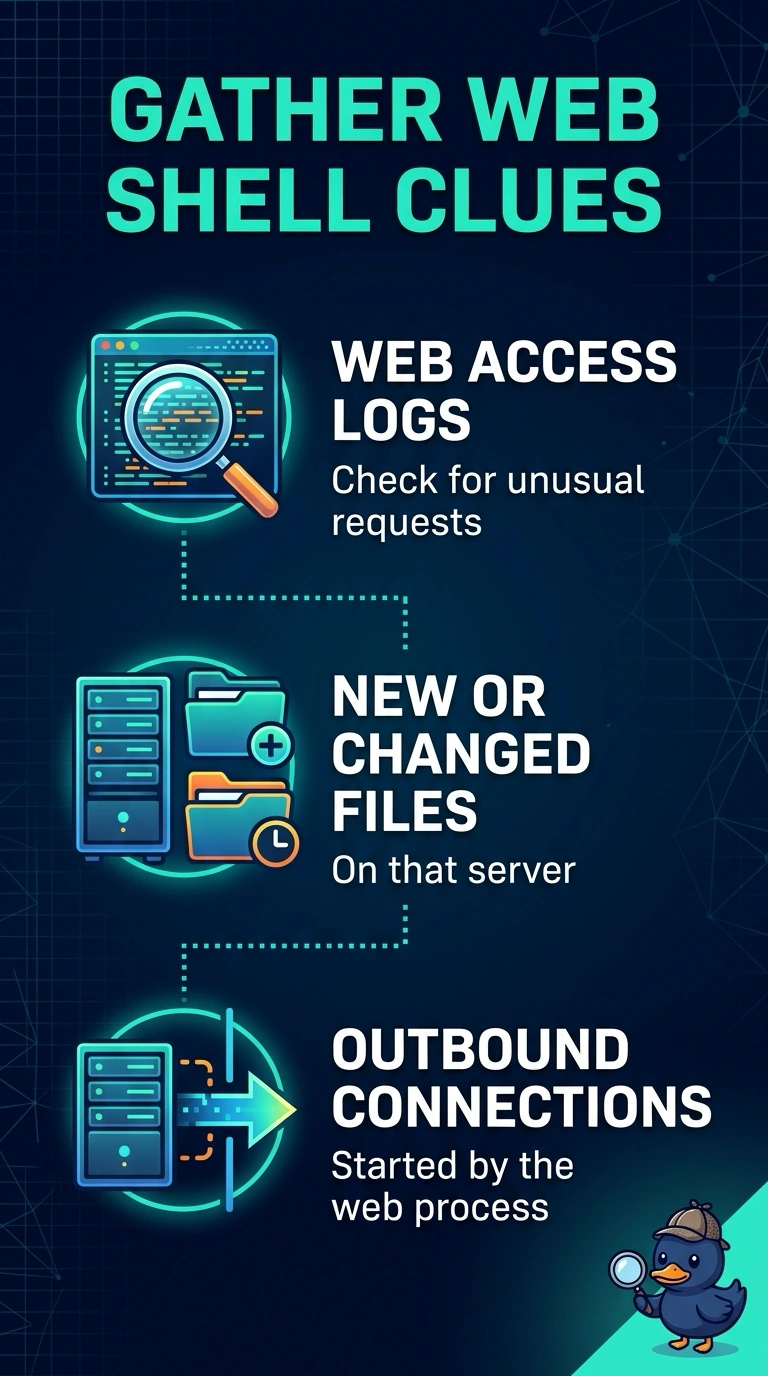
To see whether a back room has a hidden phone, you check the door log, any new object in the room, and calls the room made afterward. Gather the web access logs, new or changed files on that server, and outbound connections from the web process. A reputation lookup on the address alone does not show the shell.
Full Explanation
A web shell enables command execution through a web-facing component; many are files, but memory-resident variants also exist. Web access logs for unusual requests, new or changed files on that server, and outbound connections started by the web process are the three sources that show the request, the file, and the callback. A reputation lookup on the public address of the server and no local artifact taken from the host itself scores an address and never opens the host. Employee mailboxes belonging to staff who hold no login account on that web server at all are the wrong population and the wrong protocol. A wireless survey of the campus walking paths and the printer logs collected on that same day do not inspect the web service. Exam caveat: an access-log line shows that a request was received and which status was returned; it does not by itself prove the payload ran, so pair it with the new file and the outbound connection. Absence of a new file does not exclude a memory-resident web shell; correlate process/memory evidence too. Operational check: find the unusual request in the web log, the new or changed file it touches, and connections originated by the web server process.