
A bookstore employee forwards a message urging them to open a link and sign in, and reports having clicked it. Which sources should the analyst pull first?
Select an answer to reveal the explanation.
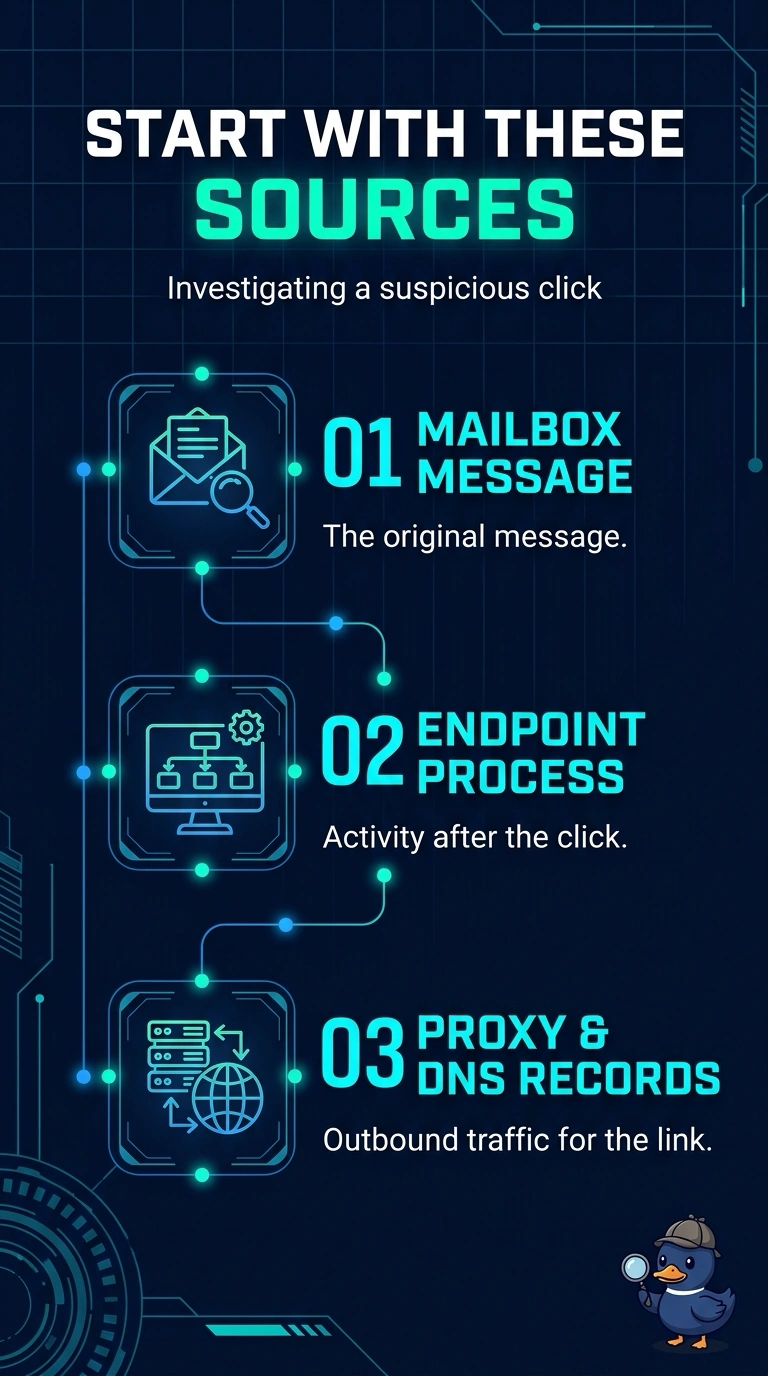
Short Explanation
When a suspicious letter arrives, you keep the envelope, watch what the reader does next, and note which door they open. Pull the mailbox message, the endpoint process after the click, and the proxy or DNS record for the link. A sandbox score alone skips whether this person actually followed the lure.
Full Explanation
A reported phishing mail is a chain: what arrived, what ran on the endpoint after the person acted, and where the link went on the network. The mailbox message, the endpoint process that followed the click, and proxy or DNS records for the link are the three sources that show that chain. Only a malware-sandbox report on the message attachment, leaving the mailbox, the endpoint, and the link aside, may describe a file in a lab and still miss whether this employee executed anything or which site they reached. Firewall deny logs from unrelated branches, plus a vulnerability scan of the mail gateway, answer different questions about other sites and about patching, not about this click. The domain registration record alone, without the message, the host, or the click path, is ownership metadata and does not show execution. Exam caveat: a sandbox detonation can be a later step when an attachment needs a behavior report, but it does not replace the message, the process, and the proxy or DNS query. Export the message, relevant endpoint process activity, proxy records for the URL and DNS queries for its hostname; DNS alone does not record a full URL or prove a click.