
A finance workstation is suspected of command-and-control traffic. Which endpoint facts and network facts belong together?
Select an answer to reveal the explanation.
Short Explanation
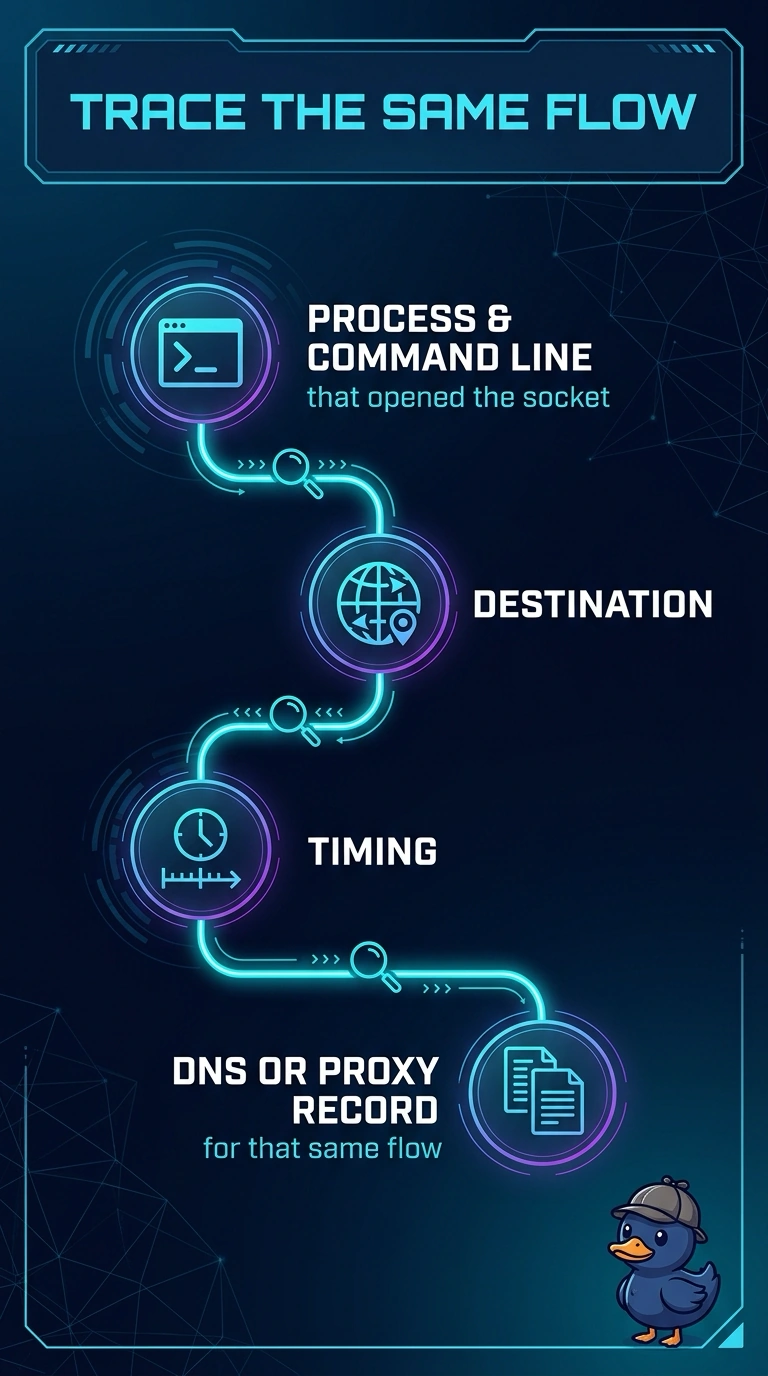
The useful card lists who placed the call and the number they dialed, together. You pair the process and command line that opened the socket with the destination, the timing, and the DNS or proxy record for that flow. A vulnerability score or a badge report does not identify this callback.
Full Explanation
Command and control is a process on a host talking to a remote point. The process and command line that opened the socket, paired with the destination, the timing, and the DNS or proxy record for that same flow, are the endpoint facts and the network facts that describe one session. The mailbox retention policy and a wireless site survey covering the whole finance floor that day concern mail storage and radio coverage, not this socket. A vulnerability score for the operating system, taken with no process name and no connection detail, measures exposure and does not show which program connected or where. Badge-reader history for the lobby doors and the printer page counts from the same afternoon are physical traces and do not identify the callback. Exam caveat: a repeating timing pattern is a clue to investigate, not the name of an actor, and an allowed flow is not automatically malicious. Operational check: tie the process identifier and command line to the same destination in DNS or the proxy and confirm both records refer to one flow.