
An indicator object and a malware object in a hospital intelligence bundle are linked by a STIX relationship of type indicates. What does that relationship record?
Select an answer to reveal the explanation.
Short Explanation
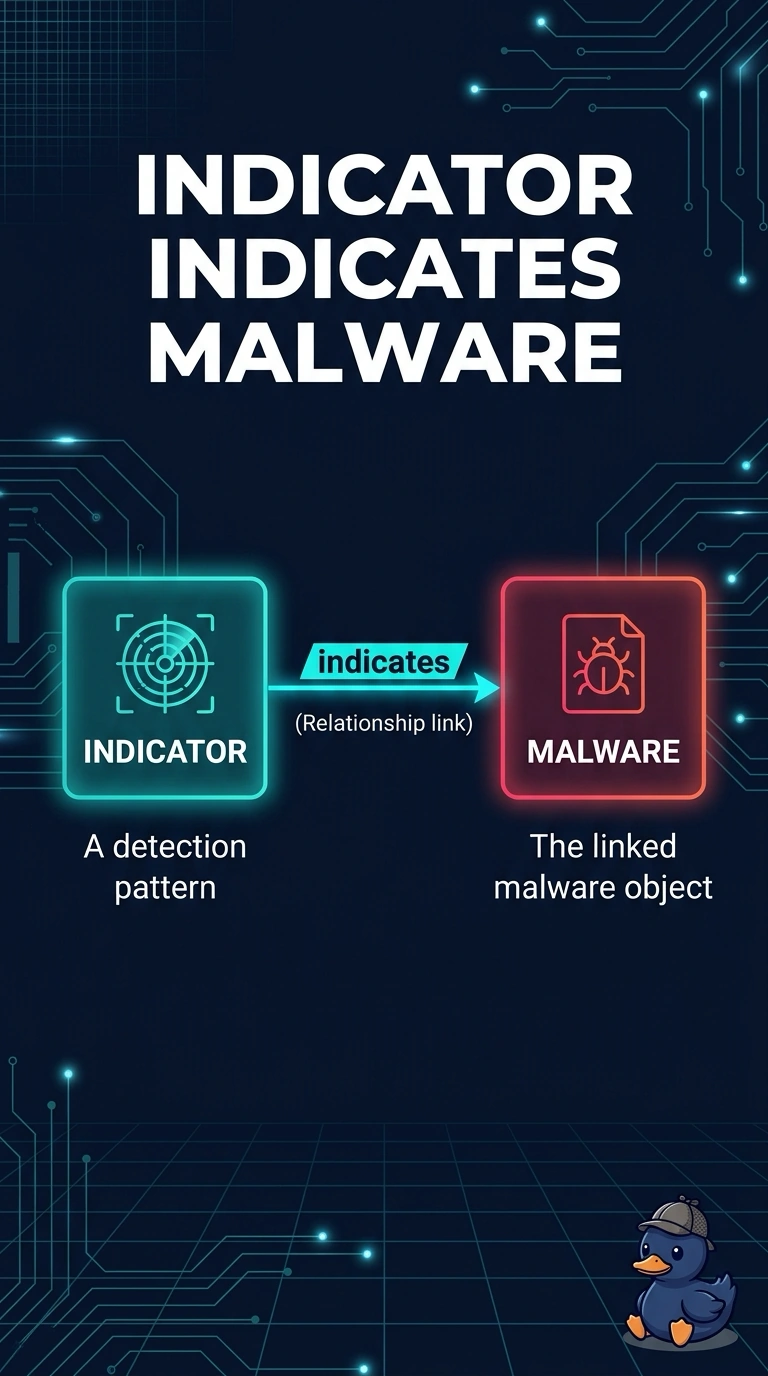
A tag that says this label belongs to that specimen is a link, not a new specimen. You read a STIX relationship of type indicates as the indicator pattern pointing at the linked malware object. The trap is treating that link as authorship, a feed delivery, or a place to store motivation.
Full Explanation
A STIX relationship is a separate object that connects two others and names the kind of connection. When the type is indicates, the relationship records that the indicator is a detection pattern for the malware object identified by that relationship link. The indicator is the source of the link, and the malware object is what the pattern indicates. It does not mean the malware object authored the indicator and owns the infrastructure associated with that pattern. Authorship and infrastructure are different claims and different objects. It does not mean a TAXII collection delivered both objects to a firewall so the firewall can block them immediately. TAXII 2.1 exchanges STIX objects using collection endpoints and TAXII envelopes; that transport does not itself enforce a block, and a block is a later control, but the relationship type itself is neither the delivery nor the block. It also does not mean actor motivation and analytic confidence were written into the pattern field of the indicator object. Motivation belongs on a threat-actor object, and the pattern field holds a detection expression. Exam caveat: the relationship asserts a link the producer claimed; analysts still judge whether the pattern is specific enough to use. Operational check: open the relationship, confirm the type is indicates, and confirm the source is the indicator and the target is the malware object.