
One university laptop holds a suspicious file hash, and a teammate wants to reimage that laptop immediately. Why should a fleet-wide search come first?
Select an answer to reveal the explanation.
Short Explanation
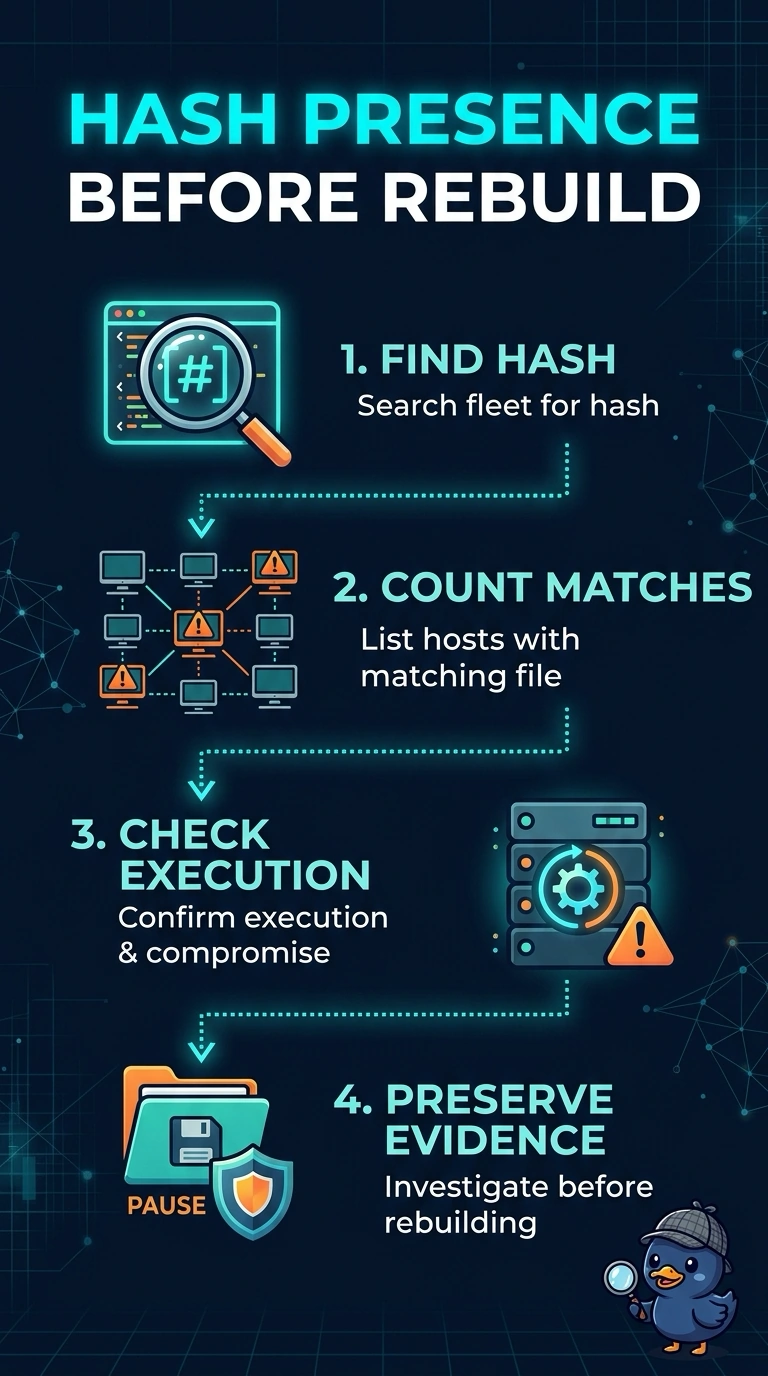
You want to know the scope of the incident before rebuilding one laptop, so search the fleet for the hash first. Deleting the file or isolating every endpoint answers a different problem and can cost you useful evidence or disrupt the company.
Full Explanation
The hash is already known, so the urgent question is how many machines carry it—not how quickly one laptop can be rebuilt. Search the fleet for the hash before reimaging so other hosts containing the matching file are not missed and the case is not mistaken for a single-computer incident. Reimaging that laptop first, on the assumption that it prevents the hash from spreading and that searches of other hosts can wait, treats erasure of one machine as a substitute for determining scope. Deleting the file on the laptop first does not make a later trajectory search run faster and discards a local copy you may still want to preserve. Isolating every endpoint before checking whether the hash exists elsewhere imposes a broad outage instead of performing a targeted lookup. Preserve evidence and investigate matching hosts; determine execution and compromise before deciding which systems to rebuild. Practical check: search the fleet for the hash, record the number of matching hosts, and only then open a reimage task for the laptop.