
A Threat Grid report shows a low threat score, and a behavioral indicator says the sample slept and checked for a sandbox. Why should the file not be closed as clean?
Select an answer to reveal the explanation.
Short Explanation
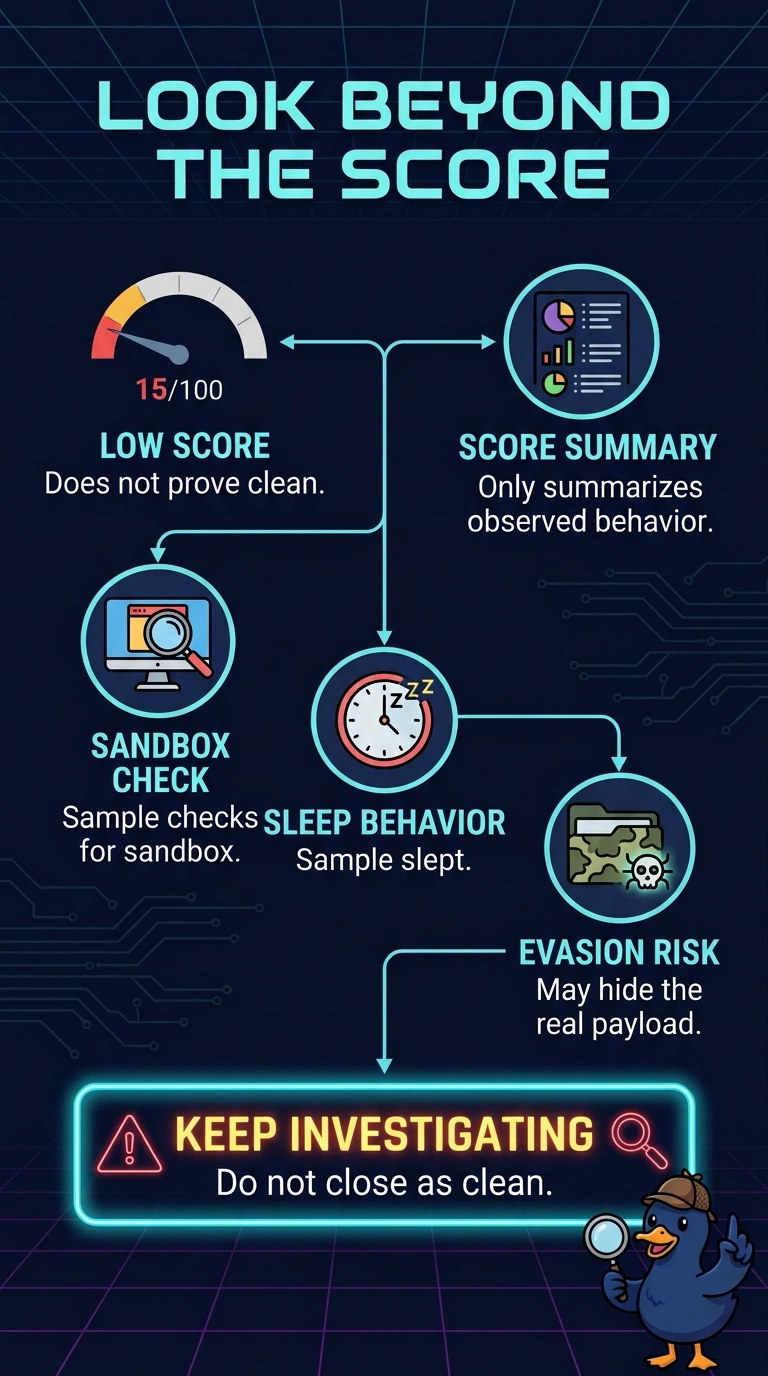
A quiet sample that first looks for the cage door is not a tame program. You should not close the file as clean, because a low Threat Grid score only summarizes behavior and this sample slept and checked for a sandbox. Ignoring that indicator, calling it normal for installers, or letting the score replace the behaviors misses the evasion.
Full Explanation
The threat score is a summary of what the sandbox observed, not a substitute for reading those observations. The score only summarizes behavior, and sandbox evasion can hide the real payload from the report, so a low score alongside sleep and a sandbox check is a reason to keep the file open. A low score does not mean the sample is clean, and the sandbox check should not be ignored as harmless noise; that indicator explains why malicious behavior may be missing. Sleep and environment checks can indicate analysis evasion, but legitimate software can also perform them; investigate their context rather than infer malicious intent from these actions alone. The threat score does not replace the behavioral indicators, so a low score does not close the file as clean. Exam caveat: do not invent a numeric cutoff for the score; read the indicators the score is summarizing, especially evasion. Operational check: open the behavioral indicators, process list, and network activity in the Threat Grid report and note the sleep and sandbox check before you accept the low score.