
A clinic incident playbook describes the response steps but does not state when execution of those steps is finished. Why do exit criteria matter?
Select an answer to reveal the explanation.
Short Explanation
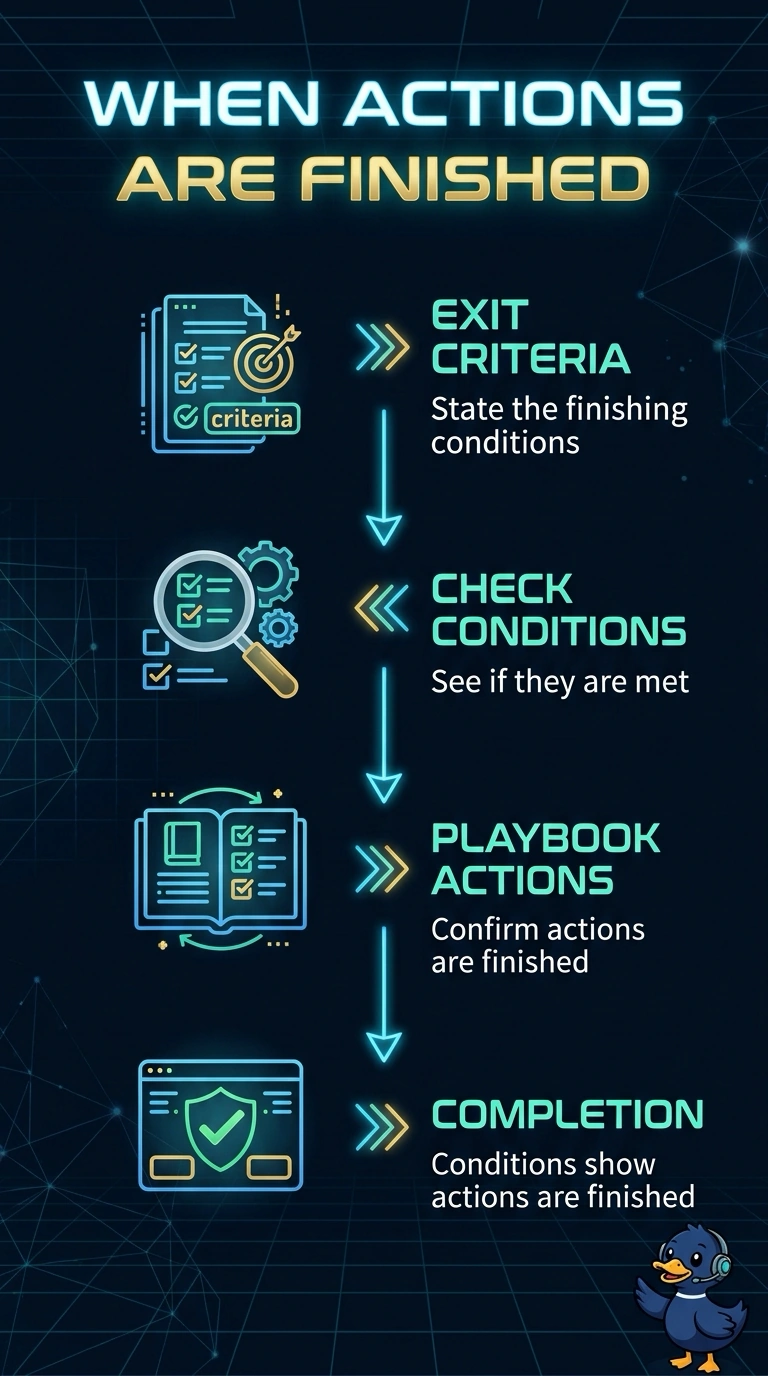
Exit criteria give you the finish line by stating when the playbook actions are complete. Without them, your team cannot tell when the work is done, so the incident may linger or be closed on a hunch; a shift change, written tool list, or tabletop-only rule does not establish that finish line.
Full Explanation
Exit criteria state the conditions that show the playbook actions are actually finished, so the team knows whether to keep executing the steps or close that playbook run. Without them, people may stop when they are tired or keep the incident open without a test for completion. The departure of the on-call analyst from the current response shift does not make exit criteria optional: a shift change is a handoff, not proof that the actions are done. A written trigger and tool list do not make a missing finish line acceptable, because a start condition and a list of tools still do not say when to stop. Exit criteria are not limited to tabletop exercises and cannot be skipped during a live incident; a live run is exactly when an unfinished playbook can lead to a premature close or an incident that remains open without end. Exam caveat: exit criteria are the playbook’s finish test, and they sit alongside the trigger and decision point rather than replacing them. Practical check: open the clinic playbook and highlight the sentence listing the conditions required before the incident commander declares that playbook complete.