
A Threat Grid report for a branch-office sample lists a callback domain in the network activity section. What enterprise data should an analyst search next?
Select an answer to reveal the explanation.
Short Explanation
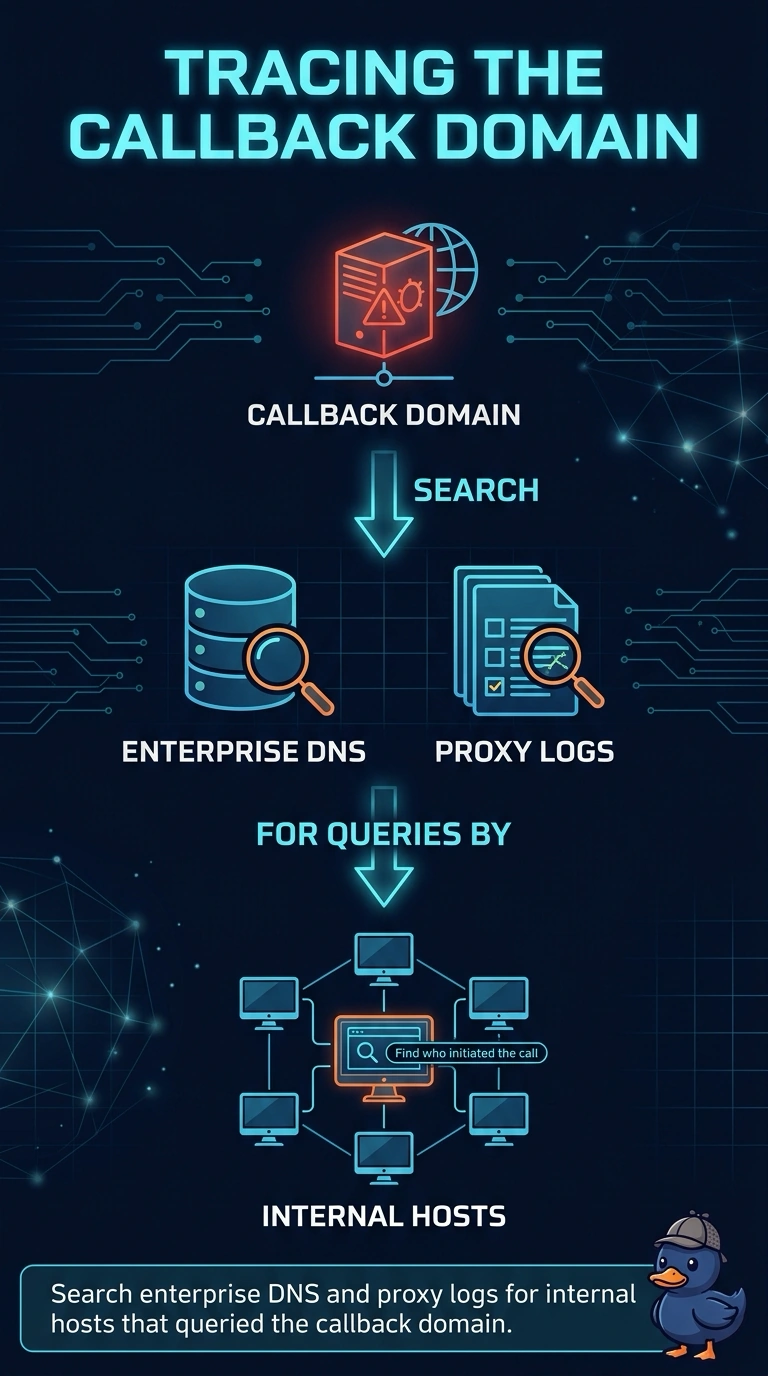
The sandbox is a firing range, not the branch office you defend. Take the callback domain from the report and search enterprise DNS and proxy logs for hosts that actually asked for it. Stopping at the score, or treating the sandbox capture as corporate traffic, leaves the real network unchecked.
Full Explanation
Network activity in a Threat Grid report describes what the sample did inside the sandbox, including a callback domain it contacted there. Sandbox traffic is not enterprise traffic. The next search is enterprise DNS and proxy logs for internal hosts that queried that callback domain, which shows whether enterprise clients queried the domain; inspect response codes and follow-on connections to distinguish a query from successful resolution or communication. To treat the sandbox packet capture as traffic that already crossed the corporate network confuses the detonation with the office. To compare only the numeric threat score with last quarter and skip any enterprise log search treats a summary of sandbox behavior as a substitute for a sighting. To close the case from the sandbox disk alone, because no second sample is attached, ignores the domain indicator the report already produced. Exam caveat: the threat score summarizes behavioral indicators and does not replace them, and it is not a cutoff you can use to skip the search. Operational check: query DNS logs for the exact domain, list the internal clients and timestamps, and keep sandbox resolvers out of that host list.