
A software company's incident playbook sends every alert through the same war-room roster, bridge call, and executive briefing. Why do severity criteria belong in that playbook?
Select an answer to reveal the explanation.
Short Explanation
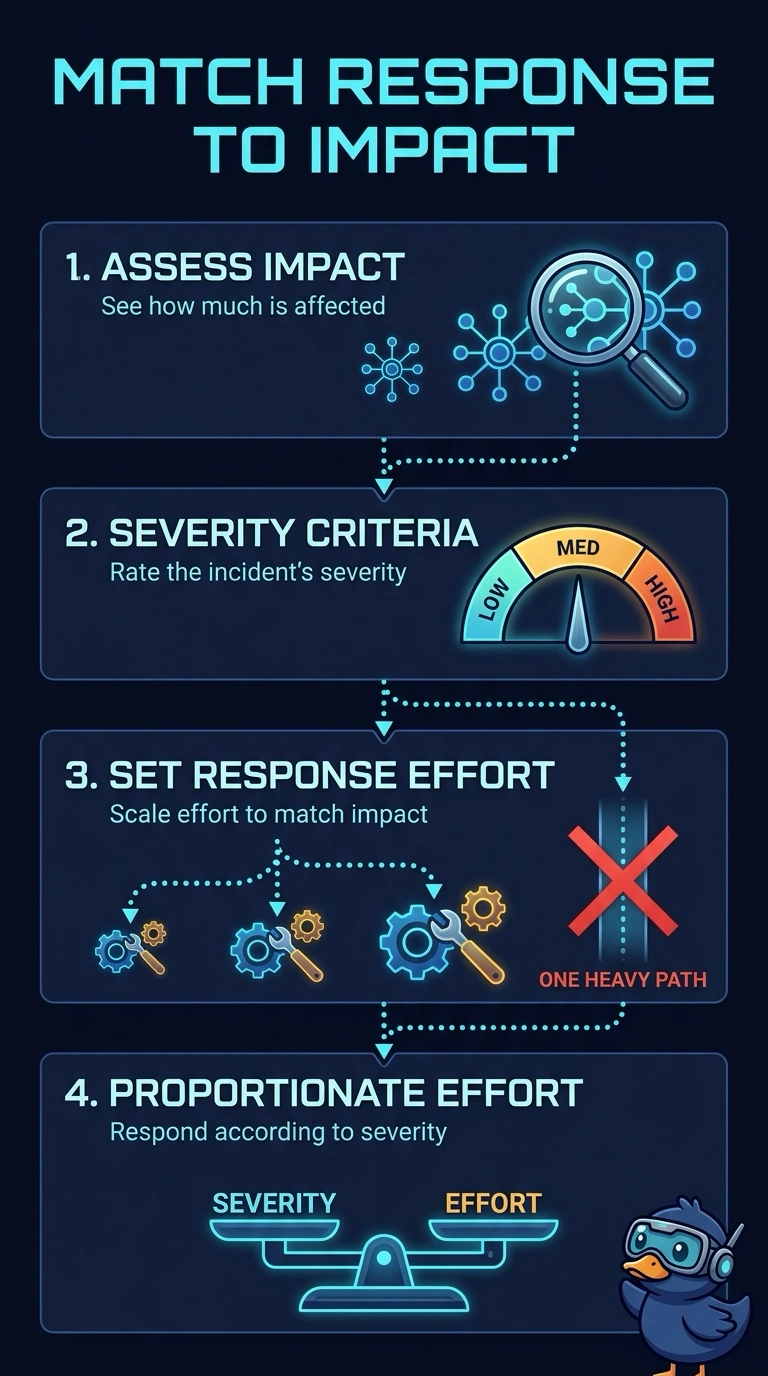
You wouldn’t call a full fire drill for a smoking toaster, and severity criteria help you avoid that kind of overreaction. They match response effort to impact, so a minor alert does not automatically get the same war room, bridge call, and executive briefing as a major incident.
Full Explanation
Severity criteria let response effort match impact instead of forcing every alert down one heavy path. A low-impact alert still gets the steps the playbook names for that level, while a high-impact alert gets the war room, bridge call, and executive briefing. Severity criteria do not let legal staff rewrite the technical timeline after the case closes; legal review can happen later, but rewriting the timeline is not the purpose of severity criteria. They also do not let analysts skip evidence collection whenever an alert looks minor: a smaller case still preserves its evidence, even if it does not page the whole roster. Nor do severity criteria let executives approve every containment action well in advance; approval rules may exist alongside the playbook, but severity scales response work rather than pre-clearing each action. Exam caveat: choose severity from defined facts, such as data sensitivity and spread, not from how loudly the first caller reports the alert. Practical check: read the playbook’s severity table and confirm each level names who is called and which steps are required before anyone opens a bridge.