
No incident is open, and the team is writing a response playbook and tuning which logs are retained. Which response goal does that preparation serve?
Select an answer to reveal the explanation.
Short Explanation
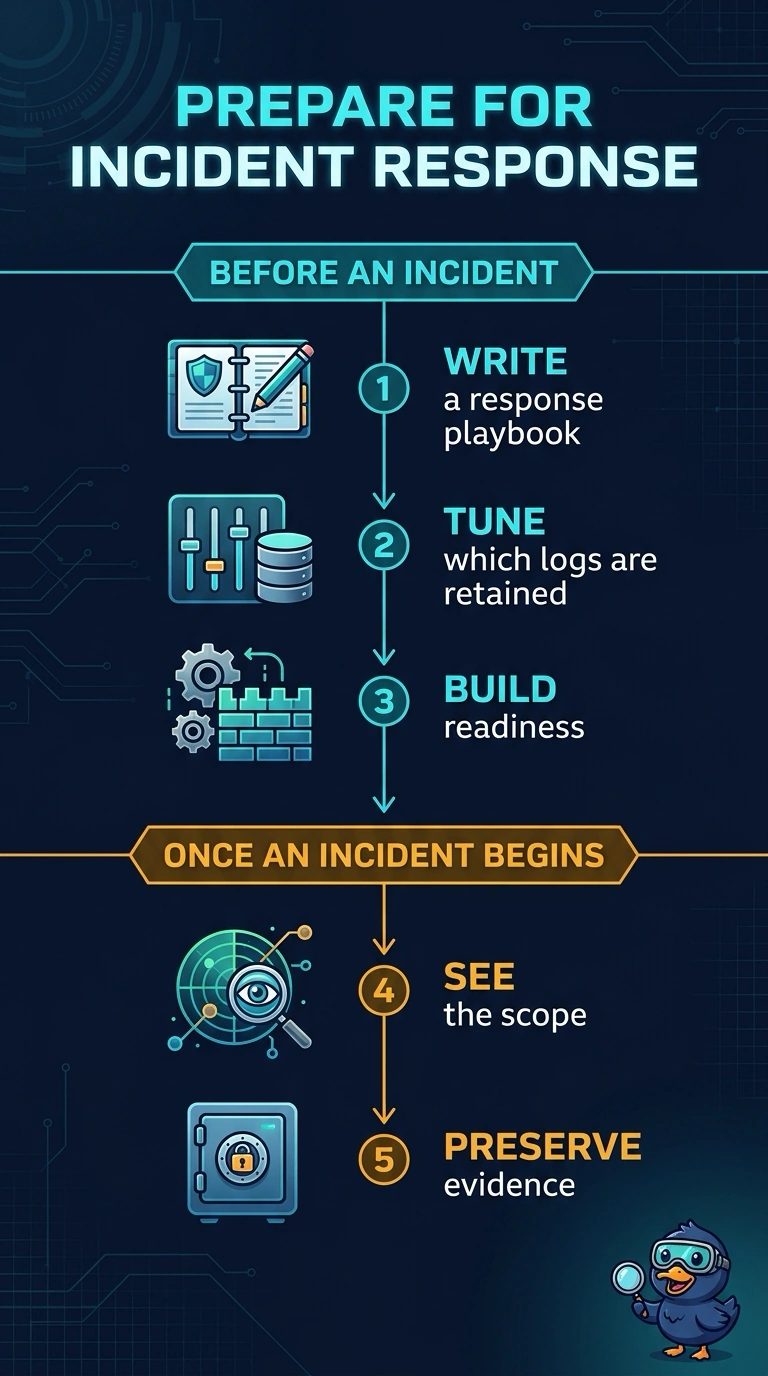
You’re stocking the ambulance and writing the route card so you’re ready before anyone is hurt. The playbook and log tuning build readiness to see scope and preserve evidence when a real incident begins—not to eradicate an absent attacker, restore a server, or assign blame while no incident is open.
Full Explanation
Writing a playbook and deciding which logs to retain while no incident is open is preparation. It builds readiness to see scope and preserve evidence once a real incident begins, because responders will know what to collect and the records will still be available. Eradicating an attacker who is not present on any system has no subject: there is no intrusion to remove. Immediately returning a production server to a trusted image is a recovery action for a named compromised host, and none is before the team. Assigning personal blame for the last outage before any control change is documented is not a response goal; improvement means changing a control, not naming a culprit. Exam caveat: preparation can make later containment faster, but drafting this playbook is not itself containment of a live incident. Practical check: confirm the playbook explains how scope will be determined and which logs are retained, and that the drafting session is not being used to close an incident that was never opened.