
A nonprofit playbook tells the on-call analyst to email raw indicators to the entire staff in the first minutes of an alert. What should the communications section constrain?
Select an answer to reveal the explanation.
Short Explanation
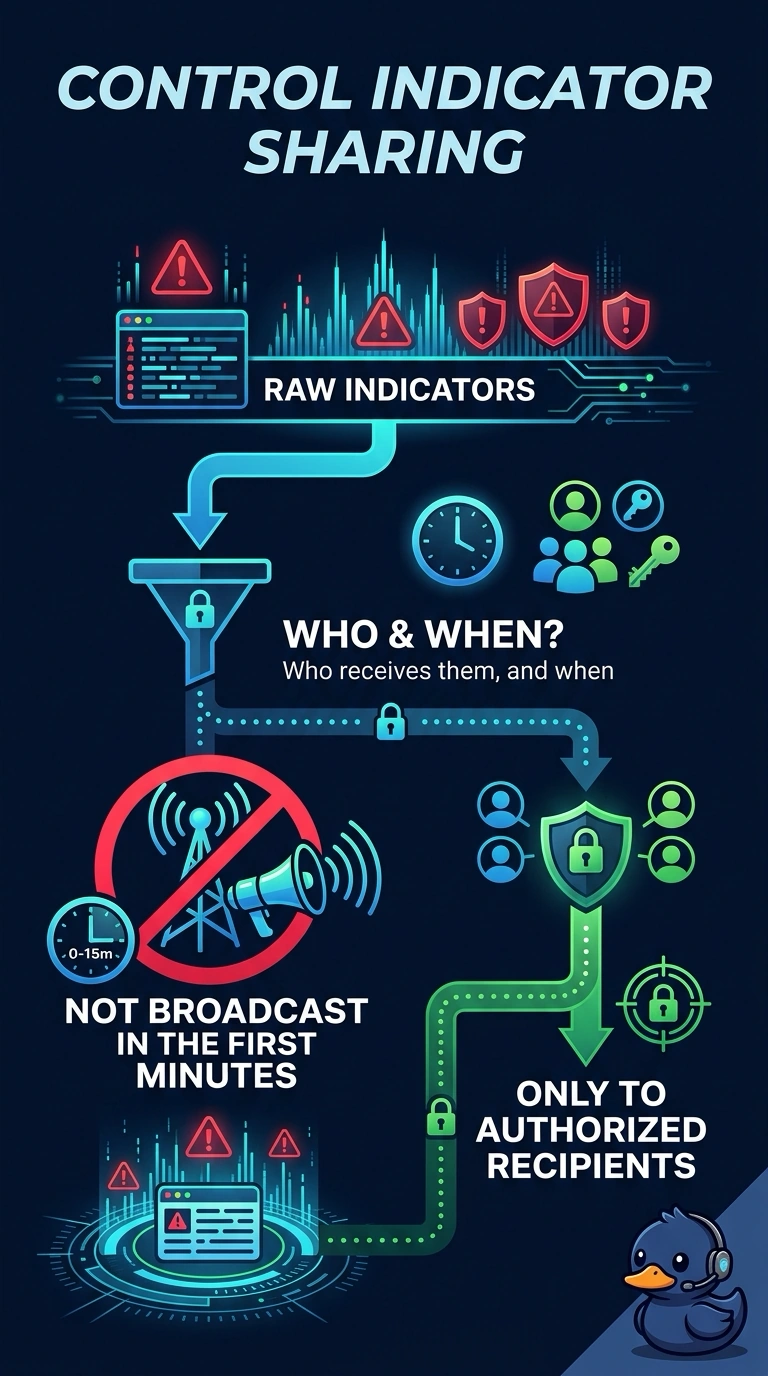
Shouting every clue across the whole company lets the person in the room hear you coming. The communications section should limit who gets raw indicators, and when, so those details are not blasted out in the first minutes. Imager picks and hash names belong in other parts of the playbook.
Full Explanation
The communications section decides audience, timing, and how much detail goes out. It should constrain who receives raw indicators and when, so those details are not broadcast in the first minutes to the entire staff. A company-wide mail of raw indicators can tip off an insider, spread unvalidated indicators, and pull in people who do not need them. The disk imager the night shift must run against every laptop is a tooling choice for collection, not a communications constraint. The hash algorithm name that analysts type into the evidence spreadsheet header belongs in evidence handling. The sandbox product that writes the malware report attached to the tracking ticket is an analysis tool, not the rule for who is told what. Exam caveat: some roles, such as the incident lead and affected system owners, do need indicators early; the constraint is need-to-know and timing, not silence. Operational check: read the communications section and confirm it names the first audience, what they receive, and what must wait until the indicator is confirmed.