
A clinic's ransomware after-action memo names the night-shift analyst who missed the first alert and proposes no change to backup, remote access, or monitoring. What does the improvement goal require instead?
Select an answer to reveal the explanation.
Short Explanation
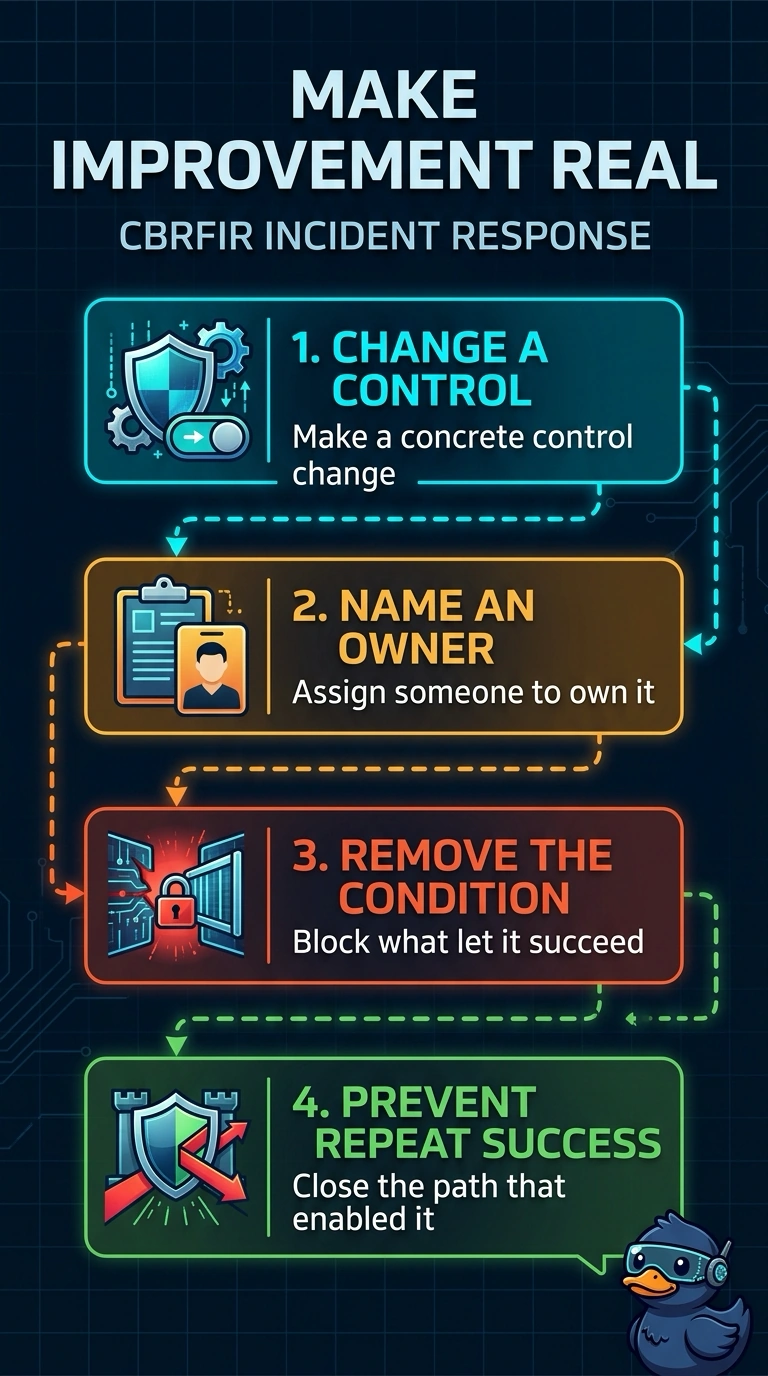
A repair ticket names the broken latch, not the guard who walked past the door. You close an incident by changing the condition that let the ransomware work, and you name someone to make that change stick. The trap is treating a reprimand as if it were a fix.
Full Explanation
The improvement goal is a durable control change that removes the condition the attacker used, with an owner who will carry it out and a later check that it landed. Backup coverage, remote-access hardening, and monitoring that would have seen the encryption are the kinds of conditions that belong in that change. A personnel entry and a formal reprimand for the analyst who missed the alert can be a management matter, yet they leave the same gap open on the next shift. A department posting that the night shift failed to notice encryption before the share was locked spreads blame and does not alter backup, access, or detection. Closure of the incident once leaders agree on the person who should have caught the alert ends the paperwork while the original condition remains. Exam caveat: a human mistake can sit in the narrative, but the improvement goal is still the control, not the reprimand. Operational check: open the after-action tracker and confirm each item names a control, an owner, and a way to verify it, rather than only a person's name.