
During a live school-district intrusion, an engineer wants to post the attacker address on a public blog so outsiders can help. Which communication goal does that post violate?
Select an answer to reveal the explanation.
Short Explanation
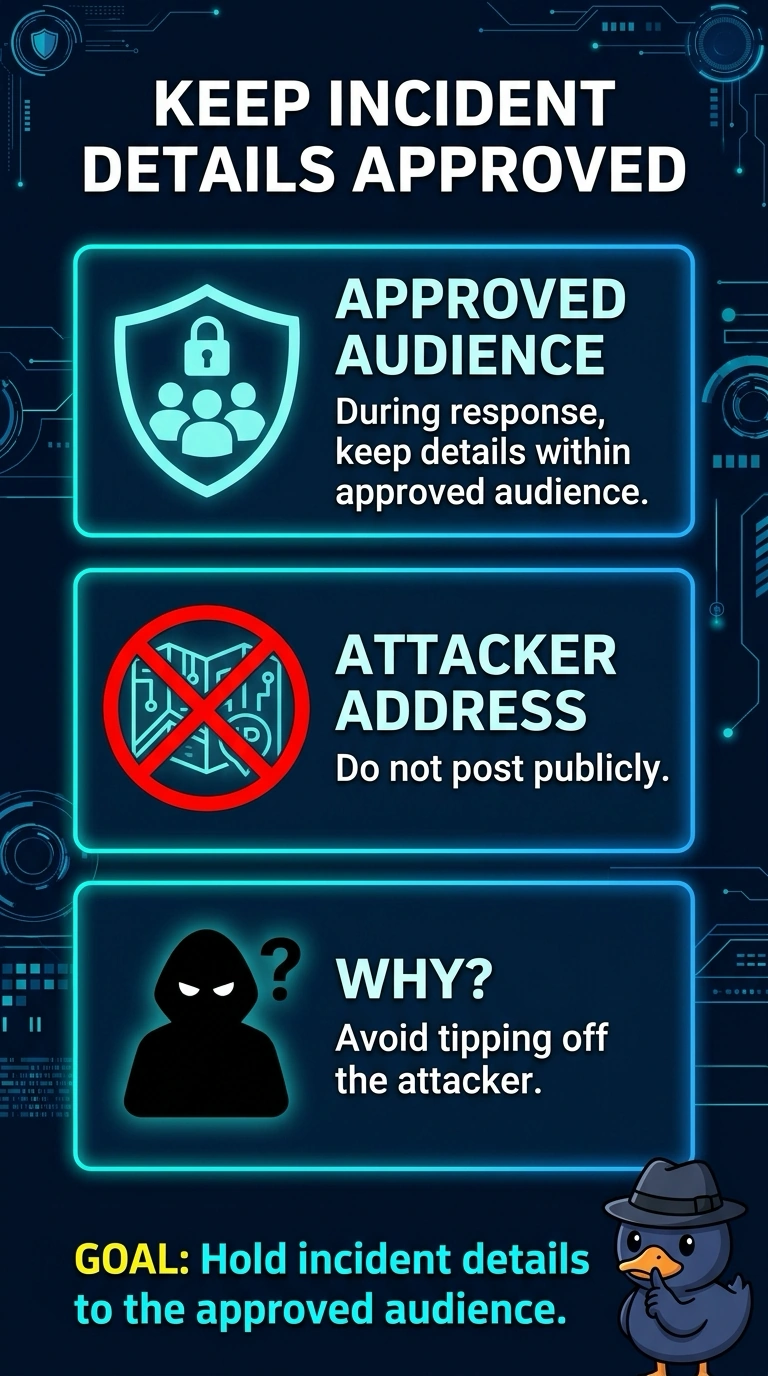
A megaphone on the sidewalk tells the person you are chasing exactly where you are looking. You hold incident detail to the approved audience so the response does not tip off the attacker. Public help is not the communication goal you are protecting.
Full Explanation
Incident communications exist to inform the people the plan names, at the time the plan allows, without handing the attacker a progress report. Posting the address on a public blog violates the goal of holding incident detail to the approved audience so the response does not tip off the attacker. Getting every indicator onto the public internet so outsiders can attribute the intrusion is the impulse behind the post, not a goal the post breaks. Making a public blog the evidence locker so chain of custody lives in the comment thread abandons custody rather than defining the audience. Letting anyone download packet captures from the post and replay the attack on their own widens the leak and is not a response goal at all. Name the approved audience out loud, and keep the attacker address off any page that audience does not include. Exam caveat: a vetted indicator can be shared later through an approved channel, which is different from a live public post. Operational check: read the communications section, confirm the blog is outside the named audience, and keep the address on the incident bridge instead.