
A teammate wants to wipe a compromised host before anyone lists the other systems that communicated with it. Which analysis goal does that wipe skip?
Select an answer to reveal the explanation.
Short Explanation
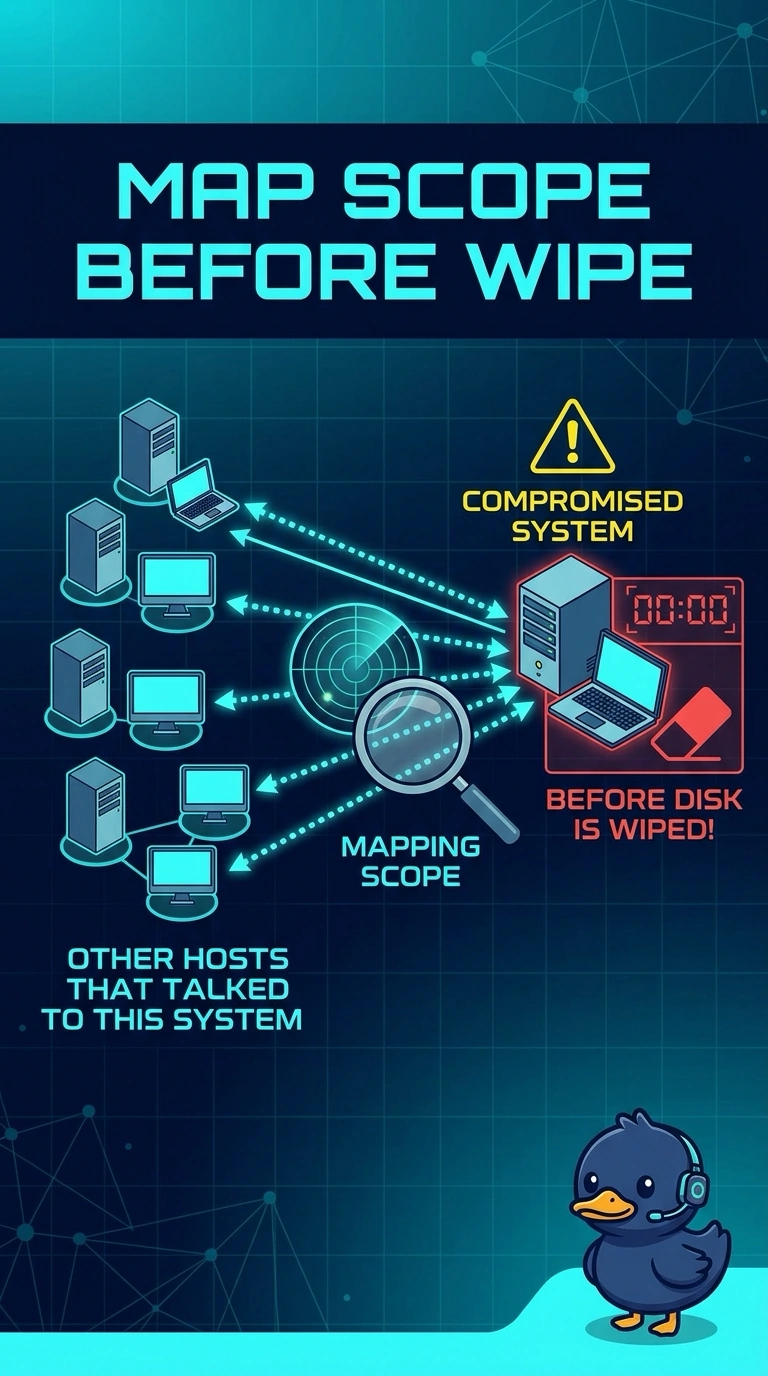
Burning the visitor book before you copy the names loses who else came to the door. Wiping this host before anyone lists the systems that talked to it skips the scope goal. Eradication, a later restore, and a future control change can still happen; the peer map is what this rush throws away.
Full Explanation
Seeing scope means knowing which other systems were involved, not only cleaning the one host in front of you. Mapping scope by listing the other hosts that talked to this system before its disk is wiped is exactly the goal this proposal skips, especially if host-only artifacts are destroyed with the disk. Eradication of the malware on this single host, the outcome the wipe itself is meant to finish, is what the wipe attempts, so it is not the skipped goal. A later restore of this host from a clean image, a step that can still follow once the disk is gone, remains available after the wipe. A post-incident change to the control that failed, work that remains available after the host is wiped and returned to service, is a lessons-learned action and is not what this wipe prevents. Exam caveat: if harm is still spreading, containment can outrank a perfect image, but the peer list should still be taken from firewall or flow records so scope is not lost with the disk. Operational check: list communicating hosts from firewall logs or NetFlow before the disk is erased, and keep that list with the case.