
At a factory, the incident commander says to image the disk before anyone captures memory, and the suspected host is still powered on. Which sequence matches the volatility of the evidence?
Select an answer to reveal the explanation.
Short Explanation
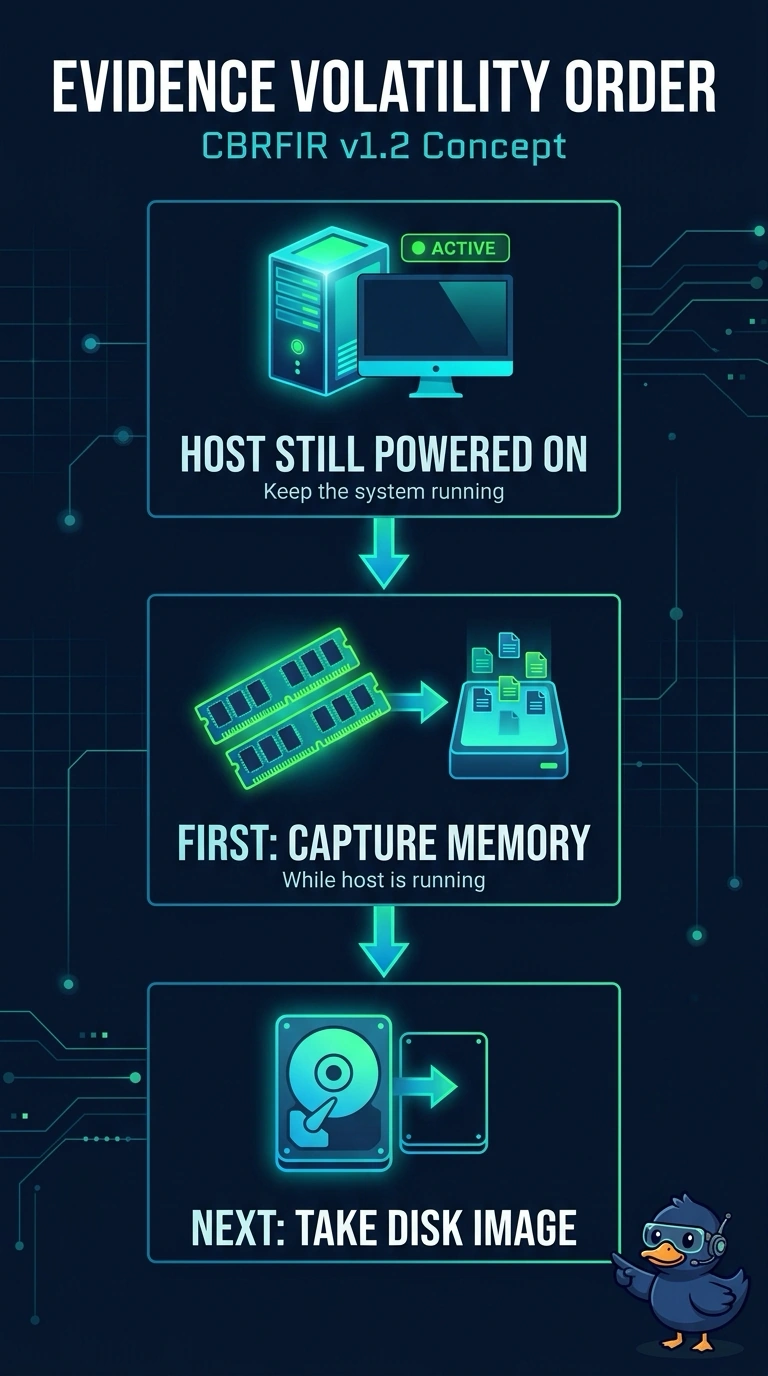
Smoke leaves a room before the furniture does, and you photograph the smoke first if you still want it. On a host that is still up, memory is the more volatile evidence, so you capture memory and then image the disk. Powering off first, or skipping memory on the theory a disk image feels complete, throws away the evidence that disappears.
Full Explanation
Memory changes constantly and disappears if the host powers off, so the volatility order while this factory host is still running is to capture memory first and then take the disk image. A disk image is durable by comparison and can wait the extra minutes. To image the disk first so the later memory capture cannot change stored files names a real contamination worry, but it inverts the order and leaves the fragile evidence for last. If you power the host off to freeze the disk, then attempt a memory capture, you remove the memory you meant to save. If you skip memory collection on the theory the disk image holds live process state, you confuse files on disk with RAM contents the disk image does not contain. Write down the tool name so the small footprint of that memory capture is explained in the notes. Exam caveat: a live memory tool has a footprint, so record the tool and the time, and do not delay containment when harm is ongoing just to preserve a perfect order. Operational check: confirm a memory image exists from while the host was running, and that the disk image was taken after that capture.