
Encryption is spreading across a hospital file share while imaging of the source server is still running. Which incident-response goal justifies isolating that share before the image is finished?
Select an answer to reveal the explanation.
Short Explanation
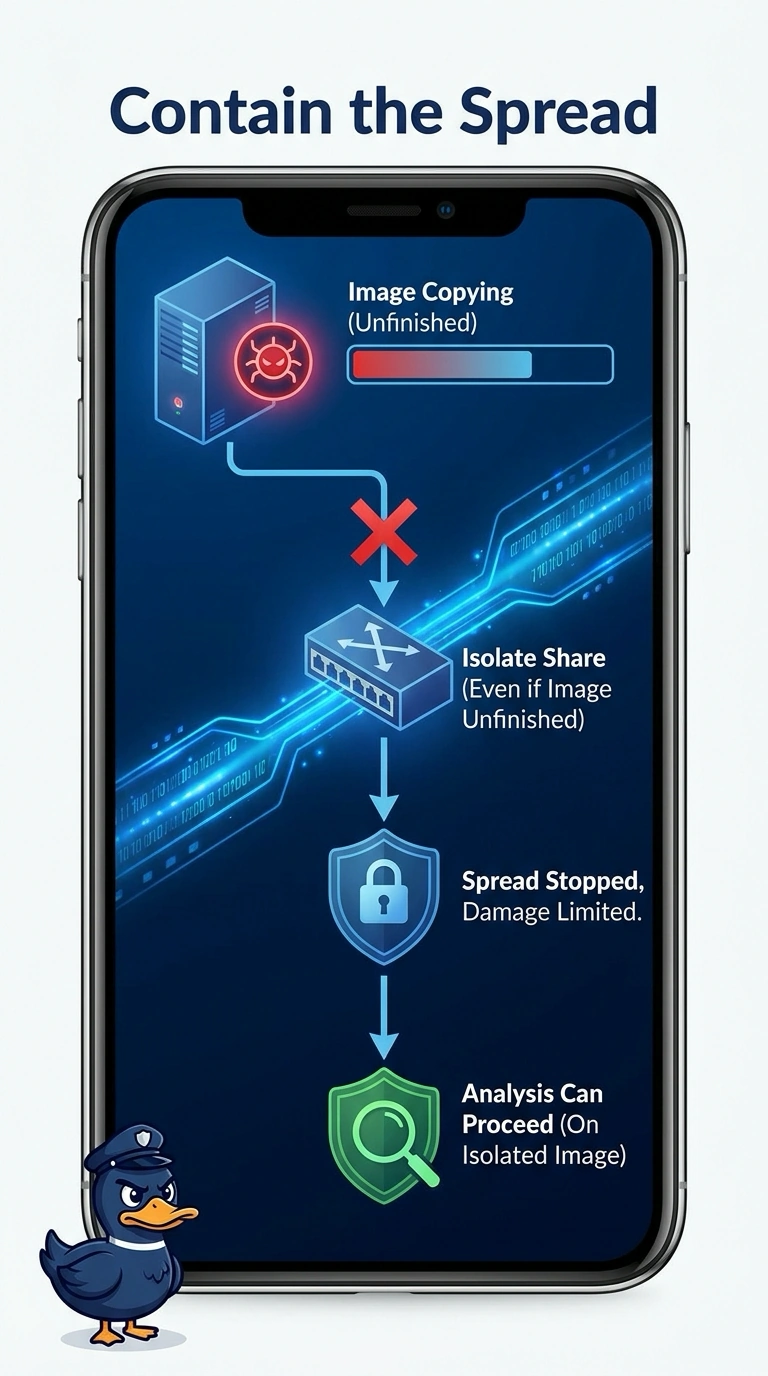
When water is still pouring across the floor, you shut the valve before you finish photographing the puddle. Isolating the share limits ongoing damage while encryption is spreading, even though the image is unfinished. Waiting for a perfect copy, a final write-up, or a backup purge does not stop the files being lost right now.
Full Explanation
Incident response puts a limit on ongoing damage ahead of a perfect forensic image when harm is still spreading. Isolating the hospital share contains the encryption in progress; the unfinished image can continue for hosts already stable, and it does not justify leaving the share open. The goal in front of you is to limit ongoing damage by isolating the share even while a perfect image is still unfinished. Choosing to finish a complete image of every volume before any file share is taken offline for containment delays the block for the sake of a cleaner copy. Publishing a final root-cause statement for leadership before changing any access path on the share puts the report ahead of the files still being encrypted. Deleting every backup set so a later restore cannot bring the encrypting program back online destroys recovery material; backups are how a trusted state is restored after the spread stops, and they are not the containment step. Exam caveat: containment can outrank a finished image while damage is ongoing, and evidence already captured should still be kept. Operational check: confirm the share or the encrypting identity is blocked, and record the partial image so that evidence is not discarded.