
For a week a response team imaged every server while an active web shell kept answering requests. Which incident-response goal did that approach miss?
Select an answer to reveal the explanation.
Short Explanation
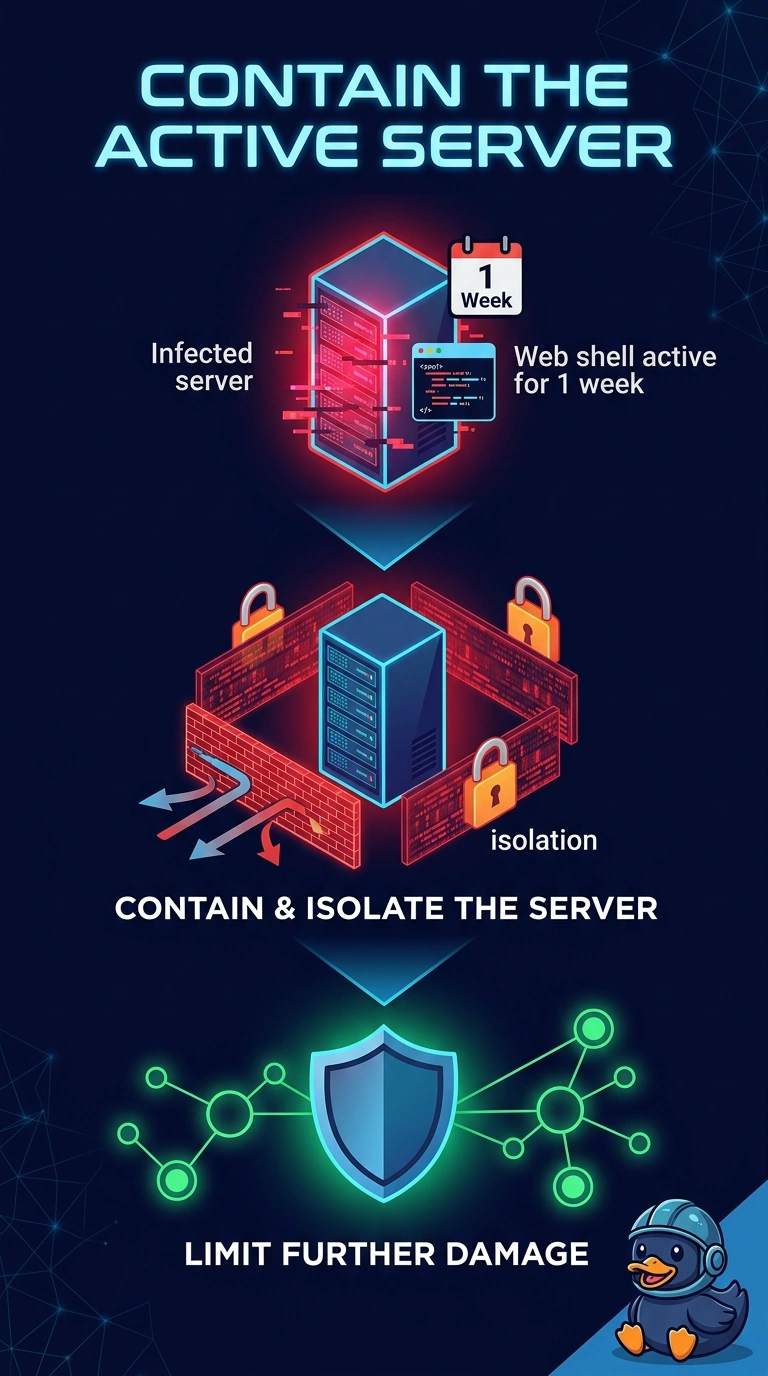
Photographing every room while the faucet still runs records the flood and does not stop it. You missed limiting further damage, because the web shell kept answering the whole week the team spent imaging. Saved disks, scope notes, and a prosecution question do not close a shell that is still live.
Full Explanation
The missed goal is containment. Limiting further damage means containing the server that was still answering as the web shell, so that foothold stops serving requests while other work continues. A week of images preserved disks and widened the evidence pile, but the shell kept answering the entire time. Leaving that shell online trades tidy images for continued attacker access on the server. Preserving disk evidence was already accomplished by the week of full-disk imaging on these servers, so preservation is not what this approach missed. Documenting scope was already attempted by gathering a forensic image from every host in the estate; more scope paperwork was not the hole. Choosing a prosecution path is a decision that belongs with counsel and is not the gap during this week; the gap is a live shell, not a charging choice. Exam caveat: images still matter for the record, and they do not substitute for stopping an active foothold. Using an authorized verification method, confirm the former attacker access path can no longer reach the web shell and that containment controls are enforced. A response visible only from an isolated analysis segment does not by itself mean containment failed.