
An analyst asks a major cloud provider for a hypervisor-level image of the host that runs one compromised guest. What can the customer actually collect instead?
Select an answer to reveal the explanation.
Short Explanation
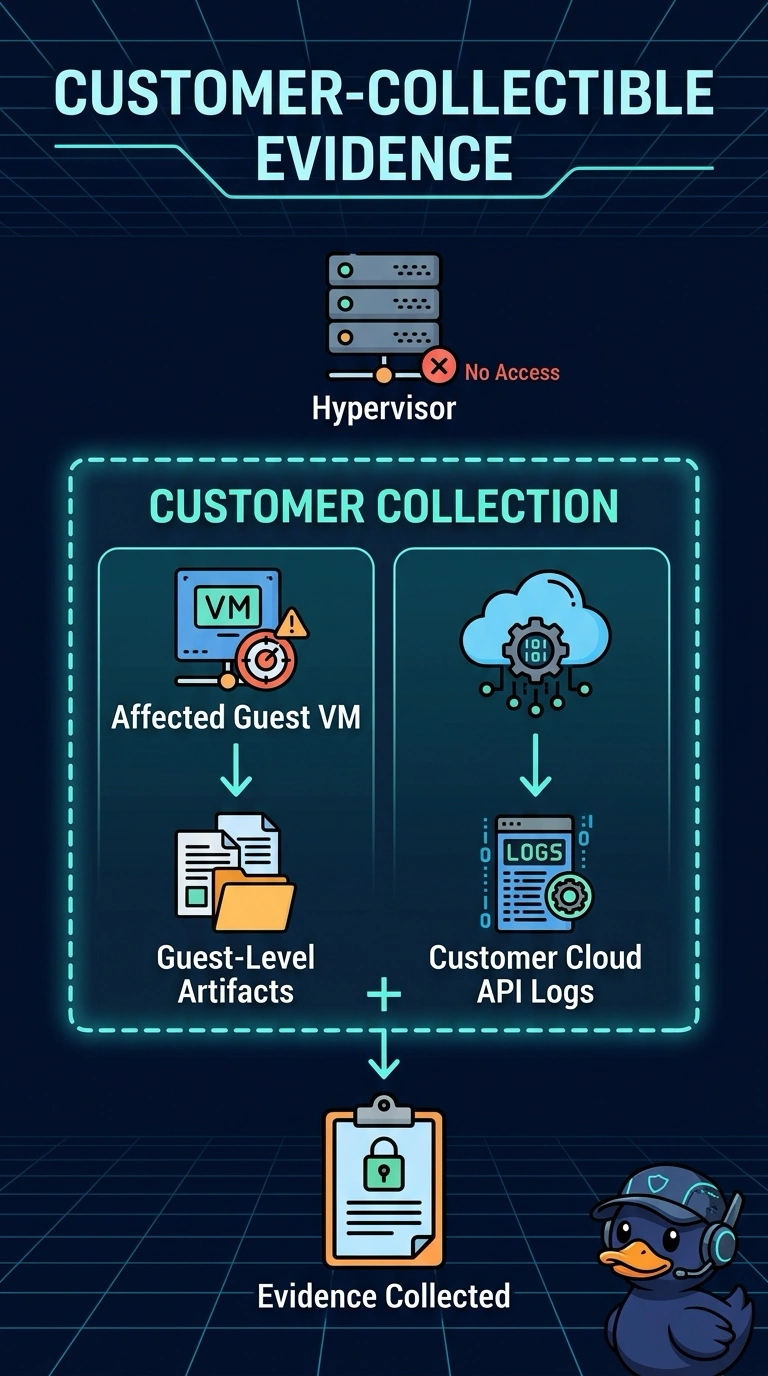
Renting one apartment does not entitle you to a photograph of the whole building foundation. The customer can collect guest-level artifacts and the cloud API logs the account is allowed to pull, not an image of the provider hypervisor. Neighboring tenants' disks and the provider host memory are not customer evidence to download.
Full Explanation
The customer does not get to image the provider hypervisor that currently runs the guest machine; that platform sits under the guest and is not a customer-exportable image. What you can collect instead is guest-level artifacts and the customer cloud logs the account is allowed to pull. Disk copies of neighboring tenants that share the same physical cloud host are not yours to take, and a multi-tenant platform is built to prevent that. Provider host memory downloaded through the guest serial console is not a real customer collection path; the serial console is not a pipe to hypervisor memory. Guest files, an in-guest capture, and account audit logs are the practical substitutes for the hypervisor image you cannot take. Exam caveat: a support conversation with the provider is not the same thing as a self-service hypervisor image, and you should not plan the case as if that image will appear in the account. Operational check: list the artifacts in hand and confirm each one is a guest disk, a capture taken inside the guest, or an account API log, with no hypervisor image in the set.