
Hospital leadership asks the SOC to decide whether this ransomware case will be prosecuted. Which boundary keeps the team on response goals rather than giving legal advice?
Select an answer to reveal the explanation.
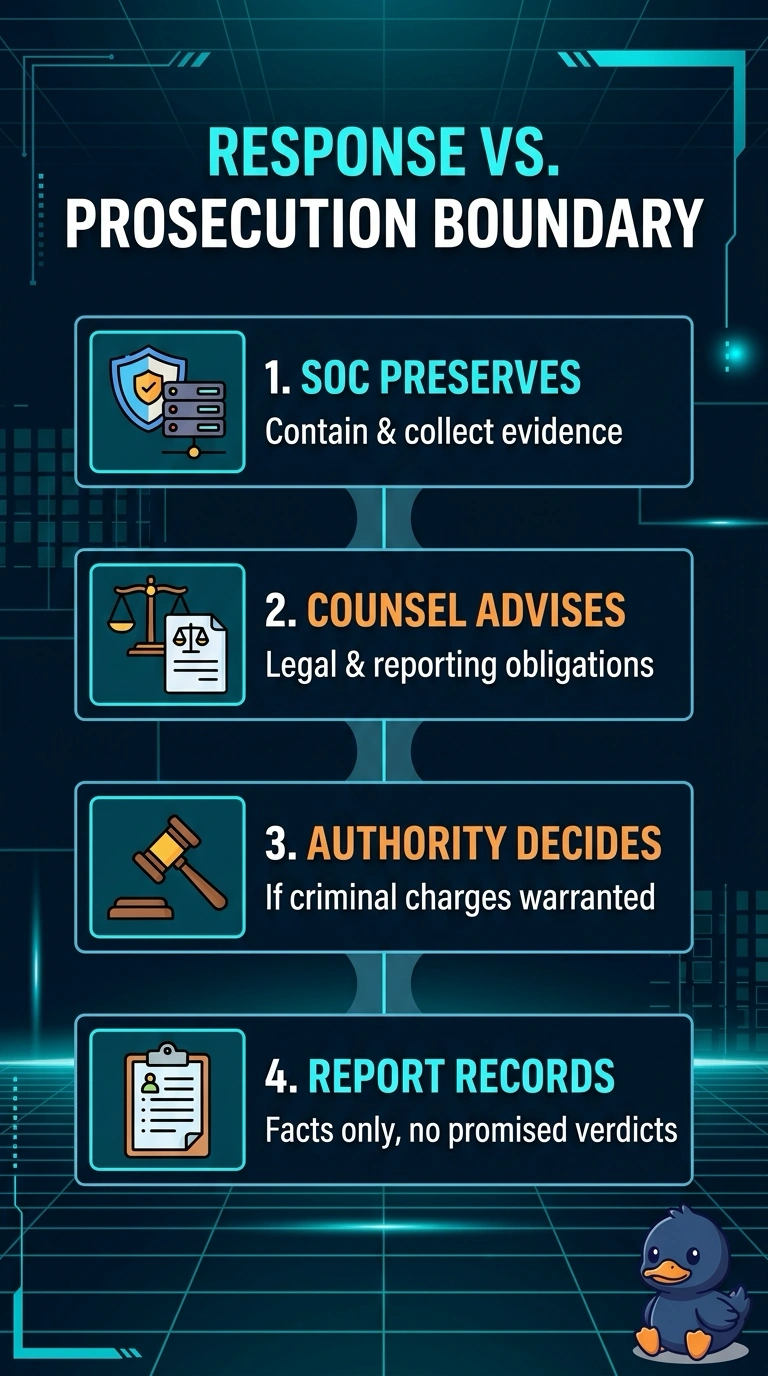
Short Explanation
You stay in your lane like the paramedic who stabilizes, not sentences. You preserve evidence and brief counsel because counsel advises on reporting and legal obligations, while competent prosecuting authorities decide whether to bring criminal charges.
Full Explanation
Response goals are to see scope, limit damage, keep evidence, return to a trusted state, and change the failed control. Preserve evidence and brief counsel is the boundary because counsel advises on reporting and legal obligations, while competent prosecuting authorities decide whether to bring criminal charges. You describe what was preserved and who was notified without recommending charges. Having the SOC issue the prosecution decision so the response work can be declared finished confuses finishing technical tasks with exercising prosecutorial discretion, which the SOC does not have. Stopping all imaging once leadership mentions court treats preservation as only a legal task and creates a gap exactly when integrity matters most for later review and referral. Putting a guilty-verdict timeline in the incident report promises an outcome no responder can know and turns documentation into a forecast. Document counsel as the legal-advice/referral contact and the SOC as responsible for response evidence; do not promise prosecution or a verdict.