
A container in an autoscaling group was replaced, and its writable layer is gone. Which evidence had to be shipped out before that replacement?
Select an answer to reveal the explanation.
Short Explanation
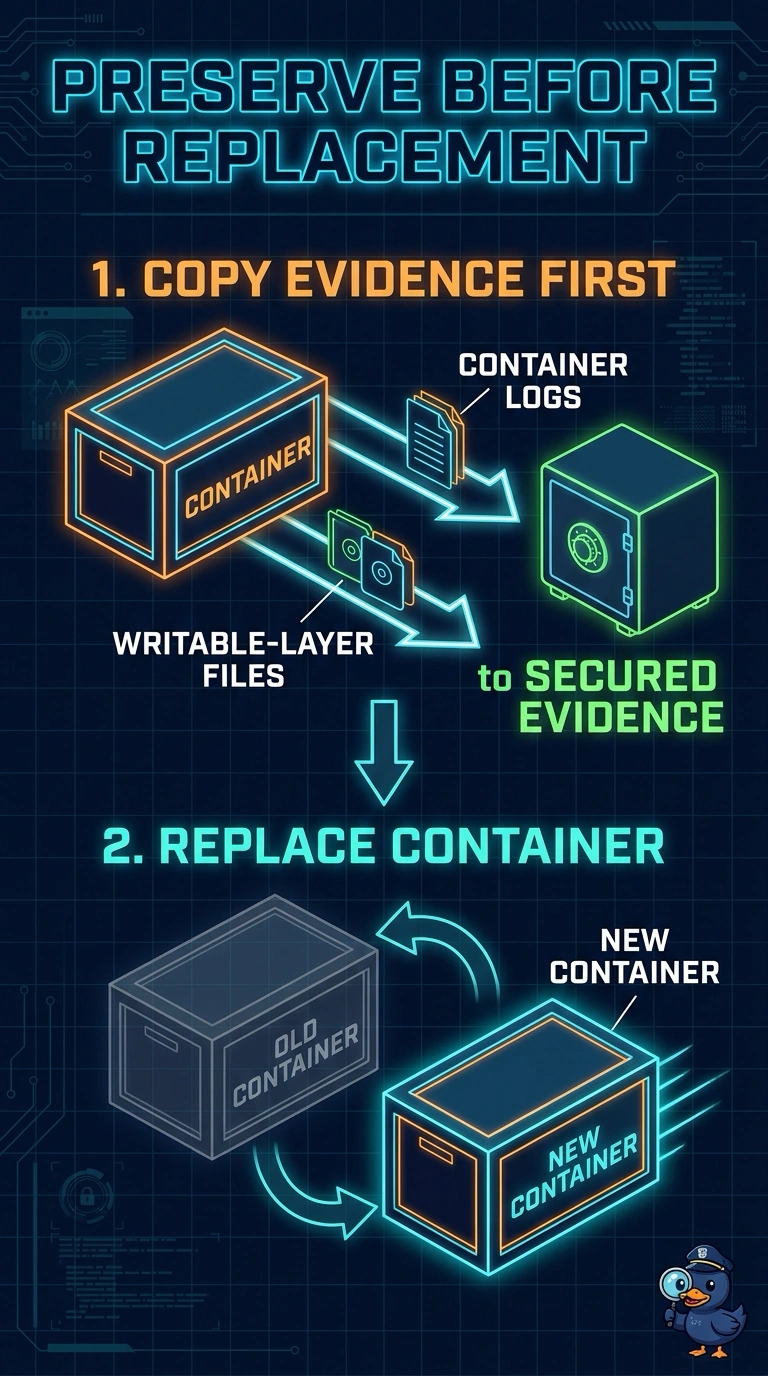
Think of the writable layer like notes you need to photograph before a room is reassigned. You had to copy the container’s logs and writable-layer files off before replacement, because that layer is ephemeral. The image registry, replacement container, and later provider hypervisor image do not bring the old layer back.
Full Explanation
Anything that lived only on the container had to leave before replacement destroyed it, so the logs and writable-layer files had to be copied off that container beforehand. The writable layer is ephemeral with the task; once the task is gone, you cannot reopen it. The image registry keeps the image you built, not each running container’s writable layer. The replacement container does not inherit the previous writable layer from the group; it starts from the image with a new layer. A later provider hypervisor image does not hold a copy of that container writable layer for you, and customers do not collect provider hypervisor images. Copy the logs and files out while the task still exists, because its replacement will not preserve them. Exam caveat: files on an attached persistent volume can survive replacement, but this case states that the writable layer is gone, so only what was copied out remains. Practical check: look for a log archive or file copy timestamped before task replacement, and confirm that the new task has its own writable layer without the old files.