
On a Linux jump host with no graphical desktop, an analyst needs a sample's binary type, section layout, and embedded strings without a long interactive session. Which radare2-family tool fits that quick look?
Select an answer to reveal the explanation.
Short Explanation
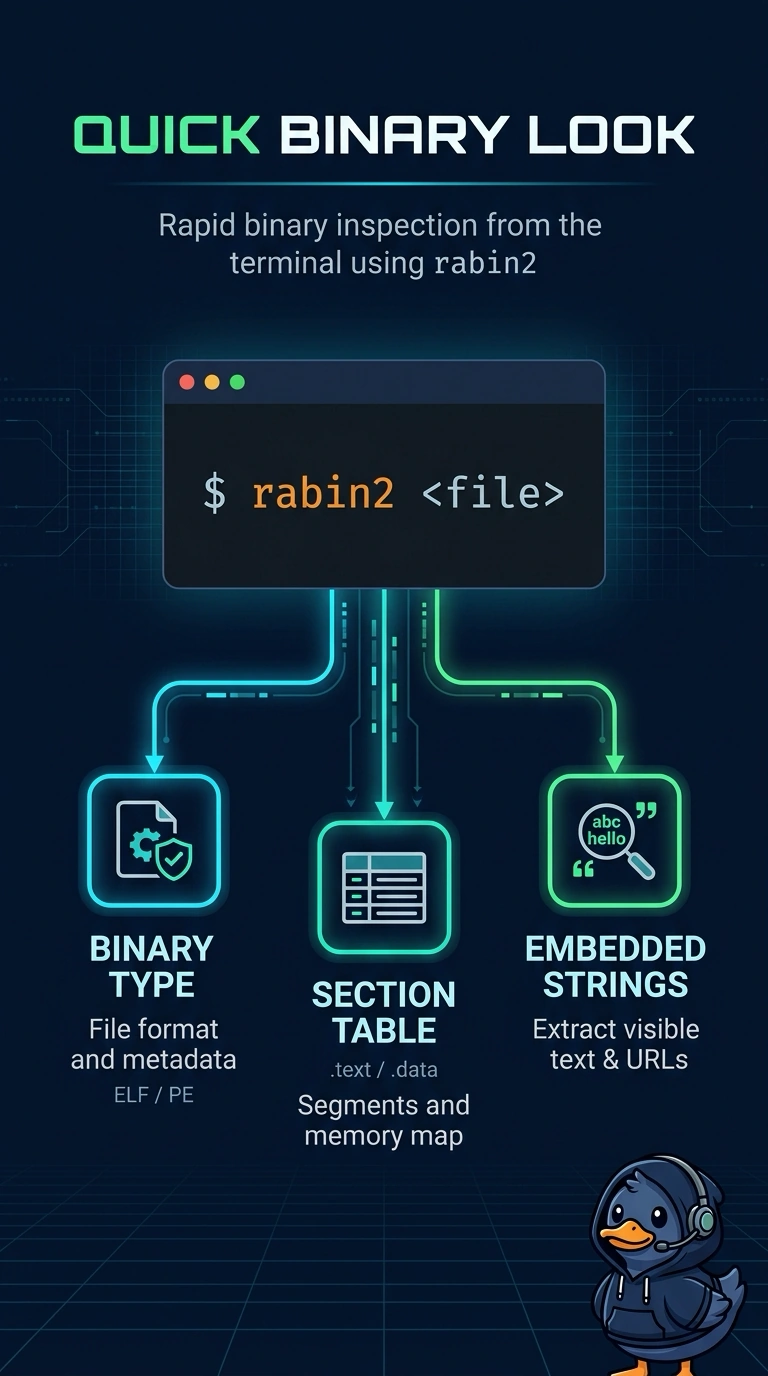
You can use rabin2 as the packing slip for a crate: it prints the binary type, sections, and embedded strings from the terminal, with no graphical session. A diff, a hash, or an assembler does different work, so this quick look stays simple.
Full Explanation
rabin2 is the radare2 companion built to print binary facts from the terminal: file type, the section table, and embedded strings, which is the quick look you need on this jump host. It does this without opening a long interactive disassembly session or requiring a graphical desktop. radiff2 compares the sample against another binary and reports byte-level differences, a useful later step when you already have a known-good twin, but not an inventory of type and layout. rahash2 computes digest values and stops once those hashes exist, so it does not describe sections or strings. rasm2 assembles a short instruction list into raw opcode bytes, which is the opposite direction from reading an unknown sample. Exam caveat: the full radare2 shell can show the same facts, but the dedicated non-interactive role for type, sections, and strings is rabin2. Practical check: run rabin2 against a copy of the sample on the jump host and confirm the output lists the binary type, section table, and embedded strings. Archive that text with the sample hash so a later build can be compared against the same type, section table, and string list.