
Audit policy on a community-college file server was set to no auditing moments before a large copy job. Which anti-forensic goal does that change serve?
Select an answer to reveal the explanation.
Short Explanation
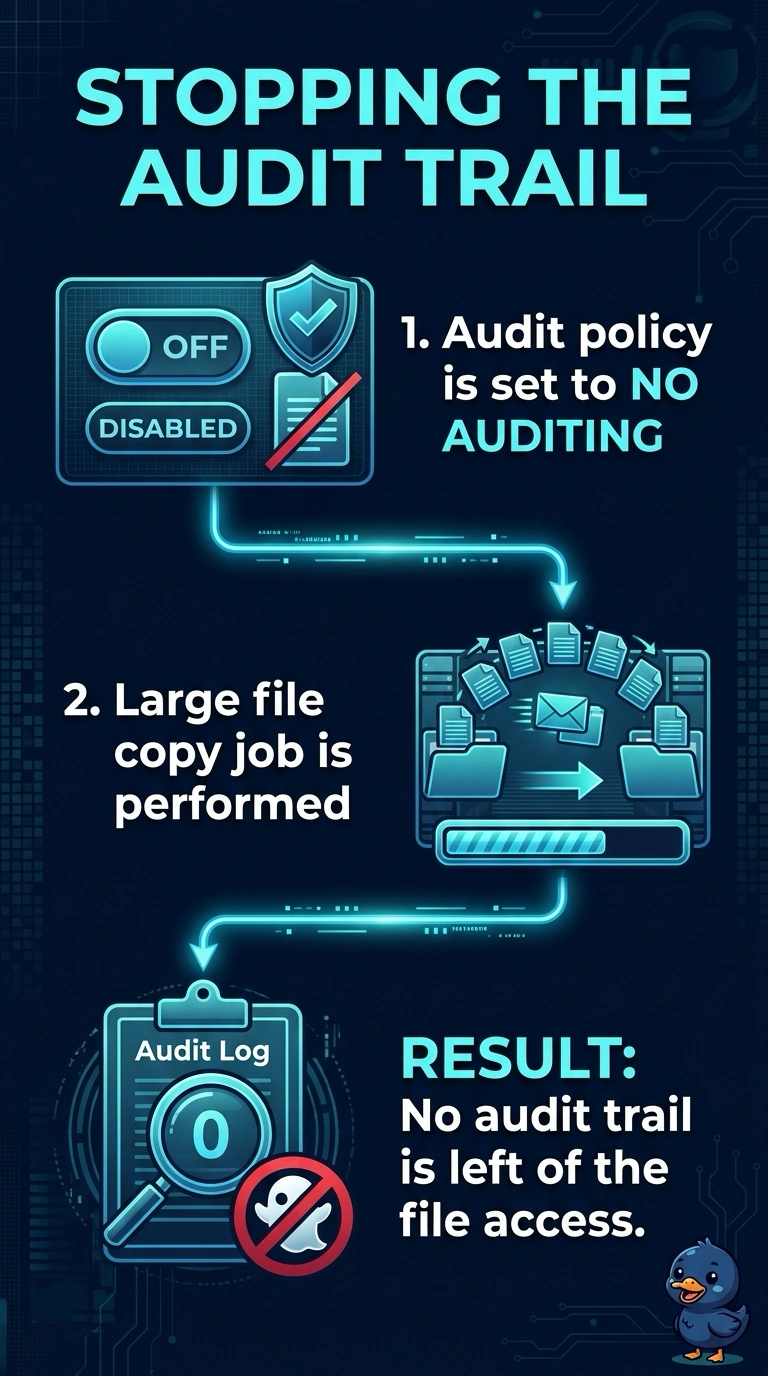
Switching auditing off and then copying the files is like unplugging the camera before you carry the boxes out. The goal is to leave no audit trail of the access. Backdating, packing, or encrypting the disk is a different trick.
Full Explanation
Setting the audit policy to no auditing just before a large copy turns off the record of who read or copied the files. The anti-forensic goal is stopping auditing so the copy job leaves no audit trail of the file access. Backdating the copied files so their timestamps match reports from the prior year would hide when the files were written, which is timestamp alteration, not a change to audit policy. Packing the copied files so antivirus cannot read the strings inside the documents hides content from a scanner and does not require the audit policy to change. Encrypting the server volume so responders cannot mount the disk and read the files is encryption of stored data, and the policy change described here does not encrypt anything. Exam caveat: an audit policy change can be legitimate during a maintenance window, so you compare the change time with the copy job and with who was allowed to edit audit policy. Operational check: review the security audit policy on the file server and the event that records the policy change, and line that time up with the start of the copy.