
A branch-office Linux sensor must record packets to a file for a later Wireshark review. Why does tcpdump writing to a capture file fit better than Volatility?
Select an answer to reveal the explanation.
Short Explanation
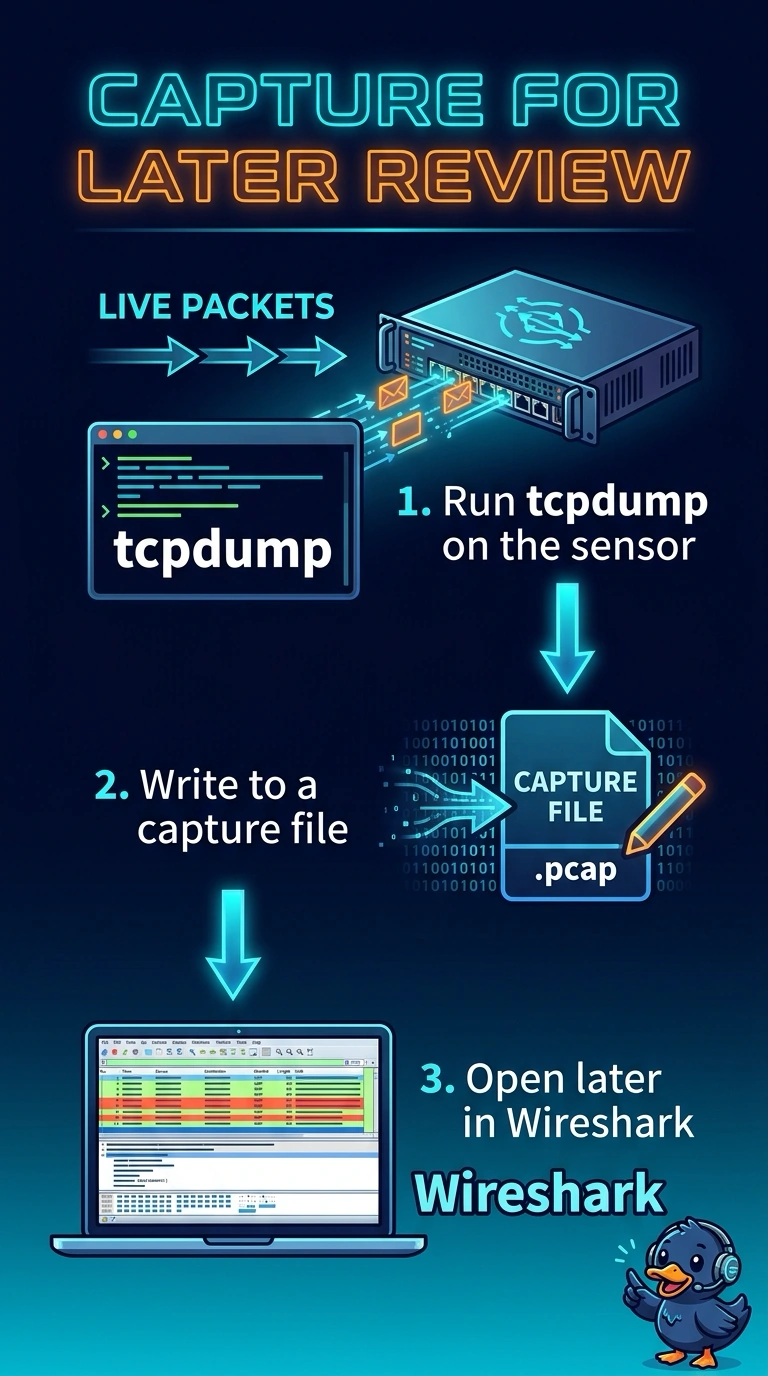
A tape recorder on the wire is how you keep the conversation, and an autopsy does not record a call that is still happening. tcpdump on the Linux sensor writes live packets to a capture file that Wireshark opens later. Volatility, strings on the interface, and Autoruns do not perform that packet-to-file job.
Full Explanation
Use tcpdump on the sensor to write live packets into a capture file Wireshark can open later, which is the job when the review happens after the packets have passed. The write goes to a capture file on disk, and you do not need a memory image when the work is recording packets from the wire. Wireshark display filters can hide rows in the view later without deleting packets from that file. Volatility is the wrong request if you ask it to write a capture file from the interface with no memory image, because Volatility analyzes a memory image and does not record a live interface. The strings utility does not save interface traffic as a Wireshark capture file; strings extracts text rather than recording packets. Autoruns on the sensor does not record packet payloads into a file for later review; Autoruns is a Windows autostart inventory, and this sensor is Linux. Exam caveat: the capture contains what crossed the sensor while tcpdump was writing, not traffic from before the command started. Operational check: confirm the capture file opens in Wireshark, shows packet timestamps from the sensor, and that no memory image was required to produce it.