
A city response team is offered either the SIFT workstation or a network flow collector. What is the SIFT workstation meant to provide?
Select an answer to reveal the explanation.
Short Explanation
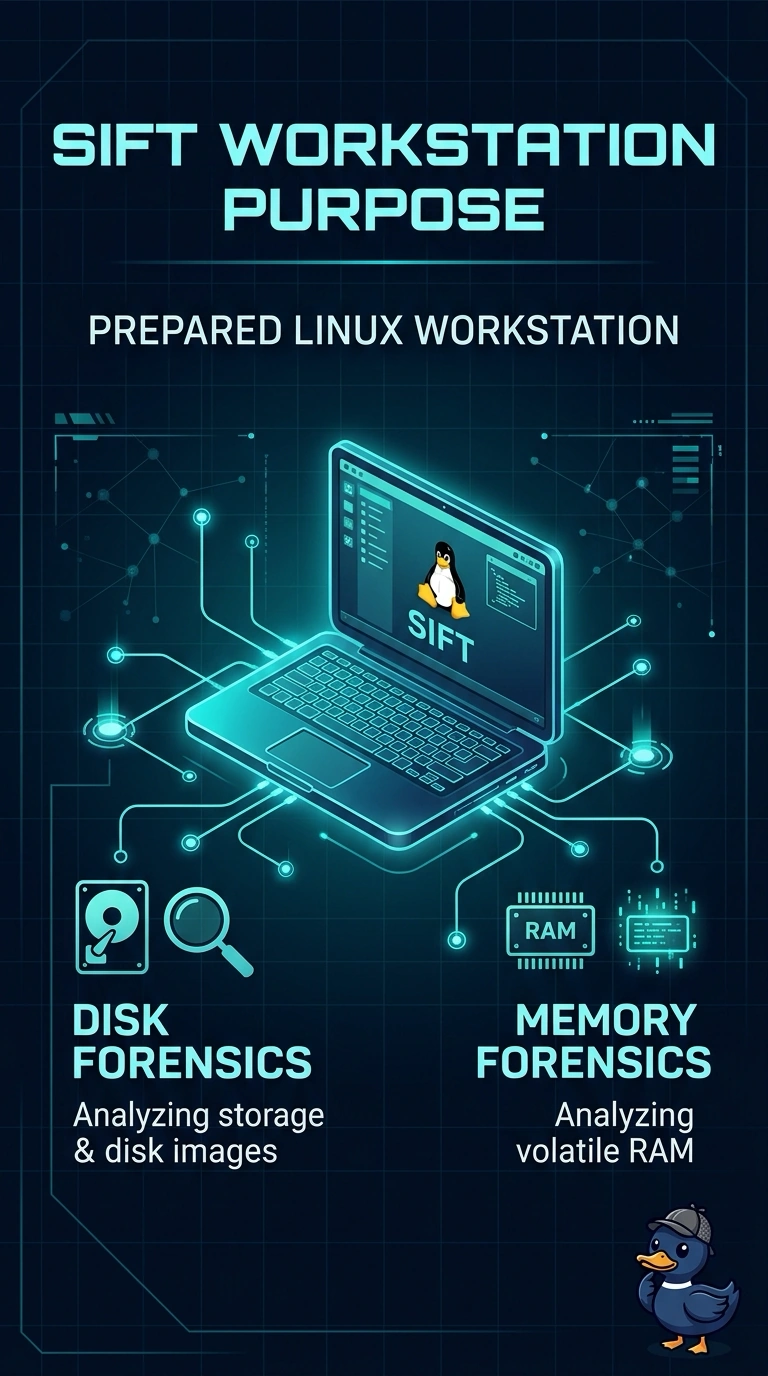
A stocked lab bench is not a turnstile counting cars on the highway, and you pick the bench when the work is disks and memory. The SIFT workstation is a prepared Linux system with forensic packages for that disk and memory work. A flow collector, a hypervisor imaging service, or a packet broker answers a network plumbing question instead.
Full Explanation
The SIFT workstation is meant to provide a prepared Linux workstation with packages for disk and memory forensics, so analysts can work images and some memory captures on a system that already has the tools. It is not the collector you place on the network to receive flows. It does not store exported flow records from routers so analysts can hunt pairs of talkers later; that is the flow collector in the offer. It does not image the provider hypervisor for every guest the customer account can see; customers do not take those hypervisor images. It does not balance mirrored packets from a switch out to a row of network sensors; that is a packet-broker job. Disk and memory work means images, timelines, and memory captures brought to the bench, not router exports arriving all day. Exam caveat: the workstation can open a capture you carry to it, and that still does not make it the system that collected enterprise flow records. Operational check: on the SIFT system, list the installed disk and memory forensic packages and confirm it is not configured as a collector receiving router flow exports.