
A Cisco Secure Endpoint export is stored as JSON lines, and each line includes a file SHA-256 field. What should a parsing script extract to build a file-indicator list?
Select an answer to reveal the explanation.
Short Explanation
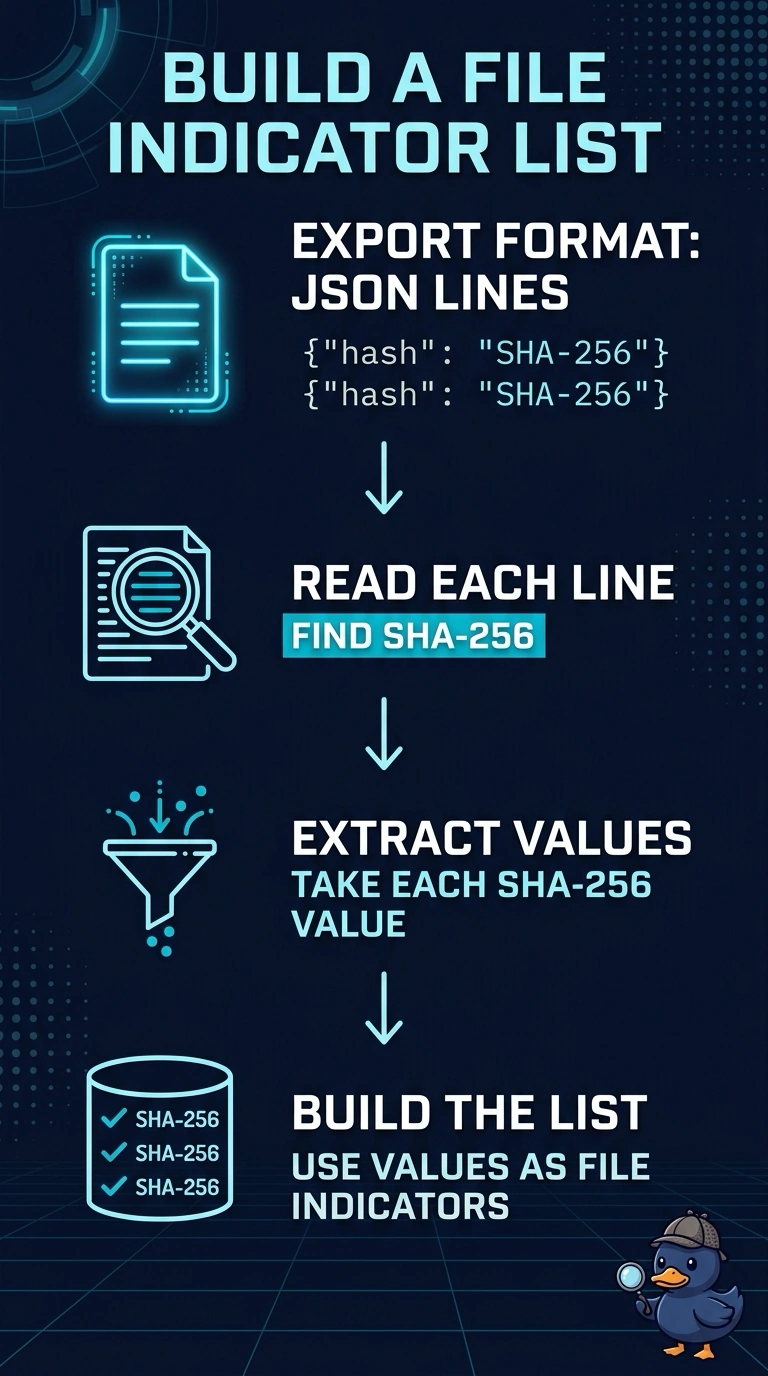
The indicator list is the stack of fingerprints, not the stack of envelopes they arrived in. You extract the file SHA-256 values stored on each JSON line. Hostnames, a hash of the whole line, and timestamps are not the file indicator.
Full Explanation
Each JSON line is one event record, and the file indicator inside it is the file hash the product already computed. The file SHA-256 values stored on each JSON line are what the script should collect for the indicator list, deduplicated so the same file is hunted once. Only the hostname, saved into the list as though it were the file hash, builds an inventory of computers and then pretends those names are file digests, so later searches look for machines in file fields. A fresh digest computed over the entire JSON line rather than the file field hashes the log text, including timestamps and punctuation, and will not match the sample on disk. The event timestamp, recorded as the indicator value for that sample, is when something happened, not which file it happened to. Exam caveat: keep the hostname beside the hash in a second column if you need scope, and do not replace the hash with that hostname. Operational check: parse three known lines, print the extracted digests, and confirm each one matches the file SHA-256 field rather than a hash of the raw line.