
Investigators need the external address a logistics host contacted, a SPAN port is available, and nobody has a memory image. Which approach answers that question?
Select an answer to reveal the explanation.
Short Explanation
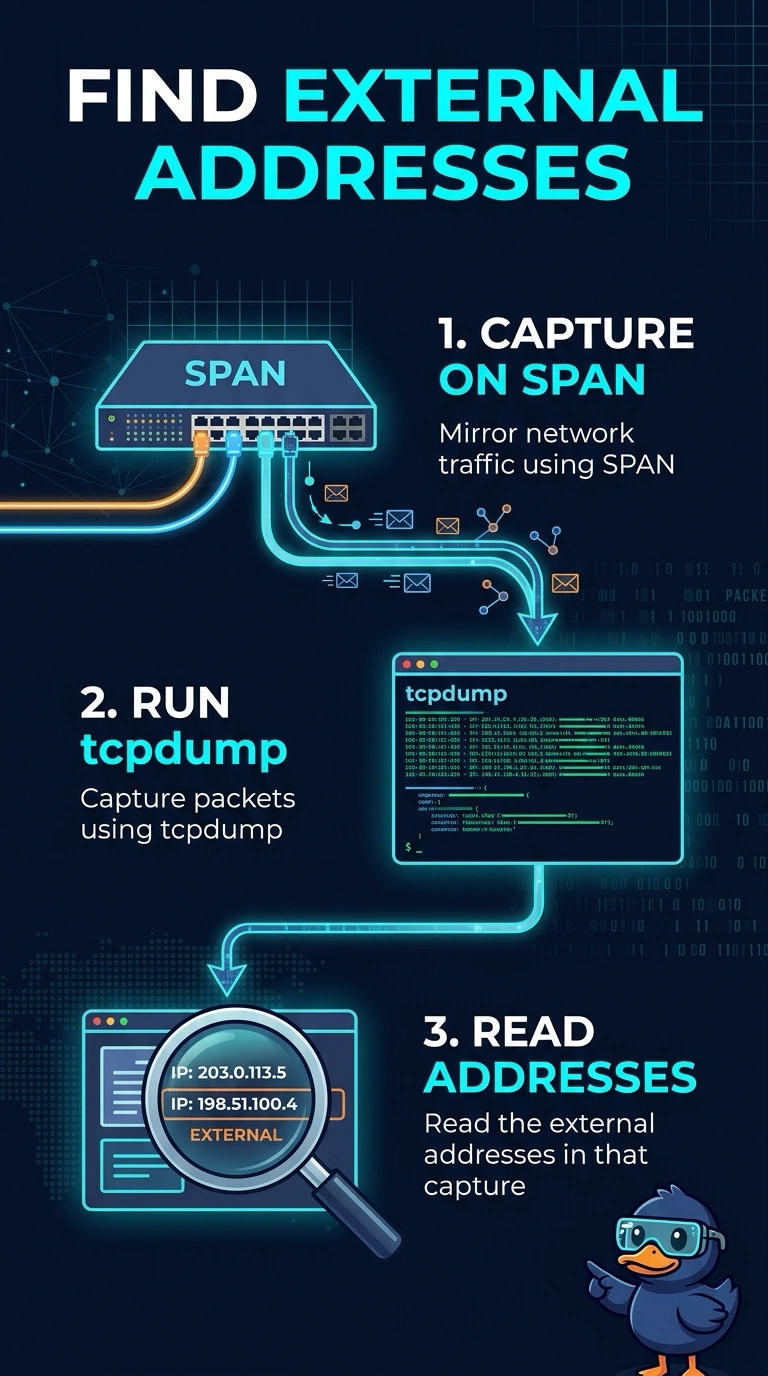
A mirror beside the highway shows you which cars passed, and wishing for a photo of the driver memory does not answer the same question. With a SPAN available and no memory image, tcpdump on that mirror records the packets and the external addresses in them. Volatility needs a memory image you do not have, and neither Autoruns nor a hypervisor image is the capture sitting on the SPAN.
Full Explanation
Capture packets on the SPAN with tcpdump and read the external addresses in that capture. The question is which external address the host contacted, the SPAN is a copy of the frames, and tcpdump records those frames to a file you can read. Do not point Volatility at the SPAN and extract external addresses from live memory; Volatility does not listen on a SPAN, and you have no memory image. Do not run Autoruns on the switch and read remote addresses from autostart entries; Autoruns is a Windows persistence view, not a switch capture. Do not image the provider hypervisor and search its raw memory for the connections that host made; the customer does not image that hypervisor, and the SPAN already holds the packets. Read the address fields in the capture rather than guessing with a tool that needs memory you do not have. Exam caveat: the capture shows addresses that appear while tcpdump is running on the SPAN, not history from before the mirror was collected. Operational check: open the tcpdump capture, find the host traffic, and record the external address from the packet headers without opening a memory image.