
A memory examination of a Windows process finds no file-backed executable image, and its active instruction pointer lies in executable MEM_PRIVATE pages containing unrecognized code. What should the analyst investigate?
Select an answer to reveal the explanation.
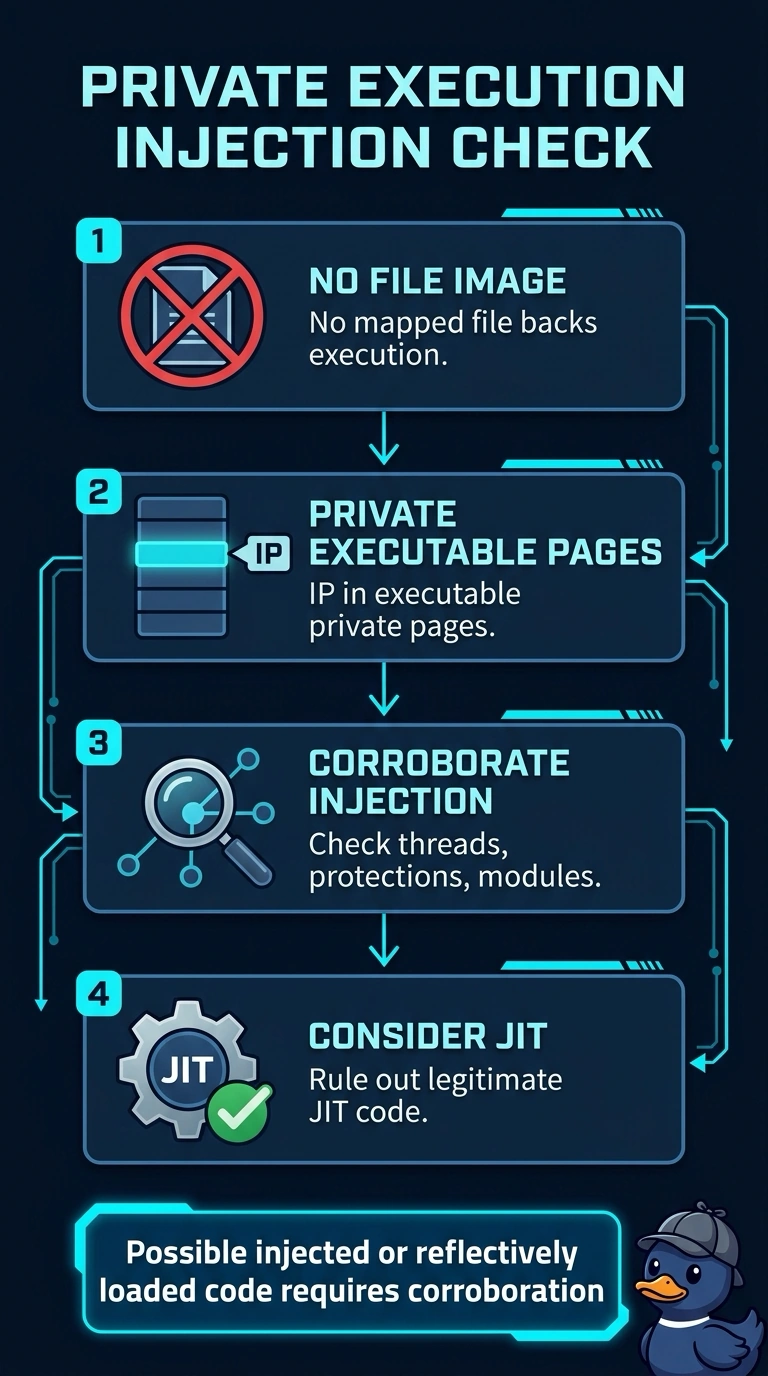
Short Explanation
A normal service is a program you can point to on disk. A blank image path together with private memory suggests code running with no file behind it, which is not how a normal service is mapped. A signed system path, an idle-process story, or a recycle-bin move does not explain that combination.
Full Explanation
A blank path can result from access restrictions, and ordinary processes use private memory. Neither alone proves fileless code. Here the executing private pages and absent file-backed image warrant injection analysis; legitimate JIT-generated code must still be considered. Services may run from vendor directories as well as system directories. The finding matters because the instruction pointer is in executable MEM_PRIVATE with unrecognized code and no file-backed executable image to account for execution, which fits injected or reflectively loaded code that executes without a mapped file. That still requires corroboration through thread start context, memory protections, loaded modules, and parentage before concluding compromise, since JIT-generated code can also appear private and executable. A signed component running from the normal system directory does not explain the finding because such a component would present a resolvable image filename and file-backed image memory. Treating private memory as idleness that can be deferred misunderstands MEM_PRIVATE as a mapping type, not a schedule state, and ignores that active execution from those pages makes deferral unsafe. A recycle-bin move does not explain an imageless executing process because deletion or relocation leaves a different forensic trail and does not create executable private code at the instruction pointer.