
Prefetch is disabled on a Windows file server. Which alternate artifacts can establish that a particular executable was inventoried or encountered, before execution is checked with separate telemetry?
Select an answer to reveal the explanation.
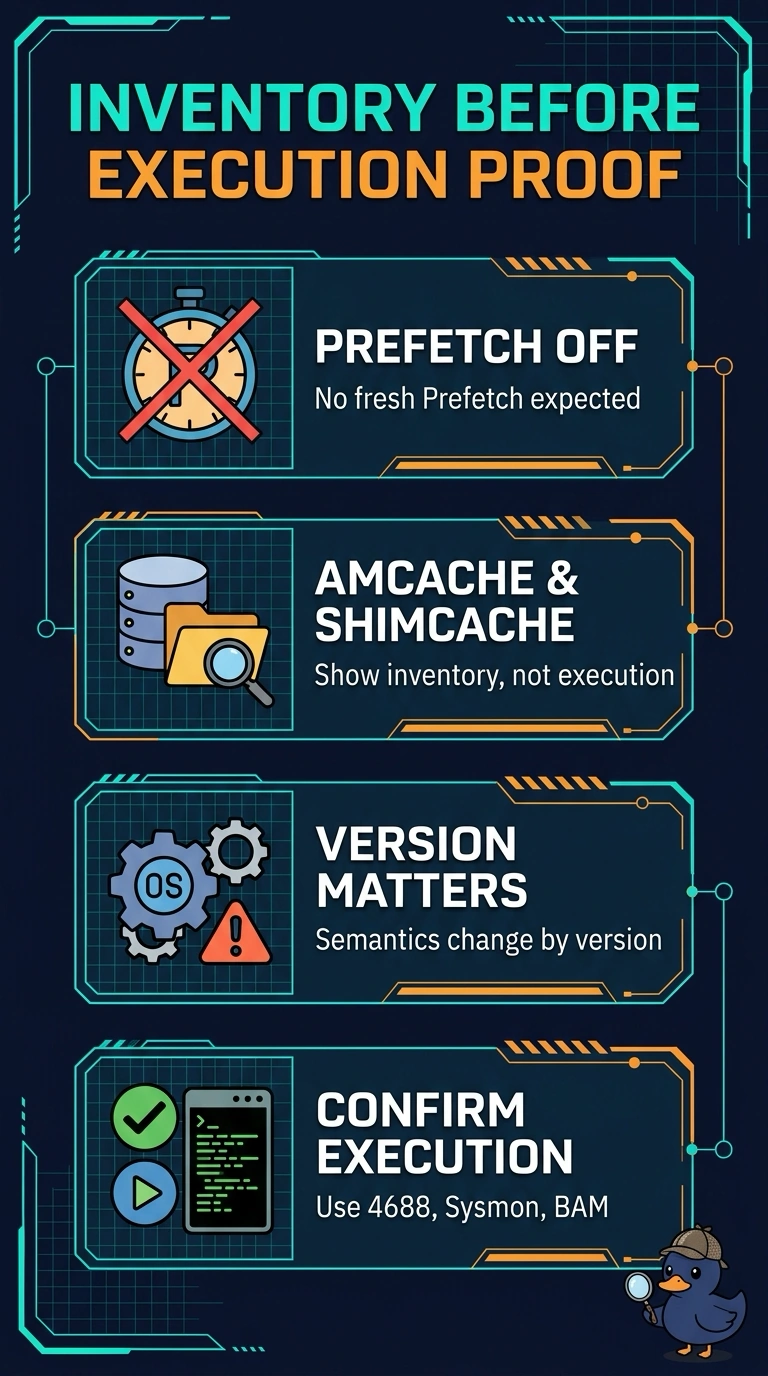
Short Explanation
Think of Prefetch as switched off, so you check the other inventory clipboards instead. You look at Amcache or ShimCache records that can support file presence, with version-dependent semantics. These caches alone do not establish recent execution or its time; correlate with enabled Security 4688, Sysmon process events, BAM or other applicable execution evidence.
Full Explanation
Prefetch files are written only when Prefetch collection is enabled, so a server with collection disabled will not create fresh entries on the Prefetch path for the executable of interest, no matter how recently it may have run. Amcache or ShimCache records that can support file presence, with version-dependent semantics, fit the revised question because they can establish that a particular executable was inventoried or encountered on the system. These caches alone do not establish recent execution or its time; correlate with enabled Security 4688, Sysmon process events, BAM or other applicable execution evidence. Interpretation depends on Windows version and hive context, so search both records for the executable path on this server and read entries for inventory meaning before pivoting to dedicated execution telemetry. The web access log on that Windows server records HTTP requests served or proxied, not local process creation, so reading it as a journal of executable launches confuses network service telemetry with host execution telemetry. A customer-made image of the provider hypervisor is not obtainable in public cloud shared-responsibility models and would not equal guest process history even if obtained, confusing host infrastructure with guest OS artifacts.