
The file command reports a sample is a Windows PE, the analysis host is Linux, and launching the sample fails. Why is that failure a weak reason to call the file harmless?
Select an answer to reveal the explanation.
Short Explanation
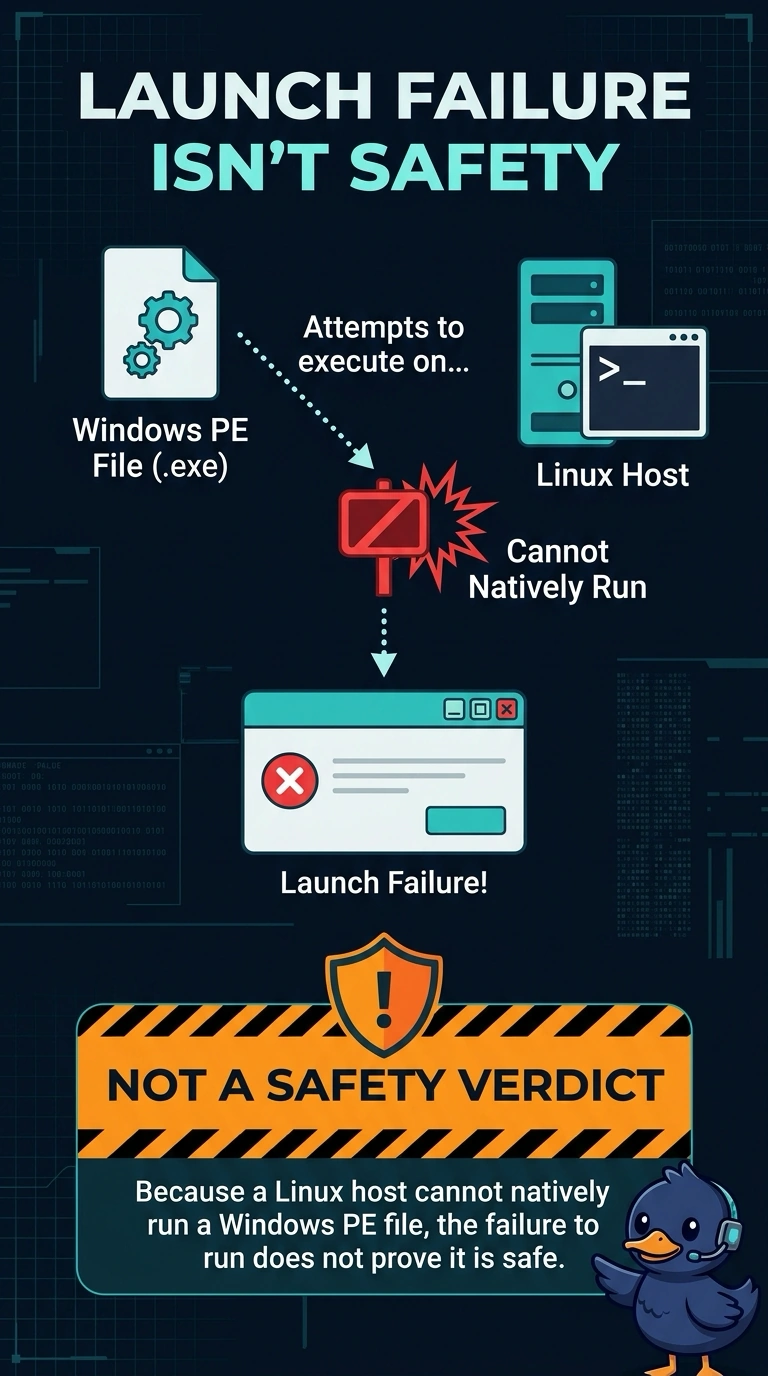
A lamp that will not screw into the wrong socket is not a broken lamp, and you do not throw it out for that. The sample is a Windows PE and the analyst host is Linux, so a failed native launch is a format mismatch, not a safety verdict. Calling the PE corrupt, trusting the file command as a safety test, or deciding only local launches can be malicious misses the mismatch.
Full Explanation
The Linux host cannot natively run a Windows PE, so the failure is not a safety verdict. The file command has already told you the sample is a PE, and a Linux exec failure is the format mismatch you should expect, not evidence the bytes are harmless on Windows. A failed launch on Linux shows a format error, and it does not show the PE is corrupt and will fail on Windows too. The file command reports type from magic bytes; it does not report PE for Windows malware only when the sample is fully safe to ignore. Malicious code is not limited to files that launch successfully on the analyst workstation; a sample can be dangerous on the system it was built for and inert on yours. Magic bytes identify the type the command reported, and the failed exec only shows the Linux loader rejected that type. Exam caveat: a compatibility layer could still run a PE on Linux, so do not try the sample that way on a casual desktop. Operational check: record the file command output showing a PE, note the failed launch was on Linux, and continue with static triage or a Windows analysis host rather than closing the case.