
A file hash from a branch laptop matches the gold-image catalog for that exact build. How should triage priority for this file change?
Select an answer to reveal the explanation.
Short Explanation
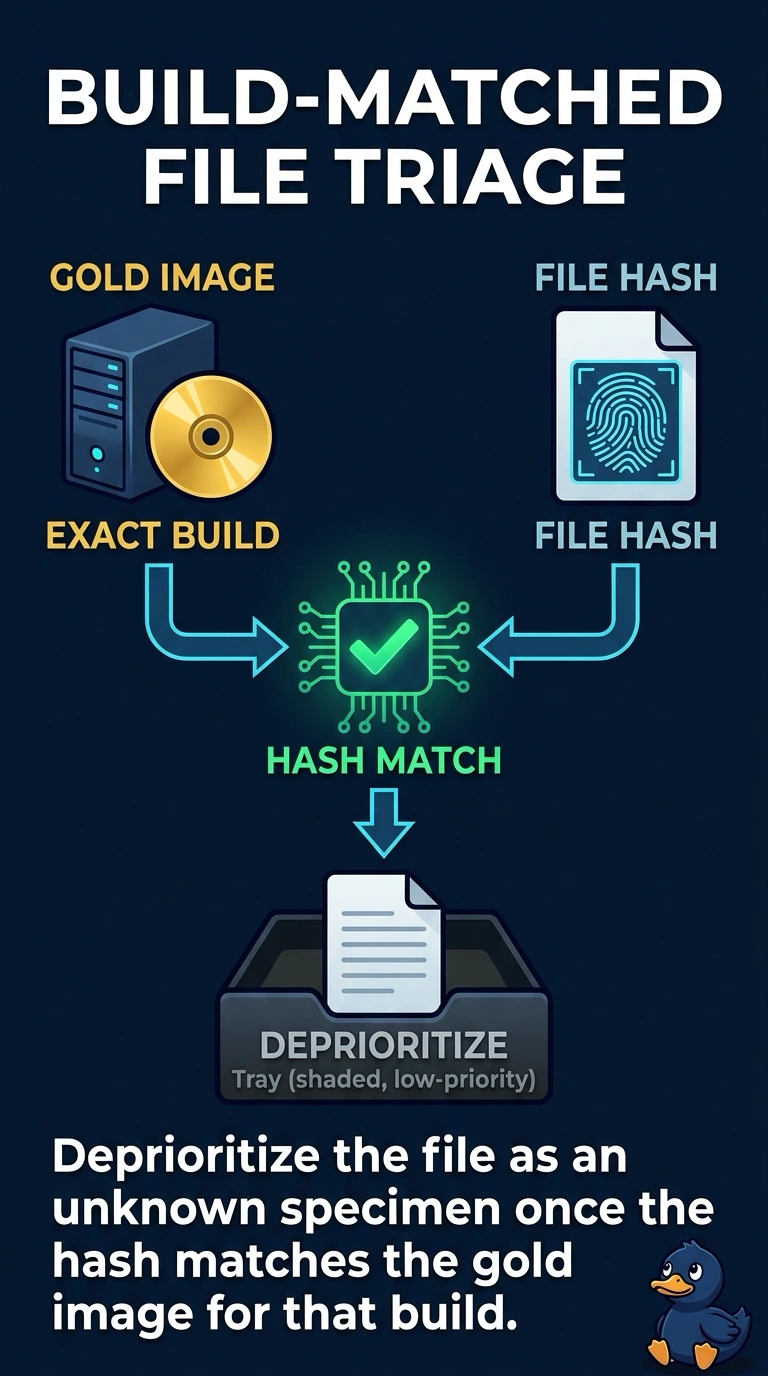
The spare part number matches the factory drawing, so this bolt is not the mystery object. Once the hash matches the gold image for that build, you deprioritize the file as an unknown specimen. Do not escalate it as planted, ignore the rest of the host, or wipe the laptop over a catalog hit.
Full Explanation
A hash that matches the gold image for that build means the bytes are the expected binary, so you deprioritize the file as an unknown specimen and spend time on hashes that are not in the catalog. The match answers whether this file is foreign malware, and the answer is that it is the known build. Escalate the file to critical on the theory that a catalog match means the gold image was planted reverses the meaning of a known-good match and treats agreement with the build as if it were proof of tampering. Skip every remaining artifact on the host once a single hash matches the gold-image catalog abandons the investigation because one file was expected, which can hide a second, unknown file beside it. Wipe the laptop now so the matching hash cannot be started again by another local process destroys evidence and availability because a trusted binary was present. Exam caveat: a known-good hash can still be misused as a living-off-the-land binary, so you lower the file's unknown-specimen priority and you still review odd command lines. Operational check: compare the hash with the gold-image catalog entry for that build and, on a match, move analyst time to unsigned hashes and to how the known binary was launched.