
A factory analyst needs the section names and flags of an ELF sample before any disassembly begins. Which approach gathers that information without running the binary?
Select an answer to reveal the explanation.
Short Explanation
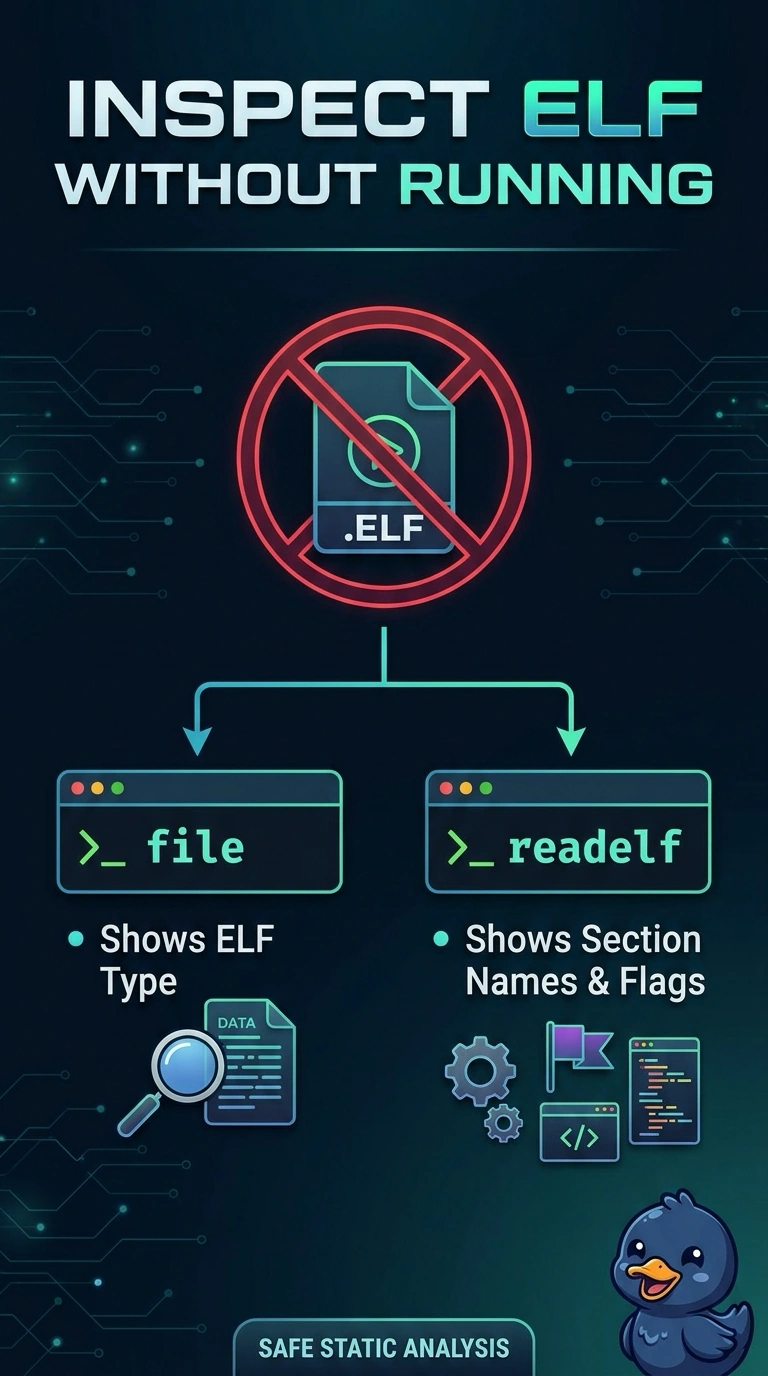
Read the table of contents before you press the power button on an unknown machine. You use file and readelf to list the ELF type, section names, and flags without executing the binary. The trap is running the sample, under strace or on the workstation, just to learn what the headers already say.
Full Explanation
Section names and flags are stored in the ELF headers. Use file and readelf to show the ELF type, section names, and flags without executing the sample. file identifies the binary, and readelf prints the section table, including the flag column, from a static read. Running the ELF on the analyst workstation and relying on the loader to print each section name and flag executes untrusted code for a fact the headers already hold, and the loader does not exist to dump that table. Executing the ELF under strace and treating the earliest system calls as the section flag listing also requires execution, and system calls are runtime behavior, not the section flags. Running xortool on the ELF and expecting a guessed XOR key to reveal the section names and the flags points a XOR-key tool at a header-parsing question. Exam caveat: file alone identifies the format; the section names and flags come from readelf, so the pair is what answers the question. Operational check: run file and readelf against a copy of the sample and confirm the section names and flags appear with the sample never executed.