
A password-protected archive arrived in a payroll email, and the password is written in the same message. What should the analyst do with the archive instead of skipping it?
Select an answer to reveal the explanation.
Short Explanation
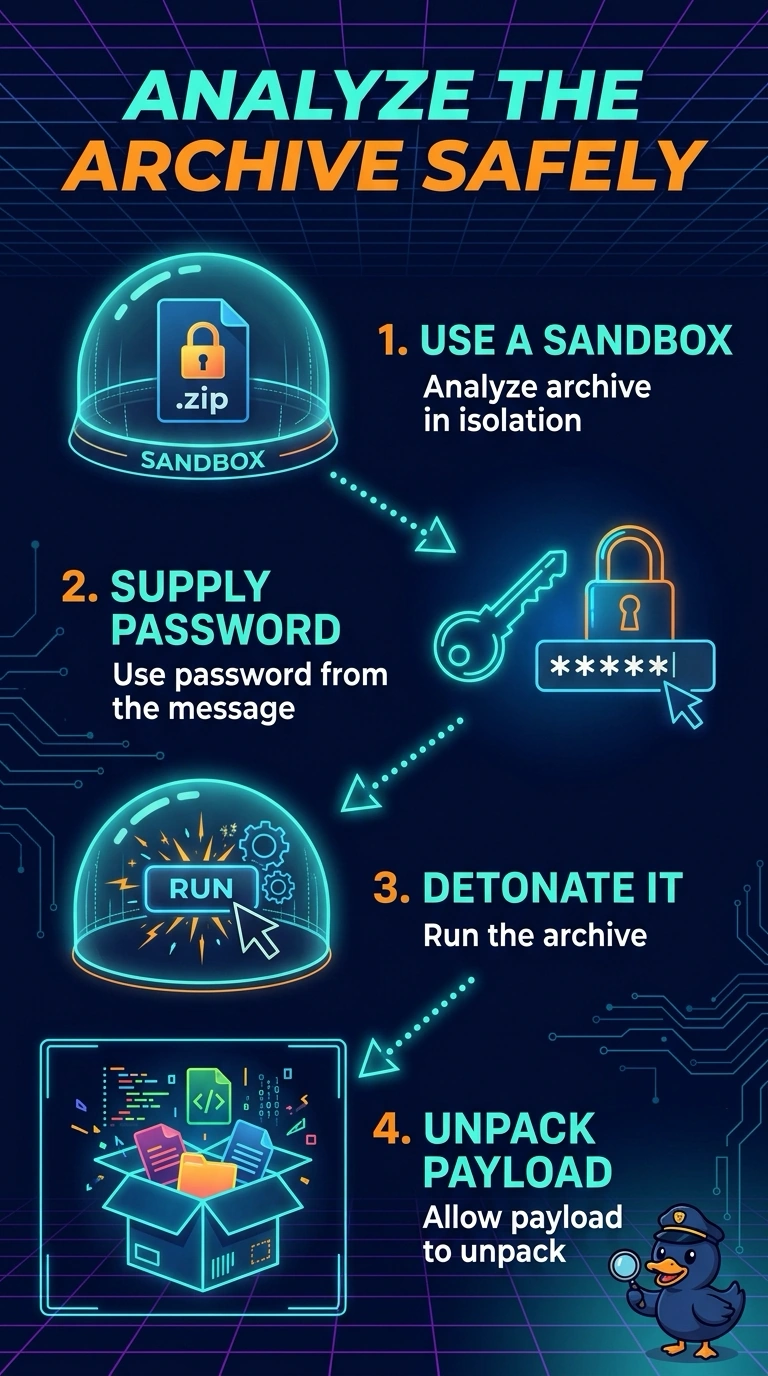
You’re right to treat the password as a way to reveal what’s inside, not as proof that the archive is safe. Detonate it in a sandbox and supply the password so the payload can unpack; that lets you inspect it without exposing the payroll workstation.
Full Explanation
A password-protected archive will not reveal its payload to a sandbox that cannot unpack it. Detonate the archive in a sandbox and supply the password so the payload can unpack, then assess the behavioral report from that controlled run. Secure Malware Analytics can accept an archive password at submission for this reason. Skipping the archive on the theory that password protection proves the contents are harmless mistakes a delivery trick for evidence of safety. Opening it on the payroll workstation using the password written in the message exposes a real finance system to the sample. Deleting the email so the password and archive leave the mail system together destroys both the sample and the context the case needs. Exam caveat: supplying the password lets the sandbox see the inner files, but a clean detonation still needs to be considered alongside the static contents of those files. Practical check: confirm the submission notes include the password source, then verify that the sandbox report lists the unpacked inner filenames rather than reporting a failure to open the archive.