
A retail site sits behind a reverse proxy, and the web access log shows the proxy address unless a forwarded header is recorded. Which logged field identifies the original client?
Select an answer to reveal the explanation.
Short Explanation
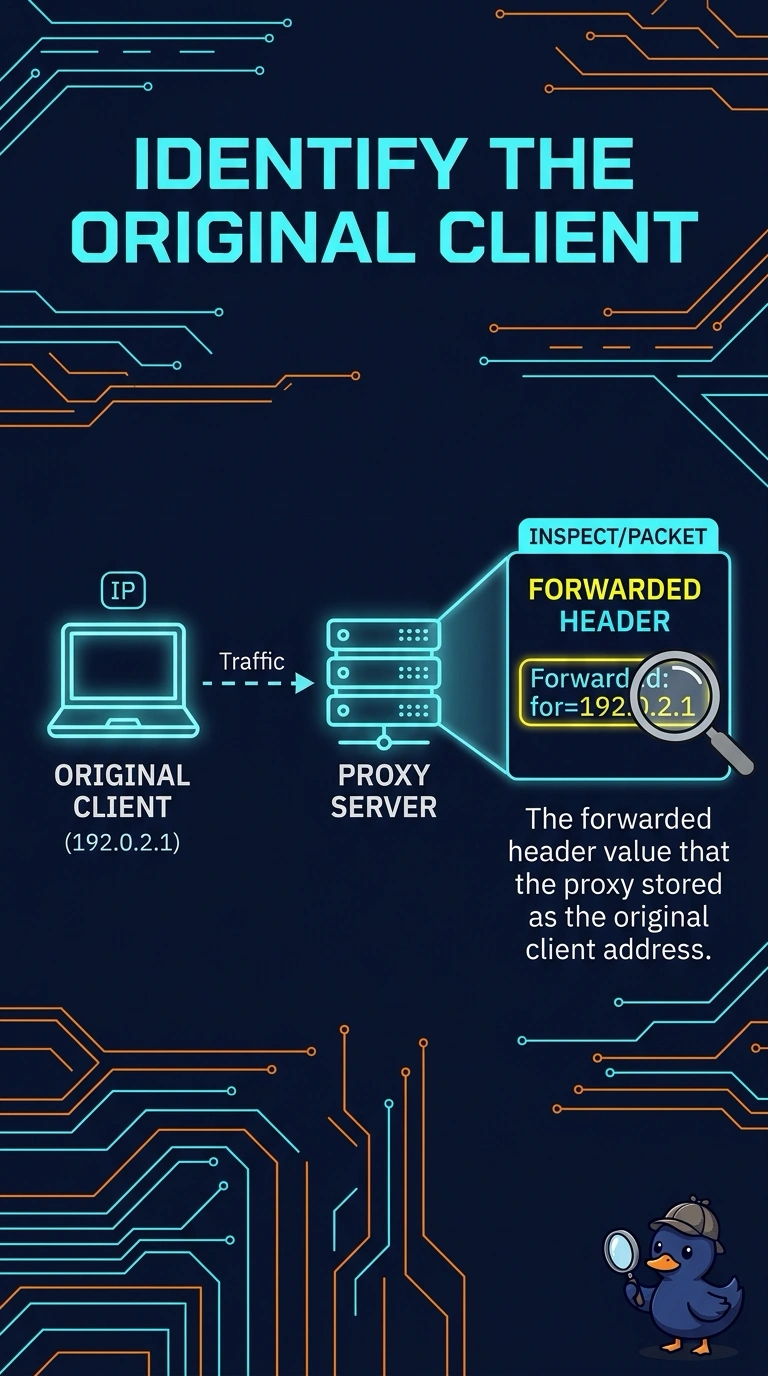
The reverse proxy is the front desk, and the guest name is on the sign-in slip. You identify the original client from the forwarded header the proxy recorded, not from the remote address of the proxy itself. The server address and the site name are not the customer who connected.
Full Explanation
When a reverse proxy terminates the client connection, the web server peer is the proxy. The field that identifies the original client is the forwarded header value that the proxy stored as the original client address, provided your proxy inserted that header and the log format recorded it. The remote address field that records the reverse proxy as the connecting peer host is the proxy itself, so it does not name the customer workstation. The web server address is the local service, and treating the proxy as the end of the client session there still does not reveal who connected to the proxy. The requested site name is the virtual host the browser asked for, and treating the browser request line as the client identity confuses the destination name with the source. Exam caveat: Trust only address elements derived from a validated trusted-proxy chain. The edge must overwrite untrusted values or append/sanitize them with correct trusted-hop parsing; never blindly trust a client-supplied leftmost address. Operational check: confirm the log format token that prints the forwarded header, then compare one known client address with a test request through the same proxy.