
On a hospital portal, the NGINX error log shows upstream timeouts for the same minutes in which the access log shows 504 Gateway Timeout responses. Which file explains the application failure rather than only recording the request?
Select an answer to reveal the explanation.
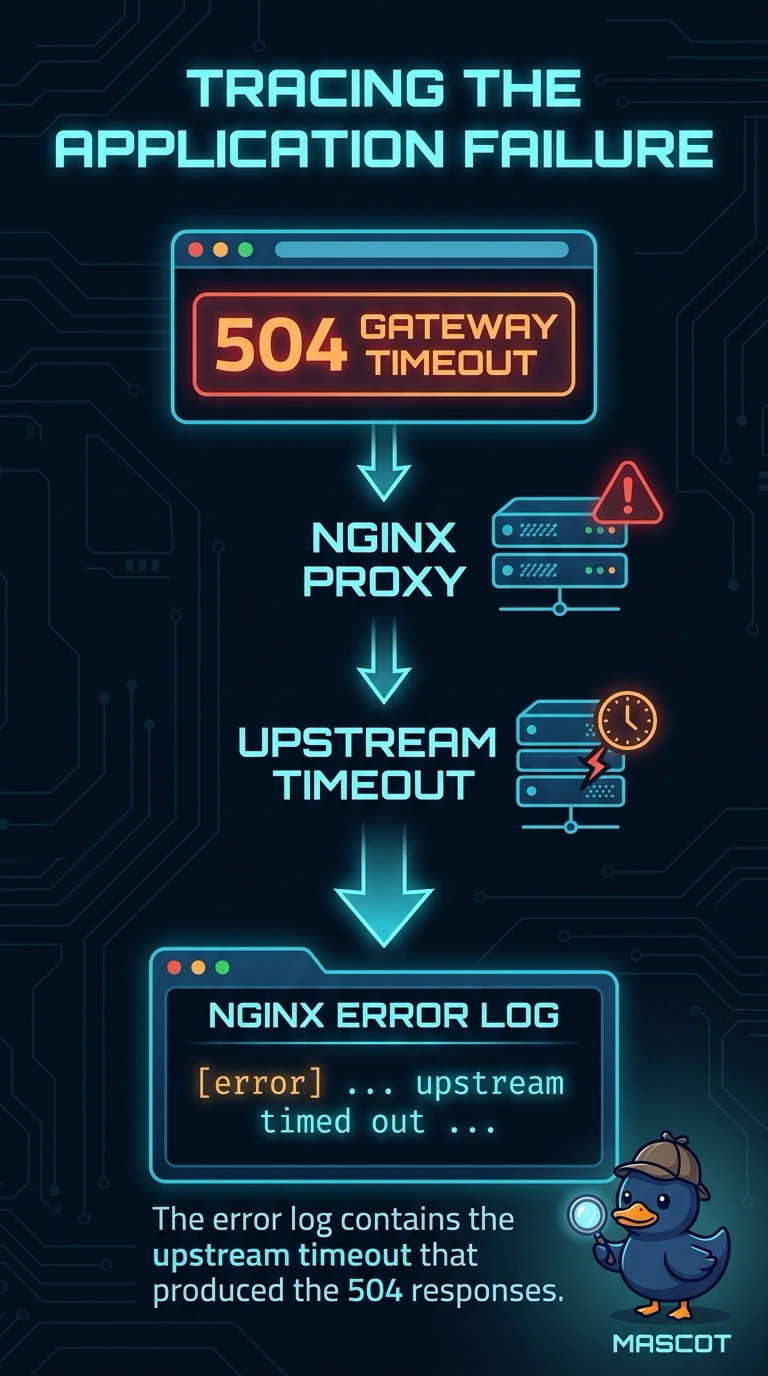
Short Explanation
The access log is the receipt, and the error log is the note from the mechanic. When the receipt shows a 504 Gateway Timeout, you read the NGINX error log for the upstream timeout behind it. The trap is stopping on the receipt and guessing why the application failed.
Full Explanation
NGINX writes the request and the status to the access log, and it writes the reason it could not reach a healthy upstream to the error log. Upstream timeouts in the error log explain the application failure: the proxy waited, the upstream did not answer in time, and the client received a 504 Gateway Timeout. The access log, holding the client address, the URL, and the returned status, proves the request arrived and shows the status, but it does not explain why the upstream failed. The certificate file, holding the portal name and the certificate expiration date, describes the TLS certificate, not an upstream timeout. The resolver log, holding name lookups for the portal hostname during that hour, shows DNS activity and does not record the upstream timeout. Exam caveat: a 504 status in the access log is a clue, not the root cause; the error log is what ties that status to the timeout. Operational check: match timestamps between the access log status and the error log upstream timeout for the same request, and note which upstream host timed out.