
A wiping utility ran on a stolen spreadsheet, and file carving on that volume returns no recoverable content. Where else can an analyst still look for a copy of the file?
Select an answer to reveal the explanation.
Short Explanation
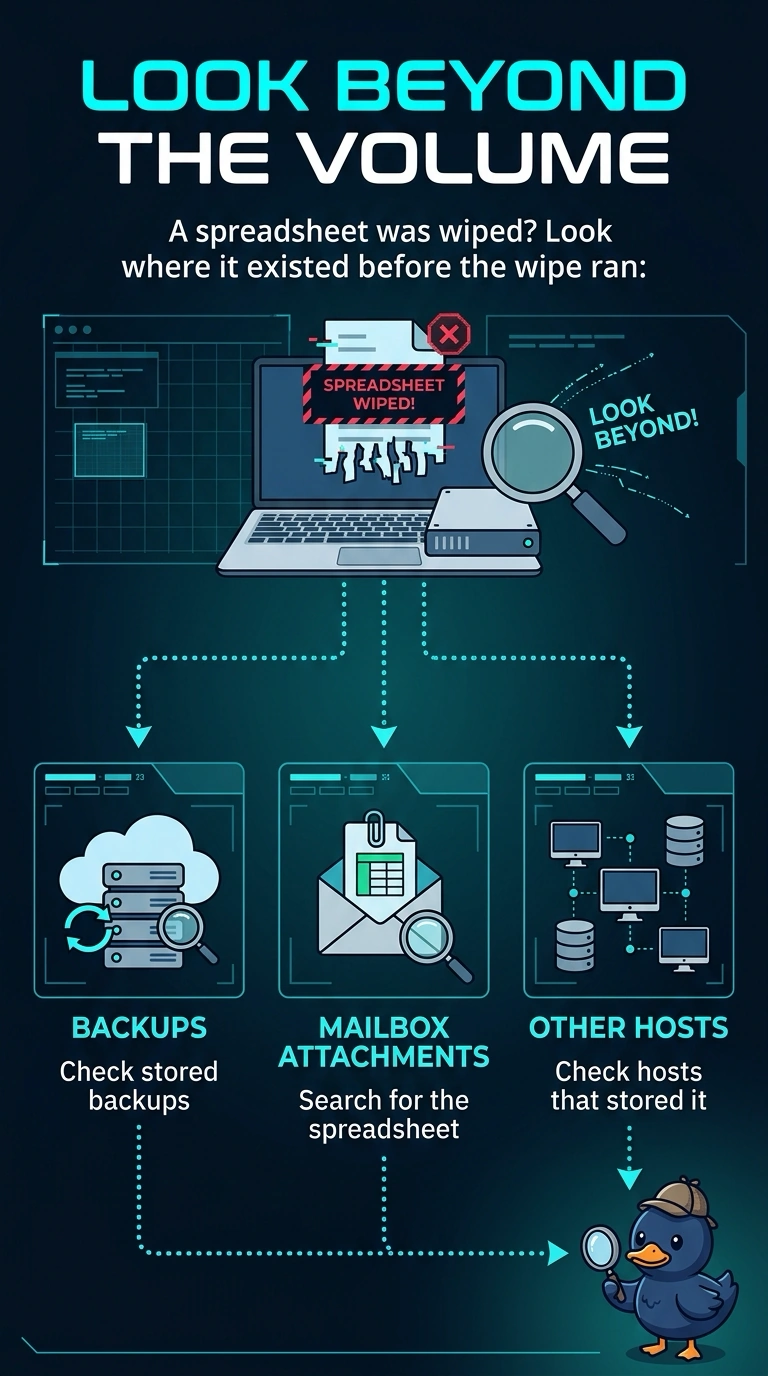
Shredding the folder in your desk does not shred the copy you mailed last week. You look for backups, mailbox attachments, and other hosts that stored the spreadsheet before the wipe. Carving an empty volume is not the last place a copy can live.
Full Explanation
Failed carving is not proof that the content was successfully overwritten; preserve the image and assess carving coverage, fragmentation and encoding while searching backups, attachments and other hosts for independent copies. The key is still correct because a spreadsheet often exists in more than one place, so backups, mailbox attachments, and other hosts that held it before the wipe can provide an independent copy even when carving on the affected volume returns nothing so far. Limiting further work to only free space on the wiped volume misses those independent locations and treats one unsuccessful carving pass as the whole investigation. A wiping tool log may document actions or errors, but it is not designed to retain the original file bytes for later review. Filename metadata may preserve a name, size, or timestamps after content is unrecoverable by the current carving approach, but it does not contain the full spreadsheet body. Start with backup catalogs, sent mail and peer hosts using filename or hash, while preserving the original image and reviewing tool coverage for fragmented or encoded content before concluding anything about the wiped volume. Exam caveat: if every copy was wiped, the file may truly be gone, which is why you exhaust the other locations before you say that.