
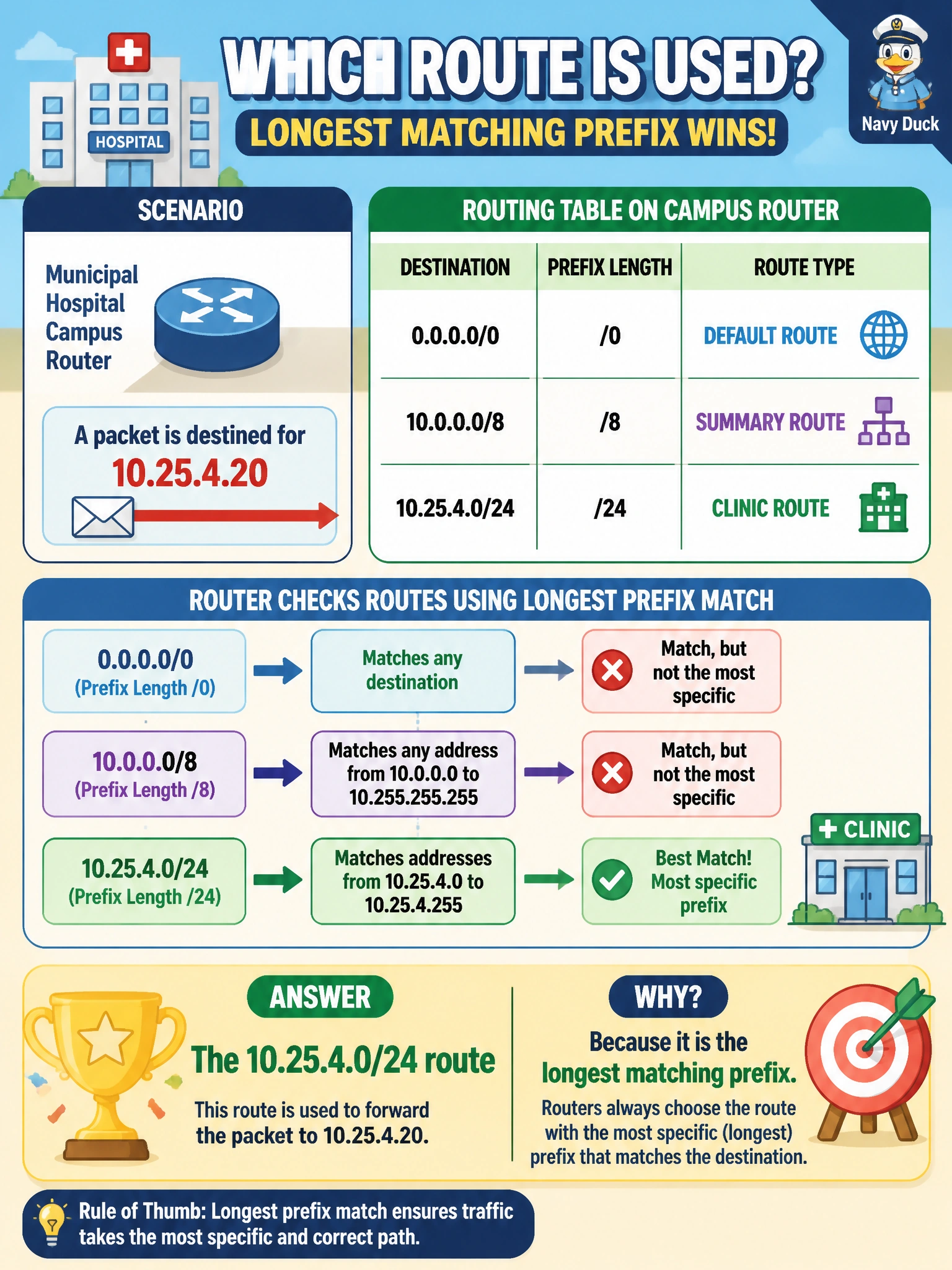
A municipal hospital campus router has a default route 0.0.0.0/0, a 10.0.0.0/8 summary, and a 10.25.4.0/24 clinic route. For a packet to 10.25.4.20, which route is used?
Select an answer to reveal the explanation.
Short Explanation
Default is the “if nothing else matches” bucket—least specific. 10.25.4.20 hits the /24 first; the default and the big /8 wait in line behind longer matches.
Full Explanation
A municipal hospital campus router that has default route 0.0.0.0/0, summary 10.0.0.0/8, and clinic route 10.25.4.0/24 forwards a packet to 10.25.4.20 using the 10.25.4.0/24 route because it is the longest matching prefix. Among all covering candidates, specificity wins: the clinic /24 outranks the /8 aggregate and the default. That hierarchy is how hospital edge designs carve clinic traffic out of large summaries without breaking Internet fallback for unmatched destinations.
Choosing the default because defaults always preempt more-specific routes fails; defaults are least specific and lose to any longer match. Choosing only the /8 because it covers more addresses fails; covering more space makes a route less specific, not more preferred for an address inside a longer match. Claiming overlapping routes cause the packet to be dropped fails; overlap is normal and is resolved by longest-prefix match rather than discard.
Exam caveat: if the /24 is withdrawn, traffic may fall back to /8 and then to default—operators should know that fallback chain for clinic outages and avoid assuming a drop. Operational check: show ip route 10.25.4.20 and confirm /24 selection; in a lab, withdraw the /24 and observe fallback to /8 then default; document the hospital campus forwarding hierarchy for clinic versus summary versus Internet traffic.