
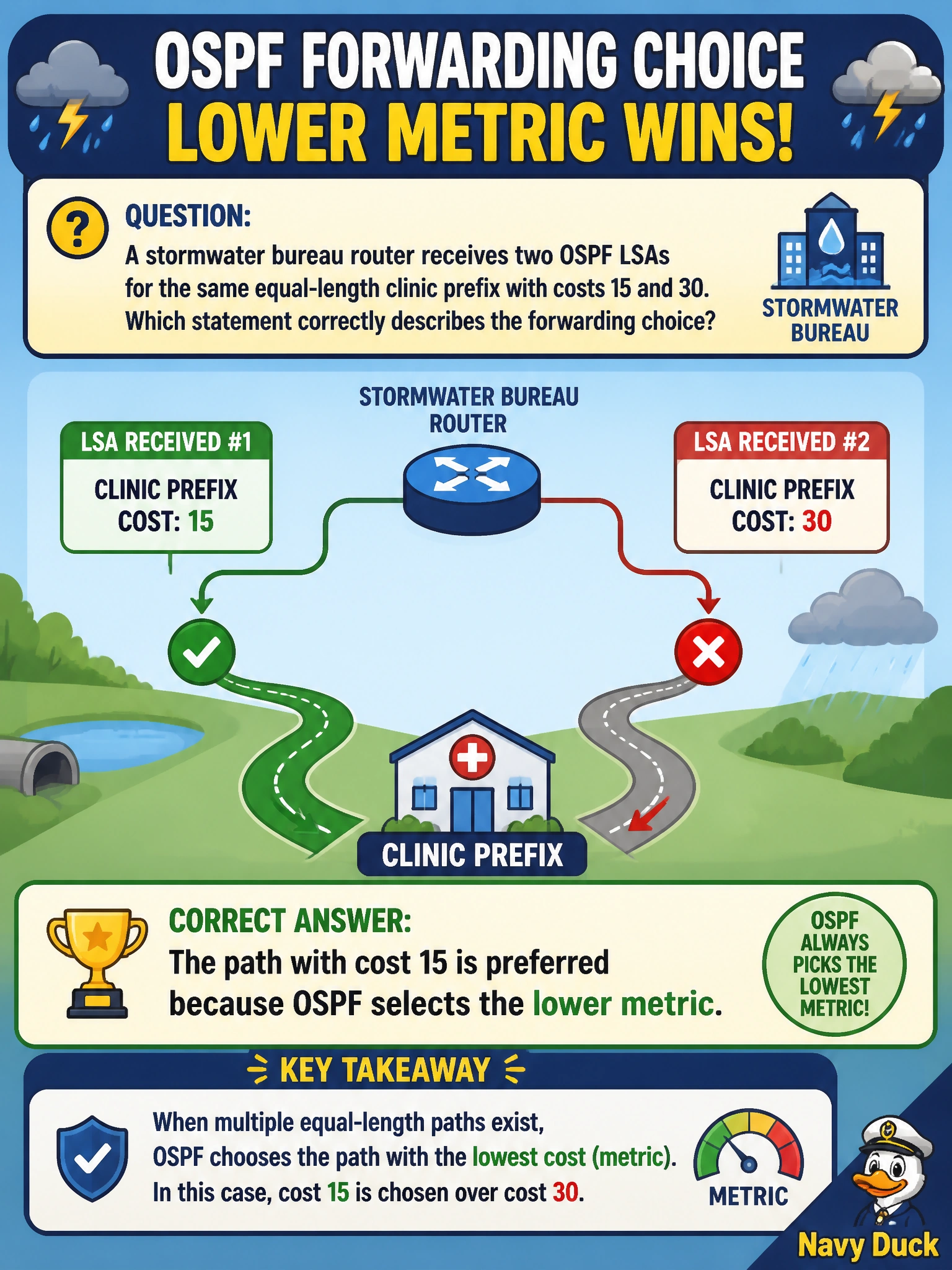
A stormwater bureau router receives two OSPF LSAs for the same equal-length clinic prefix with costs 15 and 30. Which statement correctly describes the forwarding choice?
Select an answer to reveal the explanation.
Short Explanation
Equal-length OSPF twins—cheaper cost 15 gets the job. OSPF does not reward the higher cost, and you do not need BGP to finish that decision.
Full Explanation
A stormwater bureau router that receives two OSPF LSAs for the same equal-length clinic prefix with costs 15 and 30 prefers the path with cost 15 because OSPF selects the lower metric. When prefix length is equal and the source protocol is OSPF for both candidates, cost is the decisive preference value; lower cost identifies the better SPF path toward the clinic for forwarding.
Preferring the path with cost 30 fails because OSPF does not reward the higher metric. Ignoring both paths until BGP redistributes them fails conceptually because OSPF can install and forward on its own without BGP involvement. Claiming prefix length is compared again after metric and reverses the choice fails because the prefixes are already equal length; metric comparison does not reopen a longest-match contest that was already tied.
Exam caveat: equal costs may yield ECMP; also be careful when comparing dissimilar OSPF route types (intra-area versus external E1/E2) on more advanced designs where type and metric interact. Operational check: on the stormwater edge, show ip route and relevant OSPF database entries for the clinic prefix, confirm cost 15 is preferred over 30, traceroute to a clinic address, and document the selected next hop after any cost tuning.