
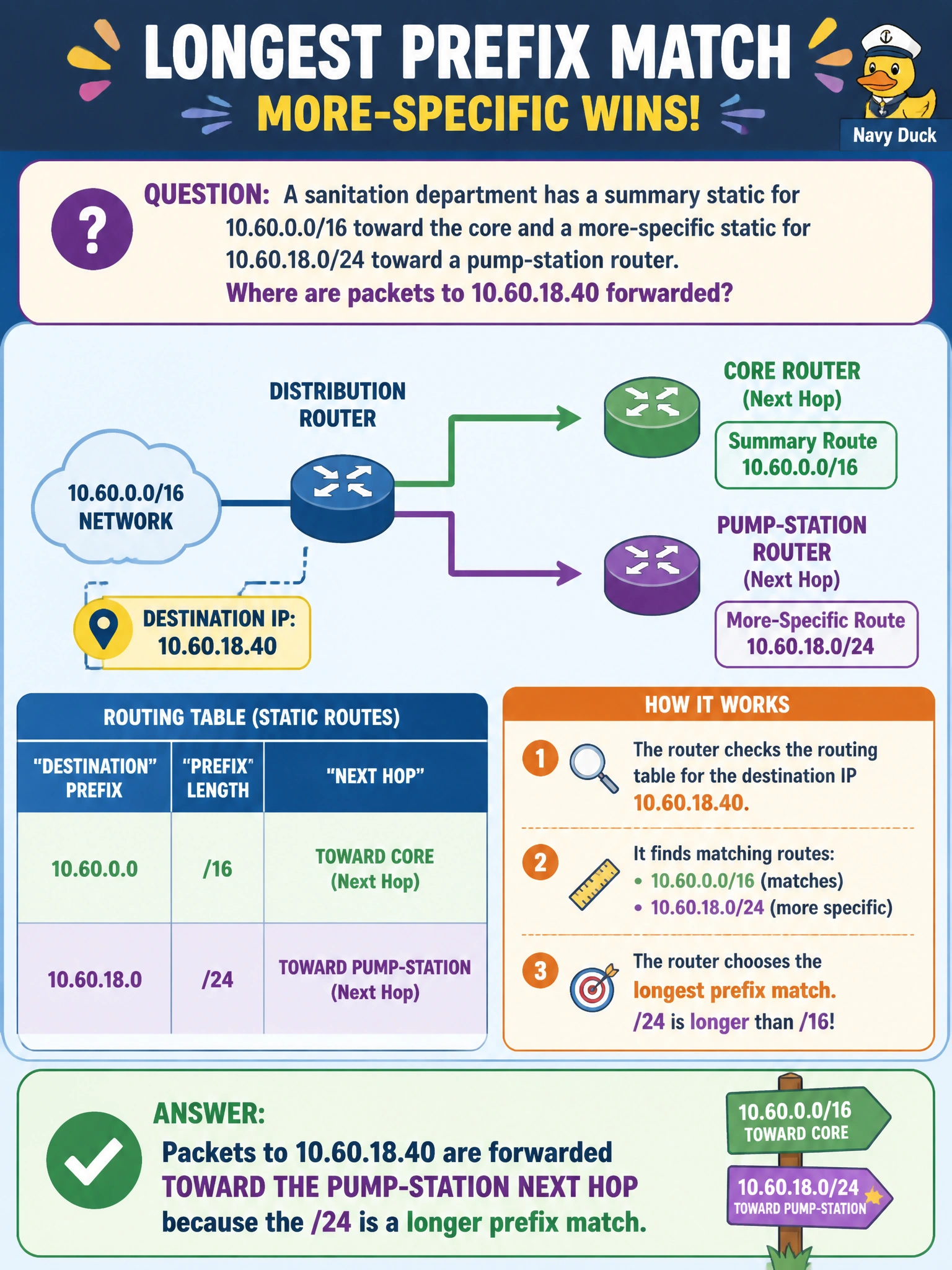
A sanitation department has a summary static for 10.60.0.0/16 toward the core and a more-specific static for 10.60.18.0/24 toward a pump-station router. Where are packets to 10.60.18.40 forwarded?
Select an answer to reveal the explanation.
Short Explanation
The tighter address sticker wins. /24 beats /16 for that pump station host, so traffic peels off to the pump-station hop—summaries do not steamroll more-specifics.
Full Explanation
When a sanitation department has a summary static 10.60.0.0/16 toward the core and a more-specific static 10.60.18.0/24 toward a pump-station router, packets to 10.60.18.40 go toward the pump-station next hop because the /24 is a longer prefix match. Overlapping statics are a standard way to carve exceptions out of a summary for remote municipal sites without removing the broader core path for the rest of the /16.
Forwarding toward the core only because “summaries always override specifics” fails; specifics override summaries for covered addresses. Dropping because overlapping statics are illegal fails because Cisco routers allow and commonly use overlapping statics. Forcing 50/50 load-balance regardless of prefix length fails because unequal lengths are not treated as equal-cost peers solely due to overlap.
Exam caveat: ensure the more-specific next hop is reachable; a recursive static that resolves incorrectly can black-hole the exception path while the summary still looks fine for other addresses. Operational check: show ip route 10.60.18.40, confirm the /24 is selected toward the pump station, ping the pump-station next hop, and test an address outside 10.60.18.0/24 to confirm it still follows the /16 toward the core.