
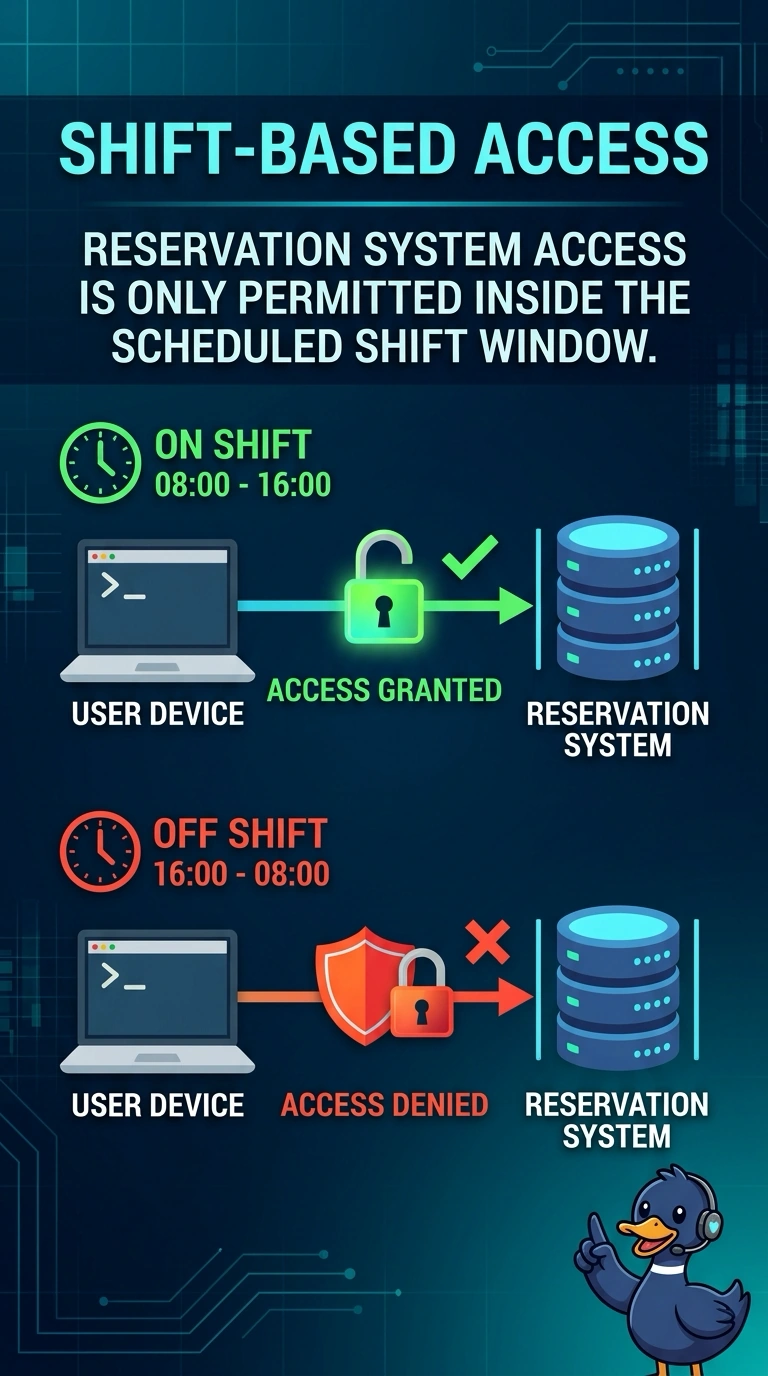
At a hotel, front-desk accounts can open the reservation system during the scheduled shift and are refused when those same accounts try again at midnight. Which access model explains the refusal?
Select an answer to reveal the explanation.
Short Explanation
The shop door locks at closing even when your staff badge is still in your pocket. You can open reservations during the shift and the same accounts are refused at midnight, so the clock is the control. The trap is blaming a job role that ignores the clock, file sharing, or a dead certificate.
Full Explanation
Time-based access control allows an action only inside a defined clock window. These front-desk accounts open the reservation system during the shift and are refused at midnight, so the refusal follows the schedule rather than a loss of the job role. Time-based access that permits the reservation system only inside the scheduled shift window explains the midnight refusal. Role-based access that would keep the same reservation rights at midnight as during the scheduled shift would ignore the clock, and the scenario refuses the same accounts after the shift. Discretionary sharing, with reservation files granted by the owner to individual front-desk staff, is an owner-by-owner grant, and the scenario describes a shift window applied to the accounts. A certificate end time at midnight that blocks every front-desk reservation login on the system would be a credential lifetime, and the stated control is the shift window, not a certificate change. On the exam, a certificate can also fail at a particular time, but you need evidence of the certificate; a stated shift window is time-based access. In operations, try a front-desk account inside the shift and again just after it, and compare the allow with the refusal.