
At a logistics hub, the site profile records how much data normally crosses the WAN during an hour of warehouse work. Which network-profile element is that measurement?
Select an answer to reveal the explanation.
Short Explanation
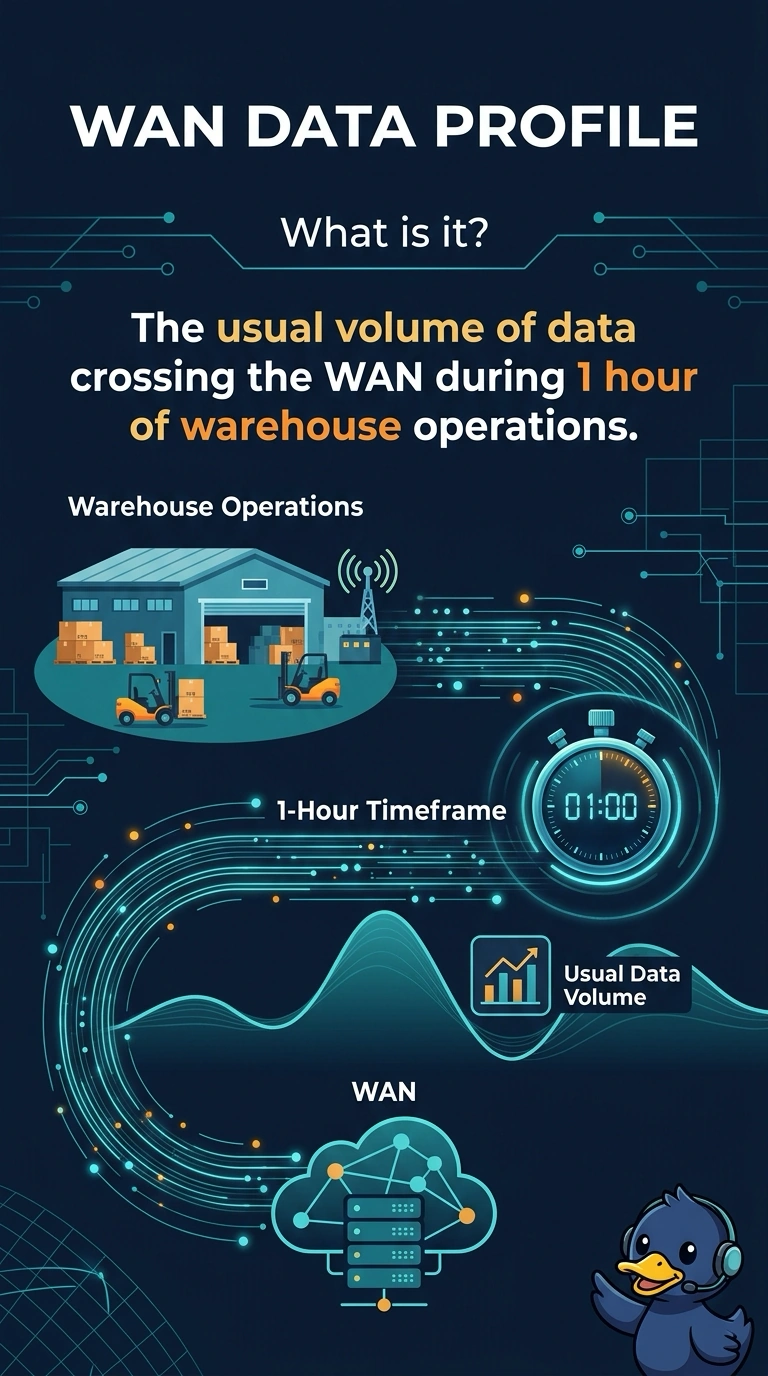
An hourly truck count on the highway is not the list of people in one office. You are looking at how much data normally crosses the WAN in an hour, and that profile element is total throughput. The trap is grabbing a server login list, a file hash, or the call tree.
Full Explanation
A network profile describes how the site normally communicates, and total throughput is the volume of traffic over a period of time. An hour of usual WAN volume at the logistics hub is that measurement, not a list of people or a file property. The usual volume of data crossing the WAN during an hour of warehouse operations is the total-throughput element. The names of people signed in to one warehouse application server during that same recorded hour belong to a server profile of logged-on users, and they do not measure WAN volume. The hash values of files stored on the warehouse file share during that same recorded hour identify file contents, and they are not a traffic total. The incident contact tree the hub calls when a warehouse platform stops responding to staff is a communications list for an incident, not a field in the traffic profile. On the exam, total throughput is a baseline volume and is not, by itself, a judgment that data was stolen, and no numeric cutoff is required to name the element. In operations, compare the hour's WAN total with the stored profile for this hub before you call the shift abnormal.