
At a retailer, stores normally reach the payment service on port 443, and one register starts a session on a rare high port toward a new address. Which network-profile element changed?
Select an answer to reveal the explanation.
Short Explanation
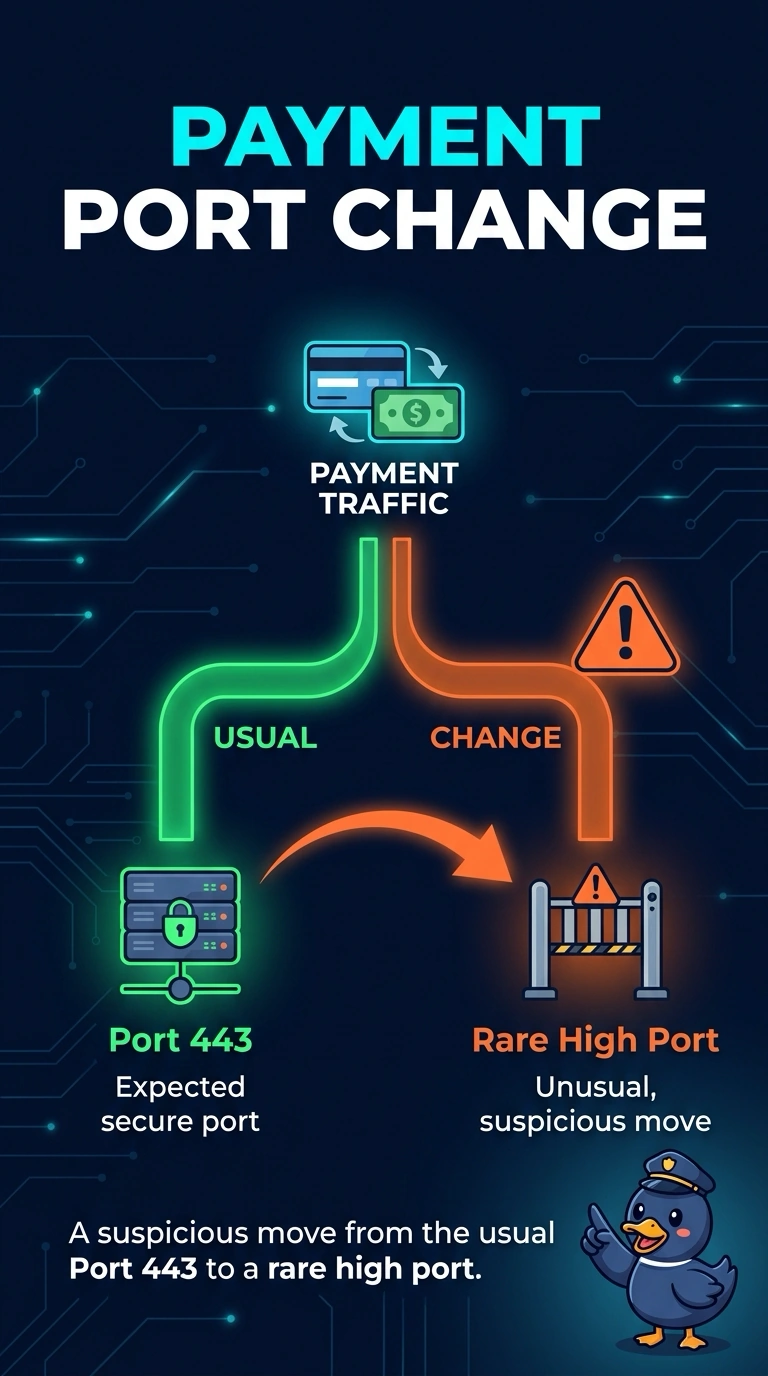
The usual service door is how you notice the store started using a strange entrance. You normally see payment on port 443, and this register moved to a rare high port. The trap is answering with traffic volume, who is logged on, or a lessons-learned note.
Full Explanation
Ports used is the network-profile element that records which ports the site normally speaks on. Stores reach payment on port 443, and this register starts a session on a rare high port, so the element that changed is the port profile. Ports used for payment, seen as a move from the usual port 443 to a rare high port, names that change. Total store throughput, a volume figure that was not the clue in this register's payment change, measures how much traffic moved, and the clue given is the port, not the volume. Service accounts logged on to the register, a host record of identities signed in on that device, is a server-profile fact about who is on the host, not the network port the payment flow used. Lessons learned from an earlier retailer incident, a review note instead of a live traffic field, is a post-incident document and is not a field in the live network profile. On the exam, port 443 remaining the norm in the profile is what makes the rare high port a break in ports used. In operations, list the destination ports this register used toward payment and compare them with the stored 443 baseline.