
At an agency, a predictive endpoint model alerts on a help-desk remote-admin tool that staff launch on every working day. What is the right first reading of that alert?
Select an answer to reveal the explanation.
Short Explanation
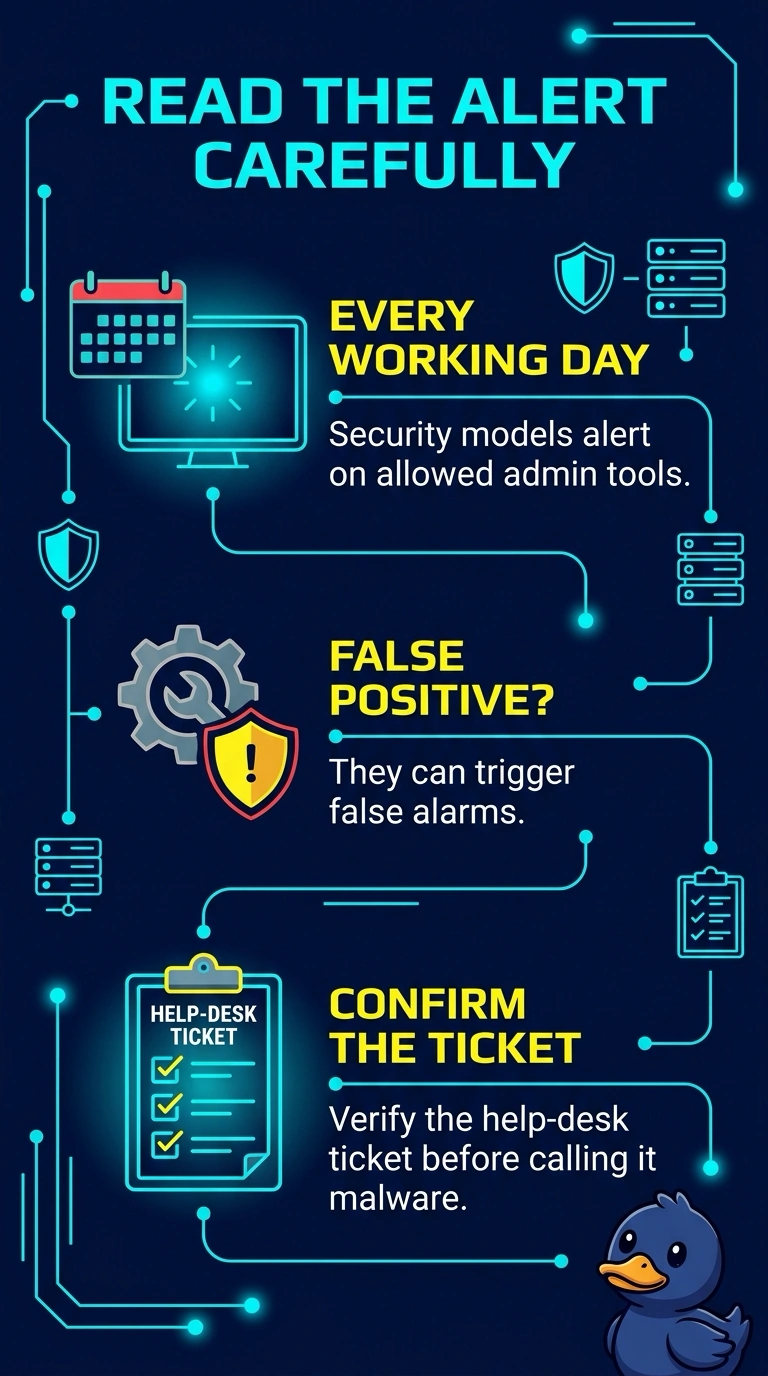
A kitchen alarm that chirps when you burn toast still deserves a glance, and toast is not a house fire. A predictive model can false-positive on the help-desk tool your agency uses every day, so confirm the ticket before you call it malware. The hit is not automatic proof of ransomware, a leaked key, or a firewall that failed closed.
Full Explanation
A predictive endpoint model scores behavior. Remote-admin tools spawn sessions, move files, and touch hosts, which overlaps the behavior the model was built to notice. Staff at this agency launch that tool every working day, so the first reading is skepticism plus a check, not a malware declaration. A model can false-positive on an allowed admin tool, so confirm the help-desk ticket before calling it malware. Promoting every hit to a specific crime is not supported. Every predictive alert on this daily remote-admin tool is treated as proof of an ongoing active ransomware outbreak skips the check and names an outcome the alert did not establish. Nothing in the alert says a key left the host. Presence of the help-desk remote tool on the workstation means the private key has already been stolen invents a credential incident from the mere presence of an approved tool. The sensor that spoke is also the wrong device to blame. The host firewall failed closed, and that firewall failure is what the predictive model actually reported. It mixes two controls. The model reported a behavior score. A firewall failure would show up as blocked traffic, not as this alert. Exam caveat: models flag admin tools often enough that the exam expects confirmation, and they do not publish an accuracy rate you can cite. Attackers also abuse the same remote tools, so confirmation is not the same as ignoring the alert. Operational check: match the alert to an open help-desk ticket and to the expected binary path before you close it as authorized use.