
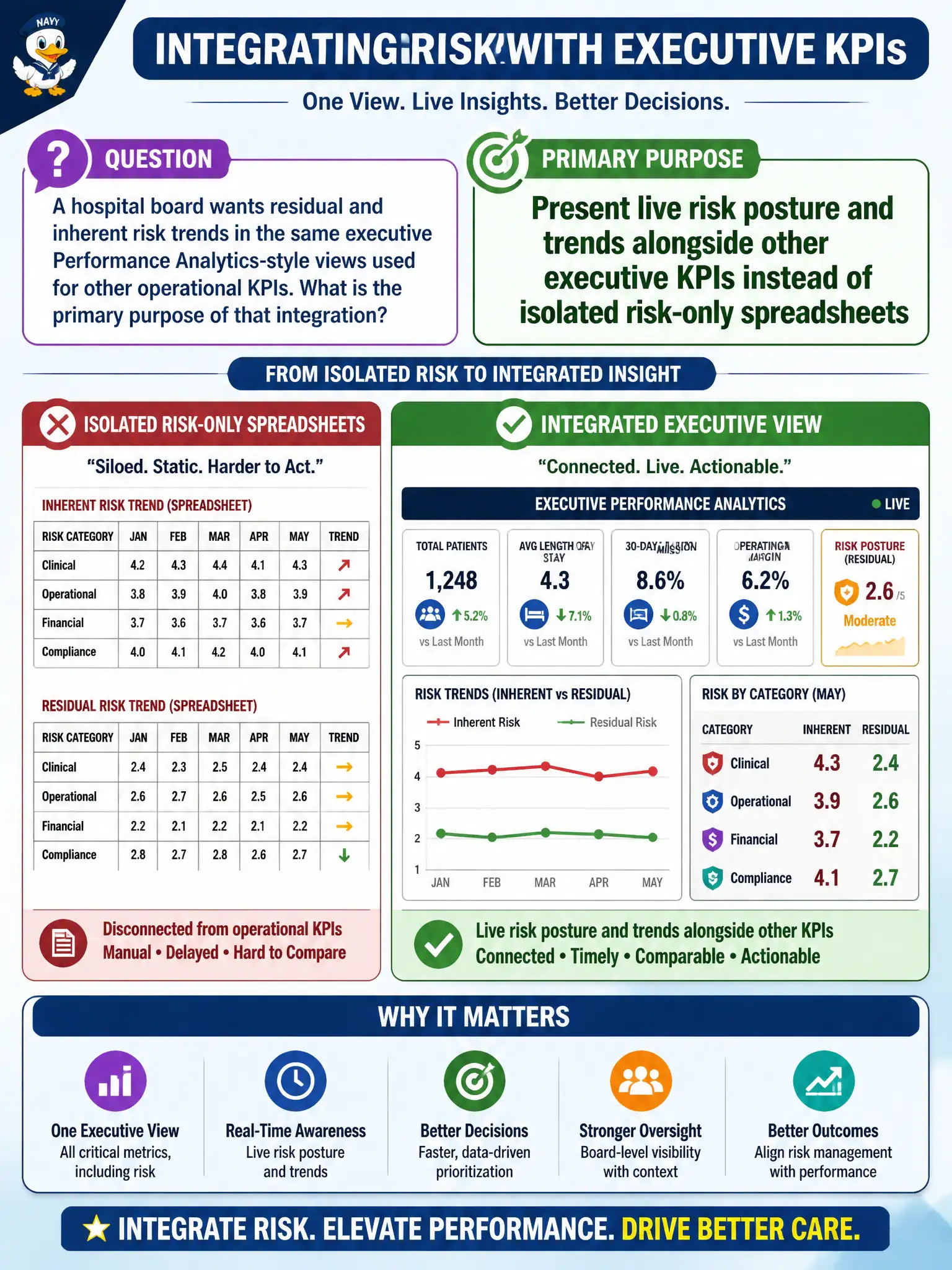
A hospital board wants residual and inherent risk trends in the same executive Performance Analytics-style views used for other operational KPIs. What is the primary purpose of that integration?
Select an answer to reveal the explanation.
Short Explanation
Boards already stare at PA-style KPI boards — risk scores should show up there too. The point is one executive windshield for posture and trends, not killing the register or auto-closing risks on a refresh. Keep the detailed records; surface the headline.
Full Explanation
Integrating residual and inherent risk trends into executive Performance Analytics-style views exists primarily to present live risk posture and trends alongside other operational KPIs instead of isolated risk-only spreadsheets. Hospital boards already live in KPI windshields; IRM should surface headlines there while detailed risk records remain in the register. Integration is presentation and monitoring, not register replacement.
Replacing the risk register with PA exclusively so detailed records are no longer needed destroys the system of record beneath the charts. Satisfying a CIS-ITSM exam objective on change calendar widgets is irrelevant to risk-posture integration purpose. Auto-closing all risks older than thirty days based on dashboard refresh alone invents dangerous automation unrelated to assessment outcomes.
Exam caveat: PA/dashboard integration complements IRM records; it does not retire them or auto-close risks on refresh.
Operational check: add residual/inherent trend widgets to the executive PA-style board; drill through to live risk records; confirm no auto-close runs from dashboard refresh.
Define drill-through from PA-style trend charts back to the underlying risk records so executives can inspect drivers without replacing the register. Explicitly disable any automation that closes risks based solely on dashboard age or refresh events.