
A transit GRC lead wants risk owners to update scores and responses while auditors and many managers may only view the register. What should be tuned?
Select an answer to reveal the explanation.
Short Explanation
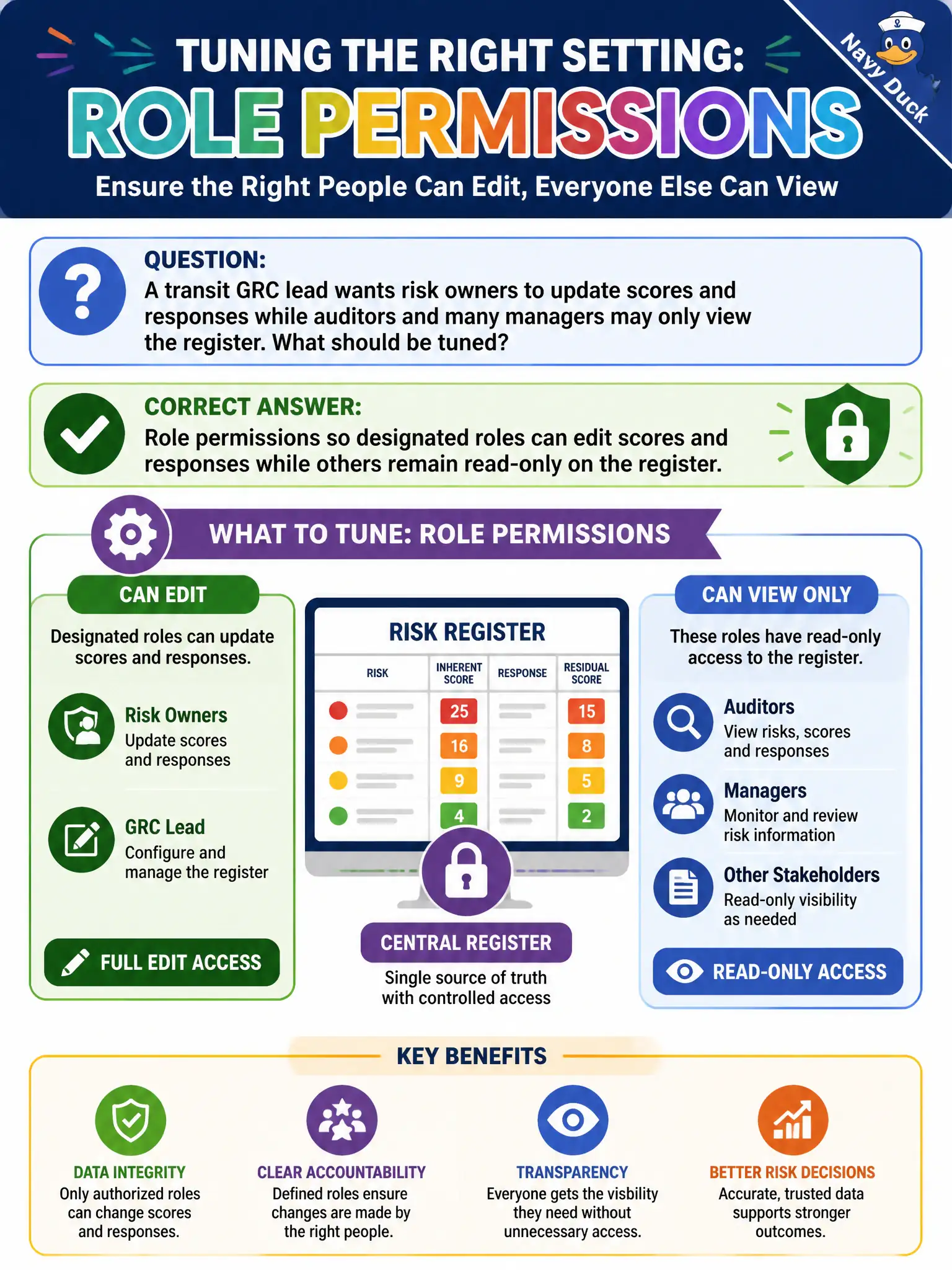
Not everybody in the station should twist the risk dials. Tune roles so owners can score and respond while viewers stay read-only. Wide-open edit or SIR-only editors break the operating model.
Full Explanation
Transit GRC leads should tune role permissions so designated roles can edit scores and responses while auditors and many managers remain read-only on the register. Least-privilege scoring protects operating-model integrity: owners update, viewers observe, auditors assure. Permission design is part of IRM architecture, not an afterthought.
Giving everyone with an instance login edit rights to every residual score invites uncontrolled posture churn. Removing all ACLs so scoring is enforced only by tribal knowledge abandons platform controls. Granting score-edit rights exclusively to the SIR analyst role for all IRM risks misassigns ownership to incident analysts.
Exam caveat: risk owners (or designated scorer roles) edit; broad read for managers/auditors; SIR analyst ≠ default IRM scorer.
Operational check: map edit roles to risk owners; assign read-only to a manager and auditor test user; confirm they cannot change residual; confirm SIR analyst lacks blanket IRM score edit.
Document the scorer role matrix in the transit GRC operating model and review ACLs after org changes. Provide auditors read-only register access sufficient for planning, and keep score edits with designated risk-owner roles—not SIR analysts by default.